
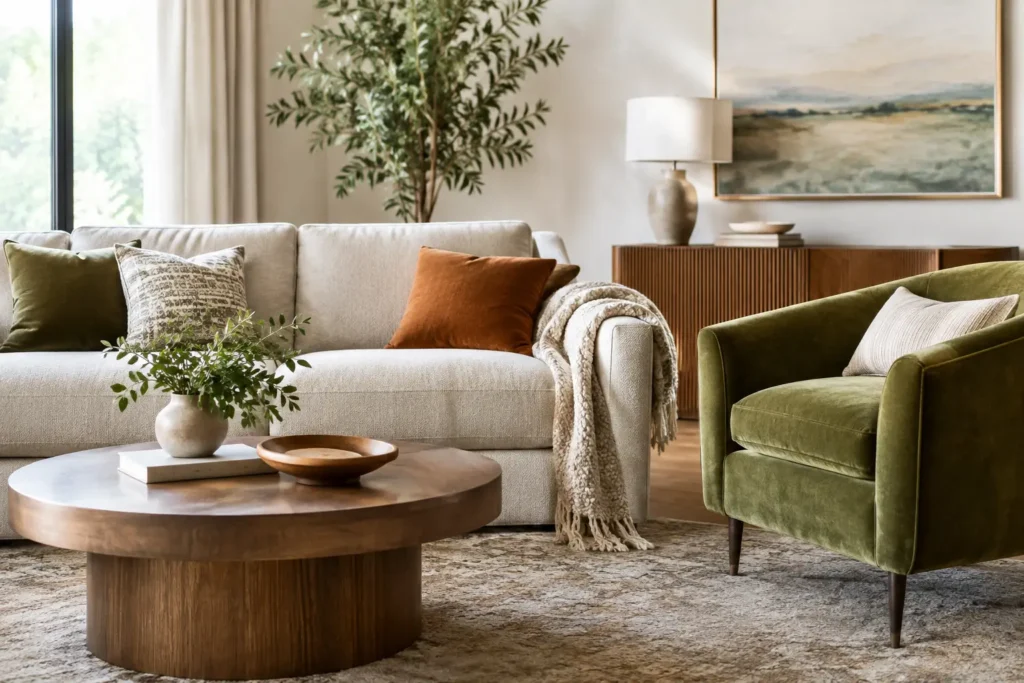
A sofa is often the largest visual surface in a living room, yet it is frequently chosen after the walls, flooring, and curtains. The strongest upholstery trends reverse that order. They treat seating, headboards, ottomans, and accent chairs as foundational design elements that set a room’s comfort level, color story, and sense of luxury.
For homes, offices, and hospitality interiors, the direction is clear: spaces should feel personal and polished, not overly staged. That does not mean every room needs a bold printed sofa or an oversized curved chair. It means selecting upholstery with a purpose, then coordinating it with window treatments, lighting, and finishes for a complete result.
Upholstery Trends Moving Beyond the Showroom Look
The most appealing interiors are moving away from furniture that looks perfect but feels difficult to live with. Homeowners want soft, welcoming rooms that still hold their shape, resist daily wear, and look refined when guests arrive. This is why texture, tailored silhouettes, and practical fabric choices are gaining attention together.
A trend should never be selected simply because it photographs well. In a family villa, a pale bouclé sofa may need a performance finish and a thoughtful placement away from heavy traffic. In a formal reception area, a more structured velvet bench can create the right impression while remaining easier to maintain. The best choice depends on how the room is used, who uses it, and how much natural light enters during the day.
Rich Texture Takes the Lead
Flat, basic upholstery is giving way to fabrics that invite a closer look. Bouclé, basket weaves, chenille, brushed velvets, and linen-look performance textiles add depth without requiring a busy pattern. Their appeal is especially strong in neutral rooms, where texture prevents beige, cream, taupe, or gray from looking one-dimensional.
Bouclé remains popular for occasional chairs, curved sofas, and upholstered beds because it brings softness and character. However, it is not automatically the best fabric for every household. Its looped surface can catch on accessories or show wear in high-use areas. A tightly woven textured fabric can offer a similar visual effect with greater everyday durability.
Velvet is also evolving. Rather than high-shine jewel tones alone, refined matte velvets in olive, tobacco, warm sand, charcoal, and deep blue are being used to create quiet drama. They work beautifully in bedrooms, majlis-style seating areas, boutique offices, and hotel lounges when balanced with sheer curtains or softly filtered blinds.
Curves Create a Softer Layout
Rounded furniture is no longer limited to a single statement chair. Curved sofa backs, barrel chairs, oval ottomans, and gently shaped headboards are bringing a more relaxed flow to interiors. These forms soften rooms with sharp architecture, extensive glass, or large-format flooring.
A curved piece needs enough breathing room to look intentional. In a compact apartment, a small rounded accent chair or upholstered bench may be more effective than a large crescent sofa that interrupts circulation. For larger living rooms, a curved sectional can define a conversation zone and create a more welcoming arrangement than seating pushed against every wall.
This trend pairs particularly well with wave-style curtains, Roman blinds, and layered sheers. The repetition of soft lines creates a calm, cohesive look without making the room feel overly themed.
Color Trends Favor Warm, Livable Neutrals
Cool gray is giving way to warmer, more natural shades. Think mushroom, almond, camel, putty, clay, muted olive, and soft cocoa. These tones feel sophisticated because they have depth, and they sit comfortably beside wood, stone, brass, black metal, and natural flooring.
Warm neutrals are not the same as playing safe. A sofa in tobacco brown or olive green can be a confident anchor, particularly when the curtains are selected to support rather than compete with it. For example, a warm ivory sheer curtain with a lined taupe drape can frame an olive upholstered sofa beautifully. The palette feels layered, not matched too literally.
For clients who prefer a lighter interior, the answer is often contrast through material rather than color. Pair a creamy upholstered chair with dark timber, bronze accessories, a textured rug, or black-framed roller blinds. This gives the space definition while preserving an airy feel.
Tailored Contrast Beats Perfect Matching
Matching every upholstered piece is no longer the goal. A coordinated room has a shared thread, but its sofa, chairs, cushions, and window coverings do not need to come from the same color family. A neutral sectional can sit beside a rust-toned chair, provided both fabrics carry a similar warmth or texture.
The same principle applies to curtains and blinds. Heavy drapes in the exact sofa color can make a room feel flat. A more elegant approach is to select window treatments in a complementary value or material. Linen-look drapes beside velvet seating, for instance, provide contrast while keeping the overall design elevated.
Performance Fabrics Become a Luxury Essential
One of the most practical upholstery trends is also one of the most valuable: fabrics designed for real life. Modern performance upholstery has moved well beyond stiff, overly synthetic-looking materials. Many premium options now offer a soft hand feel along with better resistance to staining, fading, and frequent use.
This matters in sunny rooms, homes with children or pets, busy office lounges, and hospitality settings. It also matters when furniture sits near large windows. Strong daylight can gradually alter fabric color, especially on natural fibers and richly dyed velvets. Properly specified blackout curtains, solar blinds, or layered window coverings can help protect upholstery while improving comfort and privacy.
When choosing a practical fabric, ask how it will perform rather than focusing only on its first impression. Consider the weave, cleaning method, color depth, and the furniture’s location. A light fabric may be suitable for a formal sitting room, while a busy family room may benefit from mid-tone textured upholstery that is more forgiving between professional cleanings.
Custom Upholstery Makes the Trend Personal
Ready-made furniture can be convenient, but it often leaves compromises in size, fabric, or finish. Custom upholstery gives a room the tailored quality that current interiors demand. It allows you to adjust seat depth, back height, piping, cushion firmness, leg finish, and fabric selection to suit the space rather than forcing the space to suit the furniture.
This is particularly useful in apartments with limited layouts, villas with large entertaining rooms, and commercial spaces that need seating designed around traffic flow. An upholstered banquette can turn an unused dining corner into a feature. A custom headboard can make a bedroom feel complete while echoing the softness of the curtains. Reupholstering a well-built chair can preserve its quality while giving it a fresh, current identity.
Details make the difference. Contrast piping can sharpen a clean-lined sofa, while self-piping keeps a neutral piece understated. Channel tufting adds rhythm to a headboard or bench, but may not suit a minimal contemporary room. Deep button tufting has a more traditional feel and works best when the rest of the design supports that level of formality.
Coordinate Upholstery With Light Control
Furniture and window treatments should be planned together, especially in rooms where sunlight, privacy, and temperature control matter. A beautiful fabric will not stay beautiful for long if it receives intense direct sun every afternoon. At the same time, covering every window with heavy blackout curtains can make a living space feel closed off.
Layered solutions offer flexibility. Sheer curtains soften daylight and protect privacy during the day, while lined drapes provide evening privacy and improved light control. Roller blinds can suit clean, modern interiors, while Roman blinds add a softer tailored finish. Motorized curtains and blinds are especially useful for tall windows, large glass walls, bedrooms, and spaces where convenience is part of the design brief.
For Dubai interiors, this coordination is more than decorative. Effective window coverings can reduce glare and help protect upholstery, rugs, and artwork from harsh sunlight. Choosing the fabric and window treatment at the same time creates a more considered result and avoids costly corrections later.
Choose What Will Still Feel Right Next Year
The most enduring trend is a room designed around your life, not a fast-moving social media image. Select a sofa shape you will enjoy sitting on, a fabric that supports the way your household functions, and colors that work with the light in your home. Add trend-led details through cushions, throws, an accent chair, or a reupholstered ottoman if you want flexibility.
A professional measurement and design consultation can bring these choices together before fabric is ordered or furniture is installed. Elegant Blinds & Curtains can help coordinate custom upholstery, premium curtains, blinds, and motorized solutions so every layer of the room feels intentional. Book a consultation or request a free quote, then choose finishes that make your space comfortable enough for every day and impressive enough for every occasion.