
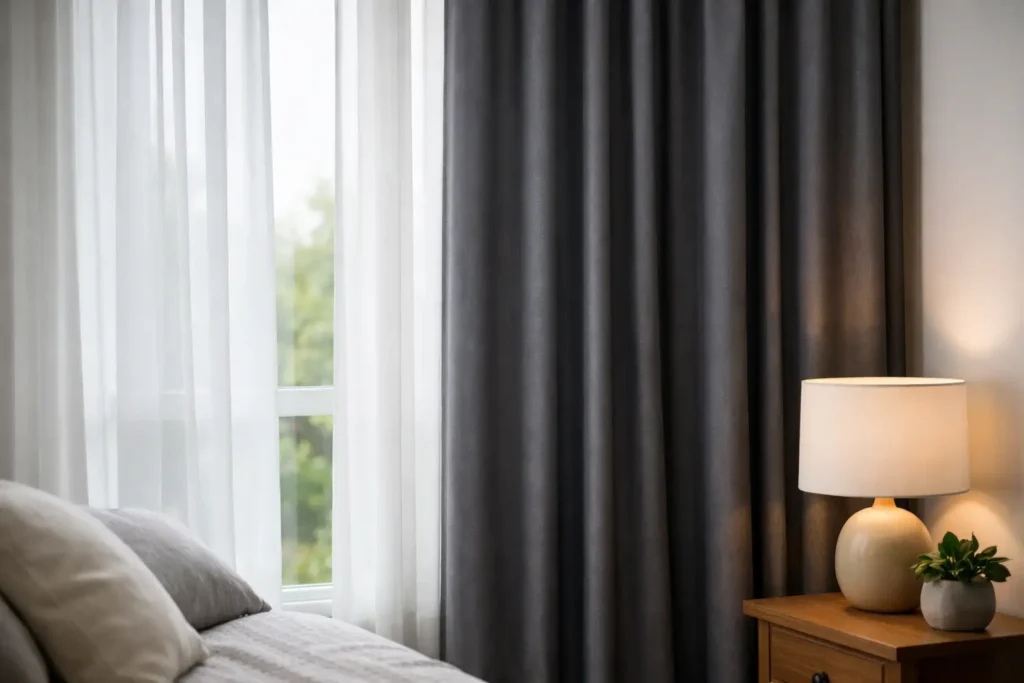
Street-facing windows look beautiful in daylight – until evening turns your room into a display case. That is usually the moment people start searching for the best curtains for privacy, and the answer is not as simple as choosing the darkest fabric in the showroom. Real privacy depends on the room, the window size, how much daylight you want to keep, and whether you want a soft decorative finish or full coverage that works day and night.
The right curtain should do more than block a view. It should suit the space, hang properly, match the interior, and feel considered rather than heavy-handed. In premium interiors, privacy works best when it feels built into the design.
What makes the best curtains for privacy?
Privacy curtains work by limiting visibility from outside, but different fabrics achieve that in different ways. Some stop clear sightlines while still letting in light. Others create complete visual separation and also improve sleep, comfort, and light control.
That is why fabric weight matters. A loosely woven sheer may soften the room beautifully, but at night, when interior lights are on, it will rarely provide enough privacy on its own. A denser fabric, a blackout lining, or a layered treatment gives a far better result. The best choice depends on whether you need daytime privacy, nighttime privacy, or both.
Fit also matters more than many buyers expect. Even premium fabric will underperform if the panels are too narrow, too short, or mounted poorly. Gaps at the sides, top, or center can reduce privacy immediately. Custom measurement and proper installation make the curtain look richer and work harder.
Best curtains for privacy by fabric type
Blackout curtains
If your priority is maximum privacy, blackout curtains are usually the strongest option. They are made with tightly constructed fabric or special lining that blocks outside visibility and significantly reduces incoming light. Bedrooms, nurseries, media rooms, and hotel spaces benefit most from this style.
Blackout curtains are also a smart choice for anyone who wants more than privacy. They help control glare, create a more restful atmosphere, and can improve thermal comfort in rooms exposed to strong sun. The trade-off is that they feel more substantial in the room, so the fabric and color selection should be handled carefully to avoid making the space look too heavy.
Dimout curtains
Dimout curtains sit between decorative drapery and full blackout performance. They offer strong privacy with a softer finish and often allow a small amount of filtered light to remain. For living rooms, guest rooms, and offices, this balance can be ideal.
They work especially well in interiors where you want elegance first, but still need dependable coverage after sunset. If full darkness is not necessary, dimout often gives a more refined look than thick blackout fabric.
Linen-look and textured curtains with lining
Many homeowners want privacy without sacrificing softness and style. In that case, linen-look curtains with a privacy lining are often the best answer. The face fabric keeps the room light, tailored, and upscale, while the lining adds coverage and improves the drape.
This combination is popular in living rooms and villas where appearance matters just as much as function. It gives you a relaxed luxury look, but with much better privacy than unlined decorative fabric.
Velvet curtains
Velvet offers rich texture, excellent coverage, and a distinctly luxurious finish. Because it is dense and substantial, it naturally performs well for privacy. It is especially effective in formal living rooms, master bedrooms, and hospitality settings where visual depth is part of the design.
The only caution is scale. Velvet can overwhelm smaller rooms if the color is too dark or the window wall is compact. In the right setting, though, it delivers both elegance and privacy with very little compromise.
Sheer curtains with a second layer
On their own, sheers are not the best curtains for privacy at night. During the day, they can help obscure views while maintaining brightness, especially if outdoor light is stronger than indoor light. Once evening arrives, that advantage disappears.
This is why layered curtains are such a strong solution. A sheer layer keeps the room airy and polished during the day, while a second curtain panel – blackout, dimout, or lined fabric – closes when full privacy is needed. It is one of the most practical and visually complete options for modern homes.
Choosing privacy curtains room by room
Bedrooms
Bedrooms usually need the highest level of privacy. Blackout or lined curtains are the safest choice, particularly for ground-floor rooms or homes close to neighboring properties. If restful sleep is also a priority, blackout becomes even more attractive.
For a more elevated finish, layering sheers behind blackout panels creates flexibility. You can enjoy filtered daylight in the morning and complete privacy at night without changing the overall look of the room.
Living rooms
Living rooms are more nuanced. Some households want privacy only in the evening, while others need it all day because of nearby streets or adjacent buildings. In these spaces, lined linen-look curtains, dimout drapes, or layered sheers with a secondary privacy panel tend to work best.
The goal is to protect the space without making it feel closed off. A custom treatment helps strike that balance, especially when the room has large windows or sliding doors.
Offices
In offices and meeting rooms, privacy often needs to coexist with a clean, professional appearance. Curtains with structured pleats, dimout fabrics, or motorized options can create a polished finish while reducing visibility and glare.
For executive spaces and client-facing interiors, this detail matters. The right curtain adds discretion, comfort, and a more refined atmosphere, which supports both design and day-to-day use.
Hotels and guest spaces
Hospitality spaces need dependable privacy, durability, and consistent presentation. Blackout hotel curtains remain the standard because they satisfy guest expectations and improve comfort immediately. Pairing them with sheers gives the room a complete, layered look that feels premium.
Why custom curtains outperform ready-made options
Ready-made curtains can be useful for quick fixes, but privacy is one area where custom solutions make a visible difference. Standard sizes rarely suit the exact width and height of the window, and that often leaves light gaps and visibility gaps. A privacy curtain that does not fully cover the opening is only doing part of the job.
Custom curtains are measured for the actual space, which allows for better fullness, cleaner stacking, and more complete side coverage. They also let you choose the right heading style, lining, and hardware for the room. In practice, this means a better-looking result and better privacy every day.
For larger homes, offices, and hospitality projects, professional fixing also matters. Heavy curtains need proper support, and wide window spans need careful planning to ensure smooth operation and an elegant fall. This is where a service-led provider adds real value.
Do motorized curtains help with privacy?
Yes, especially in large or frequently used spaces. Motorized curtains make privacy easier to manage because you are more likely to use them consistently. With one touch, you can close a full wall of curtains in the evening or adjust different zones throughout the day.
This is particularly useful in villas, penthouses, boardrooms, and hospitality environments where convenience is part of the expectation. Motorization does not change the privacy level of the fabric itself, but it improves how effortlessly that privacy is maintained.
The design details that people often miss
Color affects privacy less than fabric density, but it still influences the final result. Darker fabrics often feel more substantial, while lighter lined fabrics can provide strong privacy without making the room look visually heavy. If you want a bright interior, do not assume you need dark curtains to get proper coverage.
Track placement is another overlooked factor. Mounting curtains higher and wider than the window opening usually improves both appearance and privacy because the panels can overlap more effectively and reduce edge gaps. Fullness matters too. Sparse panels tend to look flat and can leave openings when drawn.
These details are exactly why consultation and measurement are worth it. A beautiful fabric can fail in the wrong format, while the right fabrication turns a simple treatment into a complete room upgrade.
When clients ask Elegant Blinds & Curtains for privacy solutions, the strongest results usually come from matching fabric performance with room function, then tailoring the finish to the interior style. That is how privacy stops feeling like an afterthought and starts looking intentional.
If you are choosing curtains for privacy, think beyond fabric swatches. Think about how the room is used in the morning, afternoon, and evening, how much softness or structure you want, and whether layering or automation would make daily life easier. The best result is not just a covered window – it is a room that feels calm, protected, and beautifully finished.