
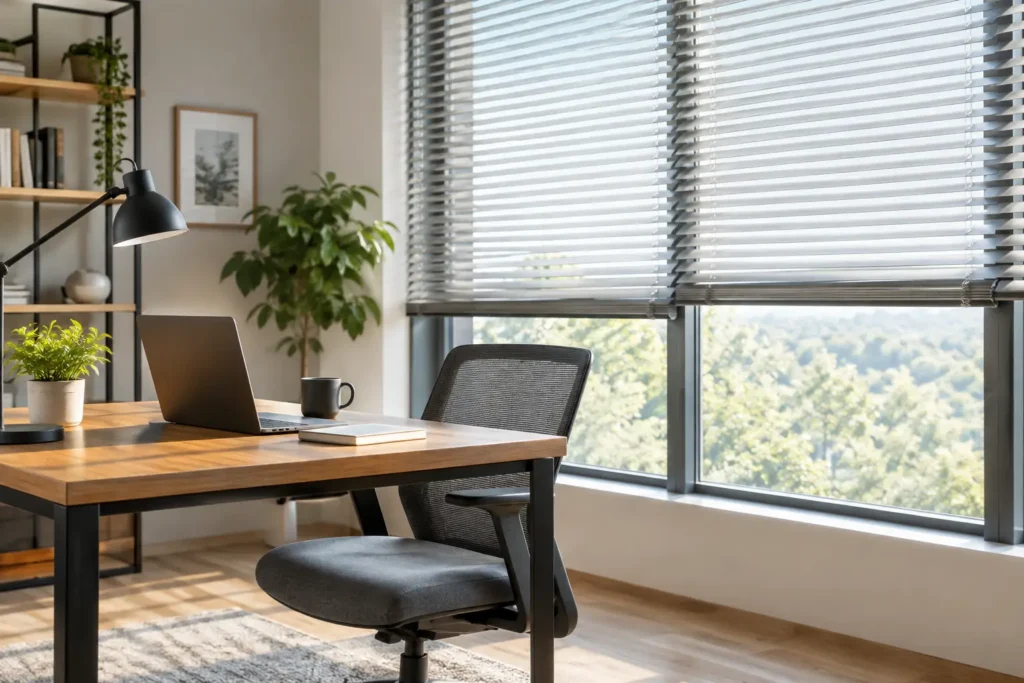
A home office can look beautifully furnished and still be difficult to work in if sunlight hits the screen at 10 a.m. or neighbors can see straight inside after dark. The best blinds for home offices solve those daily frustrations while giving the room a polished, intentional finish. The right choice balances light control, privacy, comfort, and a style that feels appropriate for both focused work and video calls.
A made-to-measure blind also changes the feel of the room. Instead of a window treatment that sits awkwardly above the frame or leaves gaps at the sides, custom fitting creates a cleaner look and gives you more reliable coverage when you need it.
What a Home Office Blind Needs to Do
Home office windows work harder than windows in many other rooms. You may need soft daylight for concentration in the morning, protection from harsh afternoon sun, and full privacy when working late. That means the most attractive fabric or color is not always the most practical starting point.
Begin with the direction of the window. East-facing offices often receive strong early light, while west-facing rooms can become hot and intensely bright later in the day. South-facing windows typically need consistent glare management. A room with more than one exposure may benefit from different treatments on different windows rather than one solution everywhere.
Screen position matters too. A monitor directly opposite a bright window creates eye strain, while a window behind you can produce a distracting silhouette on video calls. Blinds should let you redirect or soften incoming light without turning your workspace into a dark box.
Best Blinds for Home Offices by Need
Roller blinds for a clean, focused workspace
Roller blinds are often the strongest all-around choice for modern home offices. Their simple, streamlined profile suits contemporary desks, built-in cabinetry, and minimal interiors. They are available in sunscreen, dim-out, and blackout fabrics, so you can select the level of coverage based on how the room is used.
Sunscreen roller blinds are particularly useful when your priority is glare reduction without losing the view or all natural light. The woven fabric filters direct sun and can help reduce screen reflections, yet the room still feels open during the day. For many workspaces, this is the most comfortable option for regular daytime use.
The trade-off is nighttime privacy. When interior lights are on, sunscreen fabrics do not provide complete privacy. If your office faces another home, a street, or a shared outdoor area, consider pairing the roller blind with curtains or choosing a denser dim-out fabric instead.
Zebra blinds for flexible daylight control
Zebra blinds bring a more decorative, versatile feel to an office. Their alternating sheer and opaque fabric bands slide past one another, allowing you to shift from filtered daylight to greater privacy without raising the blind completely. This makes them a smart option for people who want more control throughout the workday.
They work especially well in home offices that double as guest rooms, study spaces, or reading rooms. During the day, the sheer bands create a softer atmosphere than a fully closed blind. Later, the opaque sections can be aligned for a more private setting.
Zebra blinds are not usually the first choice where total blackout is essential, such as an office used for projection work or night-shift sleep. But for a refined balance of style and everyday flexibility, they are one of the best blinds for home offices with changing light conditions.
Venetian blinds for precise light direction
Venetian blinds offer something fabric blinds cannot: precise control over the angle of the light. By tilting the slats, you can bounce daylight upward, reduce direct sun on a desk, or maintain partial visibility outside. This is useful in offices where glare changes quickly as the sun moves.
Aluminum Venetian blinds suit a crisp, contemporary workspace and are easy to maintain. Wood-look or faux-wood finishes introduce warmth and can complement home offices with classic furniture, natural flooring, or richer wall colors. Faux wood is often the more practical choice in humid areas because it maintains its shape more reliably than natural wood.
The consideration is cleaning. Slats collect dust more easily than a flat roller fabric, especially near open windows. They also create a slightly busier visual effect, which may not suit a very minimal interior. Still, for detailed light adjustment, Venetian blinds remain hard to beat.
Roman blinds for a more residential look
A home office should support productivity, but it does not need to feel like a corporate cubicle. Roman blinds are ideal when you want the workspace to feel connected to the rest of a thoughtfully designed home. Their tailored fabric folds add softness, depth, and a custom decorative finish.
Choose a lined Roman blind for stronger light filtering and a fuller appearance. Blackout lining is available when privacy and room darkening matter, while a lighter lining preserves a relaxed daytime glow. Fabric selection is key: a subtle texture, calm neutral, or understated pattern can add character without becoming distracting on camera.
Roman blinds are best for offices where atmosphere matters as much as functional light control. They are less convenient than roller or zebra blinds if you need to make frequent, small adjustments throughout the day, but their elegant finish can make a compact office feel more inviting.
Blackout blinds for high-glare rooms
Blackout roller blinds are the practical answer for rooms with aggressive sun exposure, video editing stations, presentation areas, or offices that must occasionally serve as a sleeping space. They significantly reduce incoming light and help create a more controlled environment for screens.
Keep expectations realistic: a standard blackout fabric blocks light through the material, but small lines of light can still appear around the edges unless the blind is fitted with side channels or designed with close, precise coverage. This detail matters in bedrooms and media rooms, but it can also matter in a home office where direct light is affecting a monitor.
For most people, blackout blinds work best as part of a layered approach. A sunscreen blind for daytime work and blackout curtains for evening privacy can provide exceptional comfort while adding a luxury finish to the room.
Choose the Right Fabric and Color
The blind material affects both performance and appearance. Light-colored fabrics reflect more heat and help a smaller office feel airy, but very pale shades may allow more visible light through. Darker fabrics can offer stronger glare reduction and a sophisticated look, though they may make a compact room feel more enclosed when lowered.
Neutral tones such as warm white, sand, taupe, soft gray, and charcoal are dependable choices because they work with changing furniture and décor. If the office is visible on video calls, avoid highly reflective materials and overly bold patterns behind the desk. A matte finish and subtle texture tend to look more polished on screen.
For wide windows, the fabric’s weight and the quality of the operating mechanism matter. A premium blind should raise smoothly, sit level, and retain its shape over time. This is where professional measurement and installation make a visible difference.
Manual or Motorized Blinds?
Motorized blinds are a worthwhile upgrade for hard-to-reach windows, large glazing, or offices with several blinds to adjust. With a remote, wall control, or smart-home integration, you can manage glare quickly without interrupting a call or leaving your desk.
Automation also allows for useful routines. Blinds can be scheduled to lower during the hottest part of the afternoon and open again after sunset. In a home office, that small convenience can help protect furniture from direct sun, improve screen comfort, and keep the room feeling composed through the day.
Manual blinds remain an excellent option for smaller, easily accessible windows and for projects where simplicity is the priority. The best choice depends on the window layout and how often you expect to adjust the treatment, not simply on whether automation is available.
Why Custom Measurement Is Worth It
Off-the-shelf blinds can be tempting, but home office windows are rarely as standard as they appear. Recess depth, handles, frame shape, ceiling height, and nearby furniture all influence the correct installation method. Even a small measuring error can leave unwanted light gaps or make the blind difficult to operate.
A professional consultation helps match the treatment to the way you actually work. It considers the sun path, your desk placement, privacy requirements, interior palette, and whether the blind needs to integrate with curtains or automation. The result is a window solution that looks tailored rather than added as an afterthought.
If your workspace deserves the same attention as the rest of your home, schedule a measurement consultation with Elegant Blinds & Curtains. A well-chosen blind will not only frame the window beautifully – it will make the hours spent at your desk calmer, more private, and more productive.