
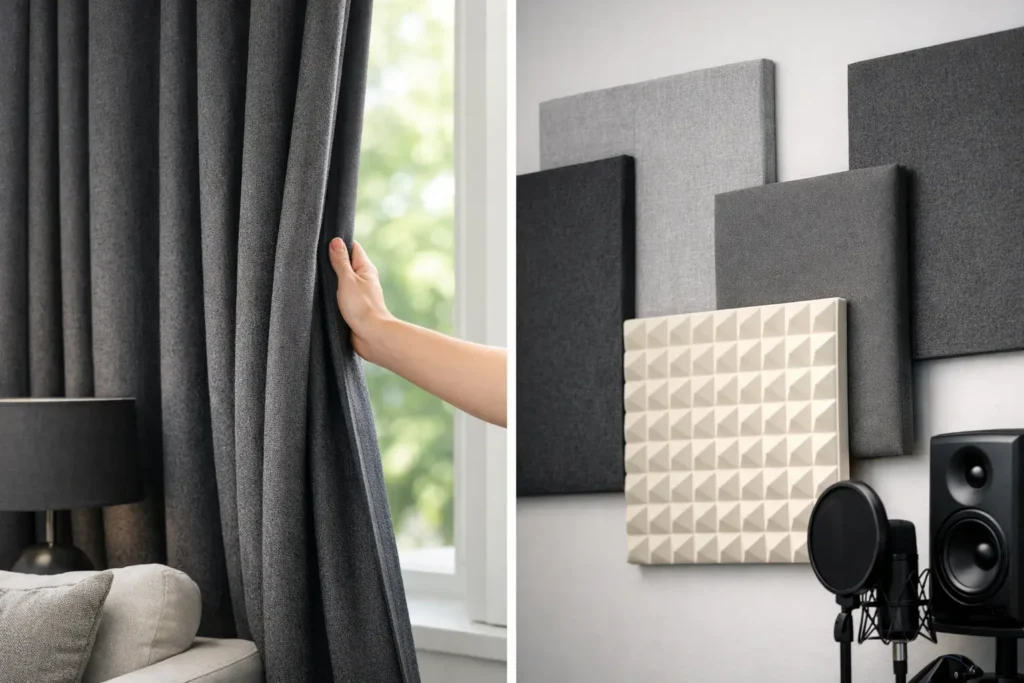
A beautifully furnished room can still feel unfinished when traffic, hallway conversations, echo, or outside construction keeps interrupting the calm. When comparing soundproof curtains vs acoustic panels, the right choice comes down to the noise you are trying to manage, the look you want to preserve, and how much change you want to make to the room.
Both options can make a meaningful difference, but they solve different problems. Custom soundproof curtains add softness, privacy, light control, and a more peaceful atmosphere around windows and doors. Acoustic panels are designed primarily to reduce echo and sharpen sound quality inside a space. For many homes, offices, and hospitality interiors, the best result is not choosing one blindly – it is choosing the solution that matches the room.
Soundproof Curtains vs Acoustic Panels: The Core Difference
The term “soundproof” is often used broadly, so it helps to be clear. True soundproofing blocks sound from traveling between spaces. This usually requires construction measures such as sealed gaps, dense walls, upgraded doors, insulated glazing, or specialized ceiling systems.
Soundproof curtains do not rebuild a wall or replace a high-performance window. Their value lies in using dense, layered fabric to absorb part of the sound energy that enters the room, soften reflected noise, and reduce the sense of disturbance near the window. When professionally measured and fitted with generous fullness, they can also help cover gaps that allow light and some sound to pass through.
Acoustic panels work differently. They are typically installed on walls or ceilings to absorb sound waves that would otherwise bounce around the room. This lowers reverberation, commonly experienced as echo, harshness, or the feeling that voices carry too far. Panels can make speech clearer in a meeting room, reduce clatter in a restaurant, and improve the listening experience in a media room.
In short, curtains are usually the stronger choice for improving comfort around windows, while panels are more effective for controlling echo within the room.
When Soundproof Curtains Are the Better Choice
Soundproof curtains are ideal when your priority is creating a quieter, more private, and more polished window area. They are especially practical in bedrooms facing busy streets, apartments close to shared corridors, hotel rooms, nurseries, home offices, and living rooms with large glass doors.
A well-made curtain combines several everyday benefits in one tailored treatment. The heavier fabric and lining can soften incoming noise, while blackout or dimout layers help control sunlight and improve sleep. The result is a room that feels more insulated, restful, and luxurious without sacrificing warmth or style.
This matters in spaces where the windows are a major visual feature. Wall-mounted acoustic treatments may be technically useful, but they cannot replace the elegant softness of full-height drapery framing a view, concealing tracks, and completing the interior design. For villas, apartments, and hospitality projects, custom curtains often deliver the most visible transformation for the investment.
Fit and fabric make a real difference
Not all heavy curtains perform the same way. A thin ready-made panel with open sides will offer limited acoustic benefit, even if the label calls it soundproof. Better-performing curtains use substantial fabric, quality lining, adequate fullness, and a track or rod placement that extends beyond the window frame.
For greater comfort, the curtain should be wider than the opening and ideally sit close to the wall or window. Extending the track above and beyond the window reduces the uncovered edges where light and sound can enter. Floor-length finishing also creates a more refined appearance and helps minimize open space below the fabric.
Professional measurement is particularly valuable for wide windows, bay windows, sliding doors, and double-height spaces. Precision fitting ensures the curtain looks intentional while delivering the strongest practical performance possible.
Where curtains have limits
If the main problem is heavy construction noise, loud aircraft, amplified music from next door, or major sound transfer through walls, curtains alone will not create silence. They can improve the room’s perceived comfort, but they cannot overcome structural weaknesses or fully stop low-frequency noise.
That does not make them the wrong investment. It simply means expectations should be realistic. In many residential settings, the goal is a calmer room, better sleep, and less sharp or intrusive noise – not a recording-studio environment.
When Acoustic Panels Are the Better Choice
Acoustic panels are the smarter choice when a room sounds overly live. You may notice this in a boardroom where voices feel tiring, a restaurant where conversations blend together, a home theater with unclear dialogue, or an office where calls seem to echo.
Because panels absorb reflected sound on walls and ceilings, they improve how sound behaves after it is already inside the room. This is known as sound treatment rather than sound blocking. A panel will not usually stop traffic noise from coming through a window, but it can make the interior less noisy, less echo-prone, and easier to use.
They are especially effective in rooms with hard finishes such as glass, marble, tile, polished concrete, and exposed ceilings. These materials look sophisticated but reflect sound strongly. Adding acoustic treatment can restore balance without requiring a major renovation.
Design considerations for panels
Modern acoustic panels are available in fabric-wrapped, timber-slatted, printed, and decorative styles, so they do not have to look industrial. Still, they are a deliberate wall or ceiling feature. That can be exactly right for a cinema room, executive meeting space, creative studio, restaurant, or commercial reception area.
For a bedroom or formal living room, however, panels may feel less natural than luxurious drapery. The decision is as much about the room’s visual language as it is about acoustic performance. A beautiful interior should not be forced to choose between function and refinement.
Can You Use Both Together?
Yes, and in some spaces this is the most balanced approach. Soundproof curtains can improve the window zone by softening outside disturbance, blocking unwanted light, and adding privacy. Acoustic panels can then address echo from hard walls and ceilings.
Consider a home office with a glass façade and minimalist finishes. Custom blackout curtains can make video calls more comfortable by reducing glare and softening sound near the window. If the room still has noticeable echo, discreet wall panels can improve speech clarity further. The same combination works well in conference rooms, hotels, media rooms, and large open-plan living spaces.
The key is to avoid treating acoustics as an afterthought. Plan the window coverings, furniture, rugs, upholstery, and wall finishes as one coordinated scheme. Soft furnishings already contribute to a room’s acoustic comfort, and tailored curtains are often one of the most effective places to begin.
How to Choose for Your Room
Start with the source of the problem. If outside noise, bright sunlight, privacy, and an unfinished window are all concerns, soundproof curtains are likely the more useful first investment. If people in the room struggle to hear one another because sound is bouncing around, acoustic panels deserve priority.
Then consider the room’s purpose. Bedrooms need rest and darkness. Offices need speech clarity and concentration. Hospitality spaces need comfort without compromising a premium guest experience. A home theater may need both exterior-noise reduction and internal acoustic treatment.
Finally, think about installation. Curtains can be customized around your existing architecture and installed with minimal disruption. Panels require strategic placement to work well, and the quantity, thickness, and positioning should be based on the room’s size, surfaces, and use.
At Elegant Blinds & Curtains, a tailored consultation begins with how you want the room to feel, not just what you want to hang at the window. From fabric selection and exact measurement to professional fitting, a custom solution can bring quiet comfort and visual elegance into the same design.
A calmer space rarely comes from one product alone. Start with the noise you notice most, choose the treatment that addresses it honestly, and let the final finish make your room feel as peaceful as it looks.