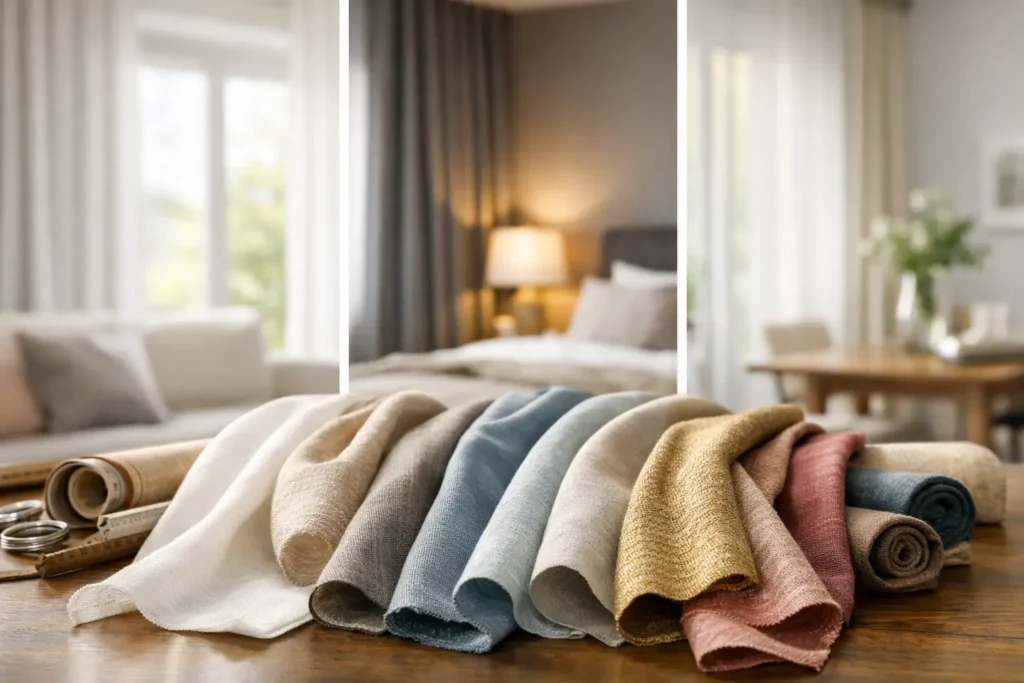
Guide to Selecting Curtain Fabrics for Every Room

Guide to Selecting Curtain Fabrics for Every Room

A curtain fabric can make a room feel softly finished, dramatically private, cooler in strong sunlight, or noticeably more luxurious. That is why a guide to selecting curtain fabrics should begin with how you want the room to perform, not simply which color catches your eye. The right material brings together style, light control, privacy, texture, and the way the fabric will hang once it is custom tailored.

For villas, apartments, offices, and hospitality interiors, curtains are often one of the largest visible textile surfaces in the room. A beautiful fabric can elevate even simple furniture. A poorly suited one may fade quickly, feel too heavy for the space, or leave you wishing for more privacy at night. Choosing with the room, window direction, and daily routine in mind leads to a result that looks refined and works effortlessly.

Start With the Room’s Real Needs

Before comparing swatches, decide what the window covering needs to do. A bedroom usually calls for sleep-friendly darkness and privacy. A living room may need daylight with softened glare. An office might require sun control without closing off the view, while a hotel room needs fabrics that look polished and stand up to frequent use.

In Dubai, sun exposure deserves special attention. Windows facing intense afternoon light need more than a decorative layer if you want to protect furnishings and make the room more comfortable. Lined drapes, blackout fabrics, or a layered combination of sheers and curtains can reduce harsh brightness while giving the space a finished, high-end appearance.

Also consider how often the curtains will be handled. A formal dining room can accommodate delicate fabrics that are mainly decorative. A family living area, children’s room, or busy office benefits from a durable material that keeps its shape and is easier to maintain.

Understand the Main Curtain Fabric Options

Each fabric has a distinct character. There is no universal best choice, because the most suitable option depends on the balance between appearance and performance.

Sheer fabrics for soft daylight

Voile, chiffon, linen-look sheers, and lightweight polyester sheers filter daylight rather than block it. They are ideal when you want a bright, airy room while reducing the directness of the sun. Sheers also add daytime privacy, though they do not provide reliable privacy after dark when indoor lights are on.

A sheer curtain is particularly effective in living rooms, dining rooms, reception areas, and bedrooms with a second blackout layer. White and ivory sheers create a clean, spacious feeling, while warmer neutrals can make a room feel more relaxed and inviting. The trade-off is practical: sheers alone will not control heat, noise, or nighttime visibility.

Linen and linen-look fabrics for relaxed elegance

Linen has a natural weave and subtle irregularity that gives interiors depth without looking overly formal. It suits contemporary villas, coastal-inspired spaces, and rooms where a calm, tailored look is the goal. Genuine linen can wrinkle and may require more thoughtful care, while linen-blend and linen-look fabrics offer a similar visual effect with greater durability and easier maintenance.

Because linen fabrics often allow some light through, they work beautifully with lining or layered blinds when stronger privacy or darkness is needed. Choose a heavier weave for more structure, especially on tall windows.

Cotton and cotton blends for versatile style

Cotton curtains feel familiar, soft, and adaptable. They can be casual or sophisticated depending on the weave, weight, color, and heading style. Cotton blends are often a practical choice for bedrooms and living spaces because they drape well and are available in a wide range of finishes.

Pure cotton can fade or shrink if it is not properly treated, particularly near sunny windows. A quality lining improves the fabric’s longevity and adds body to the finished curtain. For households that want a polished result without a highly formal look, cotton blends are a strong middle ground.

Velvet for depth, insulation, and drama

Velvet brings richness that few other fabrics can match. Its dense pile catches the light beautifully, adding dimension to jewel tones, charcoal, navy, and warm neutrals. It is well suited to formal lounges, master bedrooms, private cinemas, executive offices, and hospitality settings where a sense of luxury matters.

The weight of velvet gives it excellent drape and can support better insulation and light control than lightweight materials. However, it may feel too visually heavy in a compact room with limited natural light. Velvet also needs precise measuring, strong hardware, and professional installation so the finished folds remain elegant rather than bulky.

Blackout fabrics for complete light control

Blackout curtains are designed to block or substantially reduce incoming light, making them a preferred solution for bedrooms, nurseries, media rooms, hotels, and spaces exposed to strong sun. Some blackout fabrics have a coated backing, while others use a tightly woven multi-layer construction. Both can be effective, but the final performance also depends on the fit around the window.

For the best result, curtains should extend generously beyond the window frame and have sufficient fullness. A blackout fabric that is too narrow or mounted incorrectly can allow distracting light to enter through the sides. Pairing blackout curtains with a sheer layer gives you flexible control throughout the day: soft filtered light when open, deep privacy and darkness when closed.

Use Color and Texture to Shape the Space

Fabric color does more than coordinate with cushions or wall paint. Pale fabrics reflect light and can make compact rooms feel more open. Deep colors create intimacy and presence, particularly when used on wide windows or full-height drapes. Neutral tones such as sand, taupe, greige, soft gray, and warm white remain enduring choices because they support changing furniture and accessories over time.

Texture is equally influential. A smooth satin finish feels formal and reflective. A woven fabric offers a more grounded, architectural character. Subtle patterns can add interest to a neutral room, but large prints require care. On expansive curtains, a bold design becomes a major visual feature and can compete with patterned wallpaper, rugs, or upholstery.

Take samples into the actual room whenever possible. Fabrics can look very different under daylight, warm interior lighting, and evening shadows. Hold the sample beside the wall color, flooring, and key furniture rather than choosing it under showroom lighting alone.

Consider Lining, Fullness, and Curtain Heading

A premium curtain is not defined by face fabric alone. Lining can improve drape, protect the fabric from sunlight, add privacy, and increase light control. Standard lining gives a more finished appearance, while blackout lining is useful when you love a decorative fabric but need bedroom-level darkness.

Fullness determines how generous the curtains look when closed. Flat panels may cover the glass but rarely create the luxurious folds most homeowners expect. The appropriate fullness depends on fabric weight and heading style, but custom fabrication ensures the proportions suit the window rather than relying on a one-size-fits-all panel.

Wave headings create clean, modern ripples and are especially striking across large windows. Pinch pleats offer a more classic, tailored look, while eyelet curtains can suit simpler installations. Heavy fabrics and tall ceilings may also require stronger tracks, quality brackets, and smooth-gliding systems. These details affect the daily experience as much as the fabric itself.

Think About Care Before You Commit

Curtains collect dust over time, particularly in rooms near open doors, kitchens, or high-traffic areas. Select a fabric with care requirements that fit the setting. Many synthetic blends are durable and more forgiving, while natural fibers, velvet, and delicate sheers may need specialist cleaning to maintain their texture and shape.

For commercial and hospitality projects, ask about flame-retardant options, durability, and cleaning requirements from the start. A fabric may look excellent in a sample book but be unsuitable for a lobby, hotel room, or office that needs consistent performance over years of use.

Guide to Selecting Curtain Fabrics With Motorization

Motorized curtains deserve fabric planning too. The track, motor capacity, curtain weight, and width of the opening should work together. Heavy velvet or lined blackout drapes can be motorized beautifully, but they need a system specified for the load. Lightweight sheers move easily, though they still require accurate fabrication so they stack neatly at the sides.

Motorization is particularly valuable for tall windows, wide glass doors, and rooms where curtains are opened and closed every day. It adds convenience, protects the fabric from repeated pulling, and gives a polished finish to a smart home, executive office, or hospitality space. The key is to choose the curtain and automation system as one coordinated solution, not as separate decisions.

A fabric swatch is only the beginning of the transformation. Arrange a professional measurement and consultation before making your final choice. With the right material, lining, track, and tailoring, your curtains can frame the room with the comfort, privacy, and quiet luxury you want to enjoy every day.

Leave a Comment

Your email address will not be published. Required fields are marked *

Guide to Selecting Curtain Fabrics for Every Room

Guide to Selecting Curtain Fabrics for Every Room

A curtain fabric can make a room feel softly finished, dramatically private, cooler in strong sunlight, or noticeably more luxurious. That is why a guide to selecting curtain fabrics should begin with how you want the room to perform, not simply which color catches your eye. The right material brings together style, light control, privacy, texture, and the way the fabric will hang once it is custom tailored.

For villas, apartments, offices, and hospitality interiors, curtains are often one of the largest visible textile surfaces in the room. A beautiful fabric can elevate even simple furniture. A poorly suited one may fade quickly, feel too heavy for the space, or leave you wishing for more privacy at night. Choosing with the room, window direction, and daily routine in mind leads to a result that looks refined and works effortlessly.

Start With the Room’s Real Needs

Before comparing swatches, decide what the window covering needs to do. A bedroom usually calls for sleep-friendly darkness and privacy. A living room may need daylight with softened glare. An office might require sun control without closing off the view, while a hotel room needs fabrics that look polished and stand up to frequent use.

In Dubai, sun exposure deserves special attention. Windows facing intense afternoon light need more than a decorative layer if you want to protect furnishings and make the room more comfortable. Lined drapes, blackout fabrics, or a layered combination of sheers and curtains can reduce harsh brightness while giving the space a finished, high-end appearance.

Also consider how often the curtains will be handled. A formal dining room can accommodate delicate fabrics that are mainly decorative. A family living area, children’s room, or busy office benefits from a durable material that keeps its shape and is easier to maintain.

Understand the Main Curtain Fabric Options

Each fabric has a distinct character. There is no universal best choice, because the most suitable option depends on the balance between appearance and performance.

Sheer fabrics for soft daylight

Voile, chiffon, linen-look sheers, and lightweight polyester sheers filter daylight rather than block it. They are ideal when you want a bright, airy room while reducing the directness of the sun. Sheers also add daytime privacy, though they do not provide reliable privacy after dark when indoor lights are on.

A sheer curtain is particularly effective in living rooms, dining rooms, reception areas, and bedrooms with a second blackout layer. White and ivory sheers create a clean, spacious feeling, while warmer neutrals can make a room feel more relaxed and inviting. The trade-off is practical: sheers alone will not control heat, noise, or nighttime visibility.

Linen and linen-look fabrics for relaxed elegance

Linen has a natural weave and subtle irregularity that gives interiors depth without looking overly formal. It suits contemporary villas, coastal-inspired spaces, and rooms where a calm, tailored look is the goal. Genuine linen can wrinkle and may require more thoughtful care, while linen-blend and linen-look fabrics offer a similar visual effect with greater durability and easier maintenance.

Because linen fabrics often allow some light through, they work beautifully with lining or layered blinds when stronger privacy or darkness is needed. Choose a heavier weave for more structure, especially on tall windows.

Cotton and cotton blends for versatile style

Cotton curtains feel familiar, soft, and adaptable. They can be casual or sophisticated depending on the weave, weight, color, and heading style. Cotton blends are often a practical choice for bedrooms and living spaces because they drape well and are available in a wide range of finishes.

Pure cotton can fade or shrink if it is not properly treated, particularly near sunny windows. A quality lining improves the fabric’s longevity and adds body to the finished curtain. For households that want a polished result without a highly formal look, cotton blends are a strong middle ground.

Velvet for depth, insulation, and drama

Velvet brings richness that few other fabrics can match. Its dense pile catches the light beautifully, adding dimension to jewel tones, charcoal, navy, and warm neutrals. It is well suited to formal lounges, master bedrooms, private cinemas, executive offices, and hospitality settings where a sense of luxury matters.

The weight of velvet gives it excellent drape and can support better insulation and light control than lightweight materials. However, it may feel too visually heavy in a compact room with limited natural light. Velvet also needs precise measuring, strong hardware, and professional installation so the finished folds remain elegant rather than bulky.

Blackout fabrics for complete light control

Blackout curtains are designed to block or substantially reduce incoming light, making them a preferred solution for bedrooms, nurseries, media rooms, hotels, and spaces exposed to strong sun. Some blackout fabrics have a coated backing, while others use a tightly woven multi-layer construction. Both can be effective, but the final performance also depends on the fit around the window.

For the best result, curtains should extend generously beyond the window frame and have sufficient fullness. A blackout fabric that is too narrow or mounted incorrectly can allow distracting light to enter through the sides. Pairing blackout curtains with a sheer layer gives you flexible control throughout the day: soft filtered light when open, deep privacy and darkness when closed.

Use Color and Texture to Shape the Space

Fabric color does more than coordinate with cushions or wall paint. Pale fabrics reflect light and can make compact rooms feel more open. Deep colors create intimacy and presence, particularly when used on wide windows or full-height drapes. Neutral tones such as sand, taupe, greige, soft gray, and warm white remain enduring choices because they support changing furniture and accessories over time.

Texture is equally influential. A smooth satin finish feels formal and reflective. A woven fabric offers a more grounded, architectural character. Subtle patterns can add interest to a neutral room, but large prints require care. On expansive curtains, a bold design becomes a major visual feature and can compete with patterned wallpaper, rugs, or upholstery.

Take samples into the actual room whenever possible. Fabrics can look very different under daylight, warm interior lighting, and evening shadows. Hold the sample beside the wall color, flooring, and key furniture rather than choosing it under showroom lighting alone.

Consider Lining, Fullness, and Curtain Heading

A premium curtain is not defined by face fabric alone. Lining can improve drape, protect the fabric from sunlight, add privacy, and increase light control. Standard lining gives a more finished appearance, while blackout lining is useful when you love a decorative fabric but need bedroom-level darkness.

Fullness determines how generous the curtains look when closed. Flat panels may cover the glass but rarely create the luxurious folds most homeowners expect. The appropriate fullness depends on fabric weight and heading style, but custom fabrication ensures the proportions suit the window rather than relying on a one-size-fits-all panel.

Wave headings create clean, modern ripples and are especially striking across large windows. Pinch pleats offer a more classic, tailored look, while eyelet curtains can suit simpler installations. Heavy fabrics and tall ceilings may also require stronger tracks, quality brackets, and smooth-gliding systems. These details affect the daily experience as much as the fabric itself.

Think About Care Before You Commit

Curtains collect dust over time, particularly in rooms near open doors, kitchens, or high-traffic areas. Select a fabric with care requirements that fit the setting. Many synthetic blends are durable and more forgiving, while natural fibers, velvet, and delicate sheers may need specialist cleaning to maintain their texture and shape.

For commercial and hospitality projects, ask about flame-retardant options, durability, and cleaning requirements from the start. A fabric may look excellent in a sample book but be unsuitable for a lobby, hotel room, or office that needs consistent performance over years of use.

Guide to Selecting Curtain Fabrics With Motorization

Motorized curtains deserve fabric planning too. The track, motor capacity, curtain weight, and width of the opening should work together. Heavy velvet or lined blackout drapes can be motorized beautifully, but they need a system specified for the load. Lightweight sheers move easily, though they still require accurate fabrication so they stack neatly at the sides.

Motorization is particularly valuable for tall windows, wide glass doors, and rooms where curtains are opened and closed every day. It adds convenience, protects the fabric from repeated pulling, and gives a polished finish to a smart home, executive office, or hospitality space. The key is to choose the curtain and automation system as one coordinated solution, not as separate decisions.

A fabric swatch is only the beginning of the transformation. Arrange a professional measurement and consultation before making your final choice. With the right material, lining, track, and tailoring, your curtains can frame the room with the comfort, privacy, and quiet luxury you want to enjoy every day.

Leave a Comment

Your email address will not be published. Required fields are marked *