
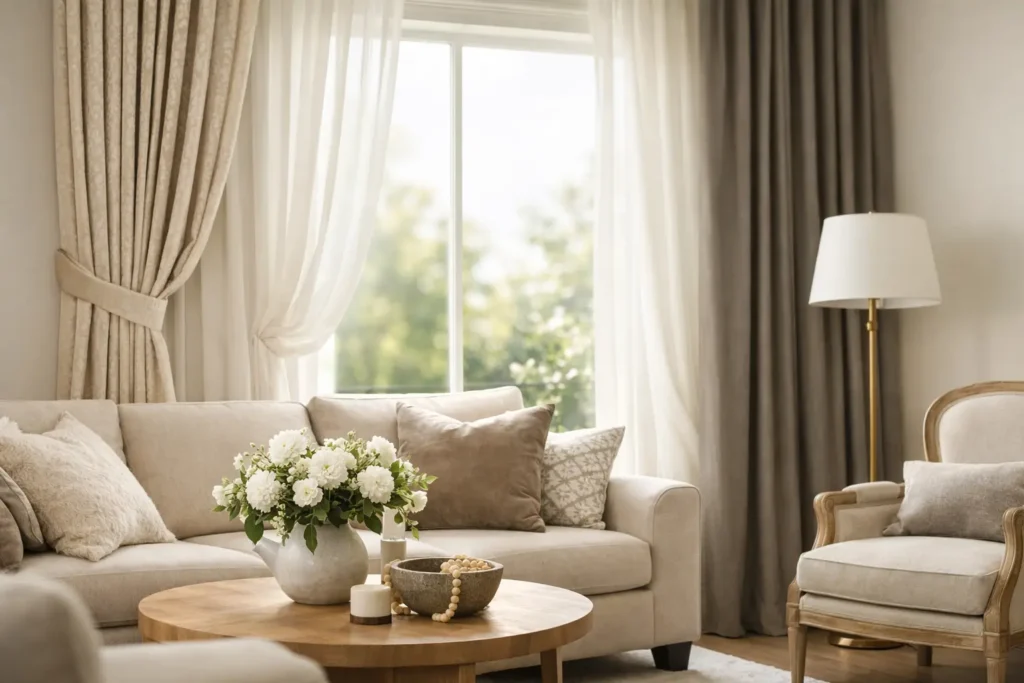
A living room can have beautiful furniture, thoughtful lighting, and a carefully chosen rug yet still feel unfinished when the windows are left bare or treated as an afterthought. The best living room drapery ideas do more than cover glass. They frame the view, soften hard architectural lines, control sunlight, and give the entire room a more considered, luxurious finish.
For a result that feels genuinely custom, start with the room’s light, ceiling height, wall color, furniture scale, and privacy needs. The right fabric and installation details can make a compact apartment feel taller, give a villa living room more presence, or create a welcoming atmosphere for a refined office lounge.
Living Room Drapery Ideas Start With the Window
1. Hang Drapery High and Wide
One of the most effective design decisions is also one of the simplest: mount the curtain track or rod close to the ceiling, then extend it beyond both sides of the window. This creates the impression of greater height and a wider window wall, even where the opening itself is modest.
When curtains are pulled open, they should sit mostly on the wall rather than covering the glass. That keeps the view open and allows more daylight into the room. In rooms with low ceilings, this approach is especially valuable because a correctly placed track draws the eye upward.
2. Layer Sheers With Blackout Curtains
A sheer-and-blackout combination is one of the most versatile choices for living spaces. Sheer curtains diffuse bright sunlight during the day, reduce harsh glare, and preserve a soft connection to the outdoors. Blackout or dimout drapery adds evening privacy and stronger light control whenever needed.
This layered look works well in homes with large windows, neighboring buildings nearby, or strong afternoon sun. Choose a double track so each layer operates independently. A warm white sheer paired with textured beige, taupe, gray, or muted blue drapery gives the room depth without making it feel heavy.
3. Choose Fullness That Looks Generous, Not Flat
The amount of fabric used across a window determines whether drapery looks polished or underdressed. Curtains that barely cover the window when closed often appear flat and temporary. Fullness creates graceful folds, richer texture, and the tailored finish associated with premium interiors.
The ideal fullness depends on the fabric and header style. Lightweight sheers generally need more fabric for an elegant wave, while thicker blackout materials can look refined with slightly less. Professional measurement matters here because the finished look depends on the exact track width, fabric weight, and stack-back space.
4. Use Ceiling-Mounted Wave Curtains for a Modern Look
Wave curtains create clean, evenly spaced folds from ceiling to floor. They are an excellent choice for contemporary living rooms because the lines are neat, architectural, and calm. Installed on a slim ceiling track, they make large glazed walls feel intentionally designed rather than visually busy.
This style suits linen-look fabrics, soft sheers, and understated solid colors. It is also practical for sliding doors and wide windows because the curtains glide smoothly across the track. If your room already has detailed furniture or bold artwork, wave drapery offers balance without competing for attention.
5. Add Texture Instead of Adding More Color
A neutral room does not need plain drapery. Texture can bring the same visual interest as a stronger color, but with a more lasting effect. Consider a linen blend, subtle woven fabric, matte velvet, or a material with a fine tonal pattern.
Textured drapery is particularly useful when the living room includes neutral walls, stone flooring, leather seating, or minimalist furniture. A sand-colored curtain with a natural weave can feel far more elevated than a smooth, basic beige panel. The key is to coordinate undertones: warm creams and camel tones pair best with warm woods, while cooler grays work better with silver, charcoal, or blue-based interiors.
6. Make Velvet the Statement in Formal Rooms
Velvet drapery brings visual weight, softness, and a sense of occasion. In a formal living room, it can be the element that makes the space feel complete. Deep olive, mocha, navy, burgundy, and charcoal velvet can create a dramatic frame around tall windows, particularly when paired with warm lighting and substantial furniture.
There is a trade-off. Velvet absorbs light and can make a smaller or darker room feel more enclosed. In that case, use velvet only as side panels with a light sheer behind it, or select a softer midtone rather than a very dark shade. Precise tailoring is essential because heavy fabrics show uneven hems and poor fitting more readily than lighter materials.
7. Match the Drapery Header to Your Interior Style
The top of the curtain changes the character of the entire treatment. Wave headers feel modern and structured. Pinch pleats create a more classic, tailored appearance. Eyelet curtains are casual and accessible, though they are usually less refined for a high-end, made-to-measure living room.
For a transitional interior, pinch pleats in a plain fabric offer timeless elegance. For a sleek apartment or a modern villa, a ceiling-mounted wave system usually feels more appropriate. The header should support the room’s architecture rather than introduce a conflicting style.
8. Let the Curtains Touch the Floor Properly
Floor-length drapery almost always looks more luxurious than curtains that stop above the floor. The cleanest contemporary finish is a precise break, where the hem just touches or sits fractionally above the floor. A slight puddle can look romantic in a formal setting, but it is less practical in homes with children, pets, or frequent cleaning.
Avoid guessing the length. Floor levels can vary, especially near rugs, steps, and tiled transitions. A professional measurement ensures each panel hangs consistently and preserves the crisp line that makes custom drapery stand out.
9. Use Pattern With Restraint
Patterned living room curtains can add personality, but the scale needs careful consideration. A large print may look striking on a wide window wall, while it can overwhelm a narrow room or compete with patterned cushions, wallpaper, and rugs. Small repetitive prints may read as visual noise from across the room.
If the room is already layered with color and detail, choose solid drapery with texture. If the furniture is simple and the walls are quiet, a restrained botanical, geometric, or tonal pattern can become a tasteful focal point. Bring fabric samples into the room before deciding, since daylight can dramatically change how color and pattern appear.
10. Use Motorized Curtains for Tall or Wide Windows
Motorized curtains are not only for smart homes. They are a practical choice for large windows, double-height spaces, hard-to-reach tracks, and living rooms where curtains are opened and closed every day. With remote, wall-switch, or smart-home control, light and privacy become easier to manage without handling the fabric.
Automation also protects the drapery from frequent pulling, which helps preserve its shape over time. For a premium finish, conceal the motorized track within a recessed ceiling pocket or a coordinated pelmet. The effect is clean, discreet, and especially impressive in modern interiors.
11. Coordinate Drapery With Blinds for Better Control
Curtains do not have to do every job alone. Combining drapery with roller blinds, Roman blinds, or zebra blinds gives a living room more precise control over glare and privacy. A sunscreen roller blind, for example, can reduce daytime glare while maintaining an outside view, while decorative side drapery softens the window wall.
This combination is ideal for rooms facing intense sun or for TV areas where screen reflection is a concern. It also allows you to choose lighter decorative fabric without sacrificing the function that a blackout blind can provide.
12. Treat the Entire Window Wall as One Composition
When a living room has several windows, a balcony door, or a wide sliding glass opening, avoid treating each section as a separate project. A continuous ceiling track and coordinated fabric across the full wall can make the architecture feel calmer, wider, and more expensive.
This approach is especially effective in open-plan homes, where the living area needs visual definition without adding walls. Even if some sections are fixed glass and others are operable doors, a unified drapery plan brings order to the room and creates a stronger backdrop for furniture.
Details That Turn Drapery Into a Finished Interior
The fabric is only part of the result. Track color, bracket placement, lining, hems, and installation accuracy all influence how drapery performs and how it looks from across the room. A curtain that is beautifully selected but incorrectly measured can block daylight, drag unevenly, or leave awkward gaps at the edges.
For a more complete service, Elegant Blinds & Curtains can help translate your preferred look into a made-to-measure solution, from fabric selection and free measurement through custom tailoring and professional installation. This is particularly helpful when layering sheers and blackout curtains, planning ceiling recesses, or adding motorized operation.
Before choosing a fabric, stand in your living room at the time of day when sunlight is strongest. Notice where glare falls, how much privacy the room needs, and which colors already dominate the space. Then schedule a measurement with a window treatment specialist who can turn those observations into drapery that fits beautifully, operates smoothly, and gives the room the finish it deserves.