
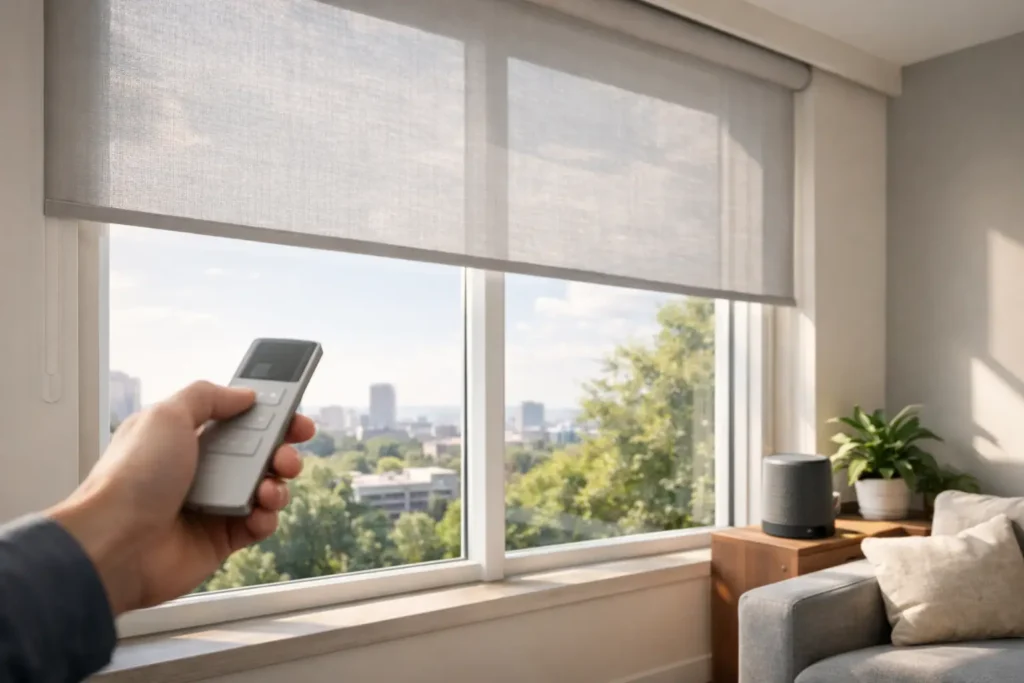
At 3 p.m., when direct sun turns a beautiful living room into a glare-filled space, the right response should not be closing every curtain by hand. The smart shading future is about window treatments that respond to how a room is actually used: protecting interiors, managing privacy, softening heat, and setting the right mood with a touch, schedule, or voice command.
For homeowners, office managers, and hospitality projects, this is more than a convenient upgrade. It is a considered approach to comfort and design. Smart curtains and motorized blinds bring the practical work of light control into the background while allowing the fabric, color, and architecture of the room to remain the focus.
What the Smart Shading Future Means for Interiors
Smart shading is often described as automation, but the strongest installations begin with a broader question: what should this space feel like at different times of day? A bedroom may need total darkness before sunrise, gentle filtered daylight in the morning, and complete privacy at night. A boardroom needs glare control during presentations without making the room feel closed in. A hotel suite needs an effortless guest experience that still looks refined.
Motorized curtains and blinds make these changes easier to manage. They can be operated by remote control, wall switch, mobile app, smart-home system, or preset timer, depending on the selected system. Rather than asking occupants to adjust heavy drapes or hard-to-reach blinds throughout the day, the treatment can move when it is needed.
The difference is especially noticeable in large villas, rooms with tall windows, and spaces with multiple openings. A coordinated system can open all living room curtains in the morning, close blackout drapes in the evening, or lower blinds during the strongest sunlight. The result feels polished because the room is working as one complete environment, not as a collection of separate fixtures.
Comfort Is More Than Temperature
Light affects how a room performs. Uncontrolled sunlight can create screen glare, fade flooring and upholstery, and make certain seating areas uncomfortable. Smart shading allows residents and teams to manage those conditions without sacrificing a view for the entire day.
Sheer curtains paired with motorized blackout curtains are a particularly versatile option. The sheers diffuse sharp sunlight and create daytime privacy, while the blackout layer provides darkness and insulation when required. In a living room or suite, this layered look also adds depth and softness that a single blind may not deliver.
For kitchens, bathrooms, and contemporary offices, motorized roller blinds offer a cleaner, more architectural finish. Zebra blinds provide another flexible choice, allowing users to shift between filtered light and privacy through alternating fabric bands. The best product is not always the most technical one. It is the one that suits the room’s humidity, window shape, daily routine, and design direction.
Design Still Comes Before Technology
A motor is not a substitute for good interior planning. The smart shading future works best when automation is built into a tailored window treatment rather than added as an afterthought. Fabric weight, stacking space, curtain heading, hardware finish, blind opacity, and installation height all influence the finished result.
For example, a dramatic full-height curtain can make a ceiling feel taller and a room feel more luxurious. Yet it also requires careful measurement and the right motor capacity, particularly when using lined or blackout fabrics. A recessed track may create a clean, hotel-inspired appearance, but it needs to be considered during fit-out or ceiling work. Surface-mounted tracks can still look elegant and are often more practical in completed homes.
This is why professional measuring matters. A few centimeters can affect how curtains stack, whether a blind clears a window handle, and how effectively a blackout treatment blocks side light. In premium interiors, these details are visible. Exact fabrication and professional fixing protect both the investment and the look of the room.
Choosing Between Curtains, Blinds, and Layers
There is no single formula for smart shading. Curtains typically bring warmth, acoustic softness, and a more luxurious presence. Blinds offer crisp lines and precise control, especially in compact rooms or modern commercial settings. Layering the two can offer the greatest flexibility, although it requires more planning and a higher budget.
Consider the purpose of each room before selecting the system. Bedrooms benefit from motorized blackout curtains or blackout roller blinds where sleep quality is the priority. Living areas often suit sheers with drapes, allowing daylight without exposing the room. Offices may need sunscreen roller blinds that reduce glare while maintaining outward visibility. Hospitality spaces may combine decorative curtains with durable, easy-to-operate blackout lining for a more elevated guest experience.
Smart control can be applied to each of these choices, but the level of automation should match the project. A single motorized curtain controlled by remote may be ideal for an apartment. A villa with many zones may benefit from scheduled scenes and integrated controls. For a hotel or office, central management can simplify daily operation, though it requires coordinated planning with electrical and automation teams.
Energy Awareness Without Compromising the View
Window treatments cannot replace proper glazing or air-conditioning design, but they can support a more comfortable, energy-conscious interior. Closing shades before direct sunlight reaches the glass can reduce solar heat gain, helping rooms feel less exposed during the hottest hours. In a sun-facing Dubai home, that practical benefit can be substantial.
The timing matters. If a blackout curtain stays closed all day, it may reduce heat but also remove natural light and the connection to the outdoors. Smart schedules offer a more balanced response. Sheers or sunscreen blinds can remain in place during bright daylight, while heavier layers close only when heat, privacy, or darkness is needed.
Sensors can take this further by triggering shades based on sunlight or room temperature. They are useful in spaces with predictable exposure, but they are not always essential. Some owners prefer manual control because their routines change frequently or because they want to decide based on the moment. A well-designed motorized system should make both automation and manual adjustment easy.
The Details That Decide Whether a System Feels Premium
The appeal of automated window treatments is immediate, but long-term satisfaction comes down to thoughtful specification. Noise level matters in bedrooms and quiet hospitality suites. Power planning matters before a ceiling is closed. Battery-operated options can be convenient in finished spaces, while wired motors are often preferred for larger, frequently used treatments. Access for servicing should also be considered, particularly for tracks hidden in coves or recesses.
Fabric selection remains equally important. A beautiful sheer may not provide enough daytime privacy for a ground-floor apartment. A blackout fabric can darken a room effectively but may feel too heavy in a small lounge if it is the only layer. In commercial settings, durability, cleaning requirements, and safety standards can influence the final choice as much as appearance.
A specialist consultation brings these decisions together. It connects fabric samples with window measurements, motor requirements, light conditions, and the way the room will be furnished. Instead of choosing a product from a catalog in isolation, clients can see how the full treatment will perform and look once installed.
Smart Shading Should Feel Effortless, Not Overcomplicated
The most successful automated spaces do not feel like technology demonstrations. They feel calm. Curtains open when the household wakes, blinds reduce glare before a meeting, and bedrooms become dark when it is time to rest. The controls should be intuitive enough for guests, children, staff, and visitors to use without instructions.
That simplicity is worth protecting. More features are not automatically better. If a system needs constant troubleshooting or is difficult for the household to operate, it will not deliver the comfort it promised. The right setup is one that balances dependable motors, elegant custom fabrication, practical controls, and professional installation.
Elegant Blinds & Curtains helps clients turn that vision into a tailored reality, from free measurement and fabric selection to precise fabrication and expert fixing. Whether you are updating one bedroom, furnishing a villa, or planning a hospitality project, start with how you want each room to feel throughout the day. Book a consultation and let the window treatment be designed around that experience.