
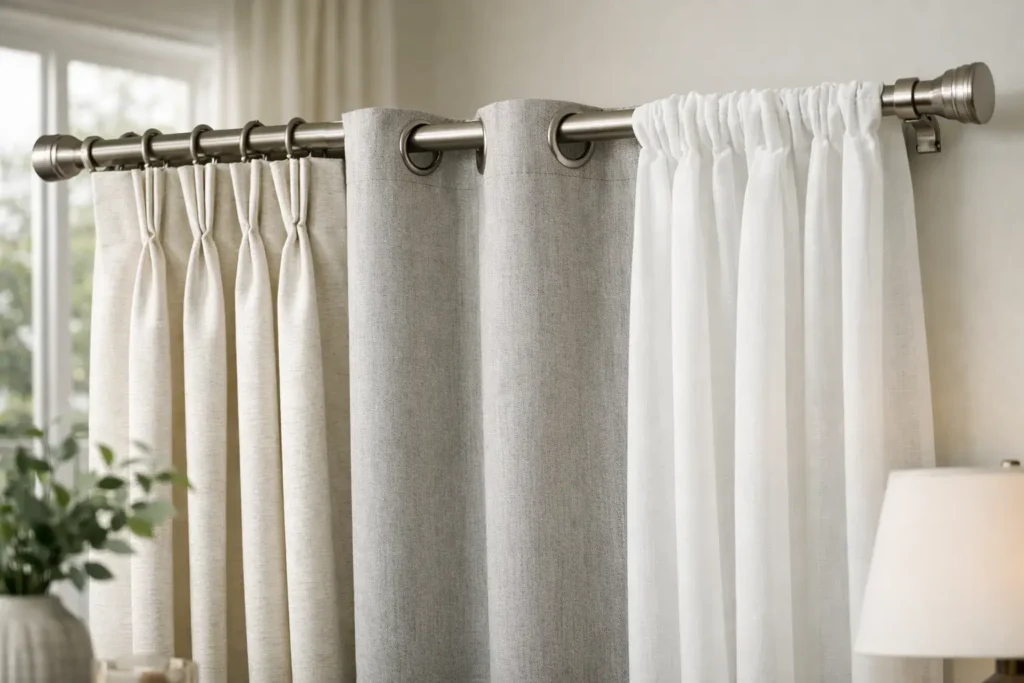
A curtain can be made from exceptional fabric and still look underwhelming if the top is wrong. Curtain heading selection determines how the fabric hangs, how easily it opens, how much fullness it creates, and whether the finished window feels casually dressed or professionally tailored. For a home, office, villa, or hospitality space, this detail has a major effect on the final result.
The right heading should work with the room’s architecture, the curtain fabric, the mounting system, and the way you use the space. A dramatic living room may call for structured pleats and generous stacking, while a relaxed bedroom with soft sheers may benefit from a lighter, more fluid style. Choosing well is not simply about following a trend. It is about creating a finish that looks considered every day.
Why Curtain Heading Selection Changes the Entire Look
The heading is the upper section of the curtain that connects to a rod, rings, or track. It controls the folds that run down the length of the fabric. Since the eye naturally notices the top line of a window treatment, the heading often sets the visual tone before anyone notices the material itself.
Structured headings create order, symmetry, and a more formal impression. Softer headings bring movement and a relaxed, contemporary feel. The same linen, velvet, or blackout fabric can look completely different depending on the heading chosen.
Function matters just as much as appearance. A heading affects how smoothly curtains travel, how much space they occupy when open, and whether they suit a manual or motorized system. For wide glass doors, floor-to-ceiling windows, and layered curtain designs, these practical details should be discussed before fabrication begins.
The Most Popular Curtain Heading Styles
Pinch Pleat for Timeless Luxury
Pinch pleat curtains are gathered into fixed groups of folds at regular intervals. Double pinch pleats provide a refined appearance, while triple pinch pleats offer a fuller, more formal presentation. This heading works beautifully in villas, elegant living rooms, dining areas, executive offices, and hotel-style bedrooms.
Because the folds are sewn into place, pinch pleats retain their shape well and give even heavier fabrics a disciplined look. They are especially effective with blackout curtains, lined drapes, and rich materials such as velvet or textured jacquard.
The trade-off is that pinch pleats usually require more fabric and a carefully planned track or rod. They also create a more traditional silhouette than minimalist headings. If you want clean architecture and a distinctly modern mood, another option may suit the room better.
Wave Heading for a Modern, Flowing Finish
Wave curtains create soft, continuous folds that remain consistent from one end of the track to the other. The effect is graceful, uncluttered, and particularly striking on large windows and sliding doors. It is a favorite for contemporary apartments, modern villas, and spaces where sheer curtains are a central design feature.
A wave heading needs a compatible wave track. This is not a detail to leave until installation day, because the carrier spacing within the track determines the depth and rhythm of the waves. When properly measured and fitted, the result is smooth and polished, especially when curtains are opened and closed frequently.
Wave headings pair naturally with motorized curtains. The folds glide evenly, and the clean top line complements smart-home interiors without adding visual bulk. They can also work with blackout fabric, although very heavy materials may need expert guidance to ensure the wave remains balanced.
Eyelet Heading for Casual Simplicity
Eyelet curtains have metal rings set directly into the top of the fabric. The rod passes through the eyelets, creating wide, easy folds. This heading is straightforward, affordable, and suited to bedrooms, casual sitting areas, and rental properties where a simple decorative update is the priority.
The exposed rod becomes part of the design, so its finish should coordinate with the room. Matte black can feel modern, while brushed brass or chrome may suit a more refined scheme. Eyelets are easy to move by hand, but they are not typically the first choice for motorized operation or highly formal interiors.
They also leave a small amount of light around the top and sides depending on the installation. For rooms that need maximum darkness, such as bedrooms or media rooms, a track-mounted blackout curtain with a more fitted heading may perform better.
Pencil Pleat for Flexible Styling
Pencil pleat tape creates narrow, gathered folds along the top of the curtain. It is one of the most versatile options because it can often be hung from a track or a rod with hooks and rings. Its adjustable fullness makes it practical for different window widths and changing interiors.
This heading can look neat and attractive, particularly with medium-weight fabric and layered curtains. However, it does not usually provide the sculpted finish of a pinch pleat or the uniform flow of a wave heading. It is best for projects where flexibility and value matter more than a highly architectural look.
Tab Top and Rod Pocket for Relaxed Spaces
Tab-top curtains use fabric loops that sit over a rod, while rod-pocket curtains have a stitched sleeve for the rod to pass through. Both styles create a soft, informal mood and are often chosen for lighter fabrics, smaller windows, or decorative panels.
They are less suitable for curtains that need to be opened and closed many times a day. The fabric can catch on the rod, and the movement is not as smooth as a hooked or tracked system. For a window that is primarily decorative, though, these headings can bring warmth and texture without looking overdesigned.
Match the Heading to Fabric Weight and Fullness
The fabric should influence every curtain heading decision. Sheers need enough volume to look elegant rather than flat, but too much gathering can make a delicate fabric appear crowded. Heavy blackout curtains need a heading that supports their weight and maintains a clean fall from ceiling to floor.
As a general design principle, wave and pinch pleat curtains often require more fabric than the final window width. The exact amount depends on the track, heading style, fabric thickness, and desired fullness. A thin sheer may need fuller treatment to create presence, while a dense blackout fabric can look luxurious with less volume.
This is where made-to-measure service has a clear advantage over ready-made curtains. Window width alone does not tell the whole story. The installer must account for return space at the sides, the stack-back area when curtains are open, ceiling height, furniture placement, and whether another layer of curtains or blinds will sit behind it.
Consider the Track, Rod, and Installation Height
A beautiful heading will not deliver the intended effect if it is paired with the wrong hardware. Tracks are ideal for wave systems, pinch pleats, layered curtains, and motorized options. They can be discreetly ceiling-mounted or recessed for a clean, built-in look.
Decorative rods make more of a statement and are often best with eyelets, rings, and selected pinch pleat styles. They can introduce a metallic accent and frame the window, but they need enough wall space beyond the window so the curtain can stack back without blocking too much glass.
Mounting curtains high, close to the ceiling, can make a room feel taller and more luxurious. Extending the track or rod beyond the window can also make the opening appear wider while allowing more daylight in when curtains are drawn back. These small installation choices often matter more than changing the fabric color.
Choosing Headings for Different Rooms
In bedrooms, privacy, darkness, and quiet operation are usually the priorities. A blackout curtain with pinch pleats or a wave heading on a quality track creates a refined finish and supports daily use. Add a sheer layer when you want soft daylight without sacrificing privacy.
Living rooms offer more design freedom. Wave sheers can create an airy backdrop for a modern interior, while lined pinch pleats add depth and elegance in a formal space. If the room has large windows, choose a system that stacks neatly so the view remains open during the day.
For offices and hospitality settings, the heading should reinforce the level of professionalism expected from the space. Uniform wave curtains work well in contemporary commercial interiors, while pinch pleats can elevate meeting rooms, suites, lounges, and premium guest areas. Durable fabrics and reliable tracks are essential where curtains receive frequent use.
Kitchens and bathrooms need special consideration. Fabric should be practical for humidity, splashes, and cleaning, which is why blinds may be a stronger choice near sinks and cooking areas. If curtains are used, lighter decorative panels that remain away from moisture are generally more suitable than full, heavy drapes.
Get a Tailored Finish From the Start
Curtain heading selection is easiest when it happens during a professional measurement and design consultation, not after fabric has been chosen. Seeing samples beside the intended track, assessing the room’s light, and planning for the open-curtain stack can prevent expensive compromises later.
Elegant Blinds & Curtains can help you compare fabrics, headings, tracks, and automation options before producing and fitting curtains to your exact dimensions. The goal is not to choose the most elaborate heading, but the one that makes your windows look naturally finished and makes daily living more comfortable.
A well-chosen curtain heading brings structure to sunlight, privacy, and the view beyond your window. Schedule a measurement when you are ready, and let the final detail at the top of the curtain set a higher standard for the entire room.