
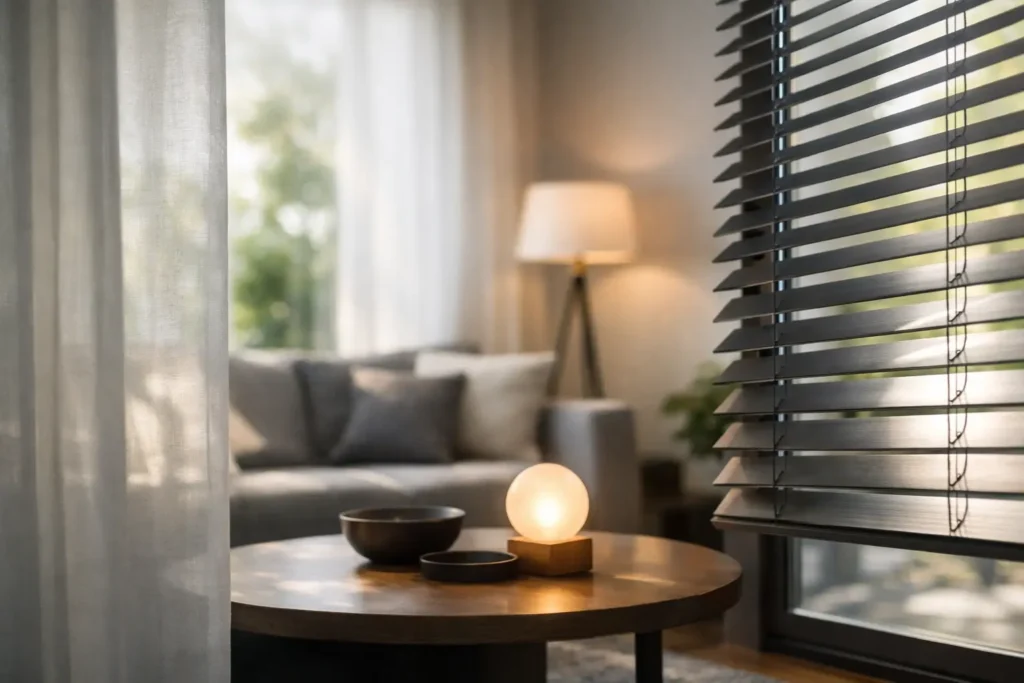
A bright room should feel inviting, not like a place where you have to squint at your laptop, move seats at lunch, or close your eyes while watching television. Knowing how to reduce room glare is less about blocking every ray of sun and more about shaping daylight so it works beautifully with the way you live, work, and relax.
Glare is especially common in Dubai homes and offices, where strong sunlight can stream through expansive windows for much of the day. The right window treatments bring the light under control while preserving privacy, comfort, views, and the polished atmosphere a well-finished space deserves.
Why Room Glare Happens
Glare occurs when direct sunlight, or sunlight reflected from nearby buildings, glass, polished flooring, water, or light-colored surfaces, is brighter than your eyes can comfortably adjust to. It often appears in rooms with wide windows, west-facing exposures, high-gloss finishes, pale furniture, or large television and computer screens.
The problem is not always the amount of daylight. A room can be naturally bright and still feel comfortable when the light is diffused. The issue is contrast: a sharp beam of sun across a dark screen, a brilliant reflection on a marble floor, or bright light sitting directly in your line of sight.
Before choosing a treatment, notice when glare appears and where it lands. Morning glare may call for a different solution than intense late-afternoon sun. A bedroom needs stronger control than a living area, while an office may need daylight without reflections on monitors. These details are what turn an attractive window covering into a genuinely effective one.
How to Reduce Room Glare With Layered Window Treatments
The most refined answer is often a layered one. Combining sheers with curtains, or pairing a blind with side drapery, lets you adjust the room throughout the day instead of relying on one fixed level of coverage.
Use Sheer Curtains to Soften Direct Sun
Sheer curtains are ideal when you want to maintain a light, open feel but remove the harshness of direct sun. Their translucent fabric filters incoming light and spreads it more evenly across the room. This can make a major difference in living rooms, reception areas, dining spaces, and hotel lounges where daylight is part of the design.
A sheer alone will not fully prevent glare from low, intense sunlight, particularly on west-facing windows. However, it provides a graceful daytime layer that reduces contrast without making the room feel closed off. Choose a fabric density and color that suit the exposure. White and very pale sheers look crisp, but a slightly warmer or denser weave may manage bright conditions more effectively.
Add Blackout or Dimout Curtains Where Control Matters Most
For bedrooms, media rooms, conference rooms, and spaces with strong afternoon exposure, blackout curtains offer the highest level of glare control. When professionally measured and fitted with adequate overlap, they minimize light gaps around the window and give you the option of near-total darkness.
Dimout curtains are a softer alternative. They significantly reduce sunlight and screen reflections while allowing a subtle glow to remain in the room. They work well in living rooms or offices where complete blackout would feel too heavy during the day.
The trade-off is simple: the more opaque the fabric, the more daylight and outside view you give up when it is closed. This is why pairing blackout or dimout curtains with sheers is so effective. You can filter light in the daytime, then close the heavier layer when the sun becomes disruptive.
Choose Roller Blinds for Clean, Precise Coverage
Roller blinds are a practical favorite for reducing glare on screens. They sit close to the window, offer a clean architectural look, and can be made in sunscreen, dimout, or blackout fabrics depending on the room.
Sunscreen roller blinds are particularly useful in offices, home workspaces, and living rooms. Their technical mesh fabric cuts glare and UV exposure while retaining a degree of outward visibility. Openness matters here: a more open weave preserves a clearer view but allows more light through, while a tighter weave improves glare reduction and privacy.
For a television wall or computer desk facing a window, a dimout or blackout roller blind may be the better choice. The professional advantage of a made-to-measure blind is coverage. A poorly sized blind leaves bright strips at the sides, which can be enough to create distracting reflections.
Consider Zebra Blinds for Flexible Daytime Adjustment
Zebra blinds alternate sheer and opaque horizontal bands, allowing you to align the fabric for filtered daylight, partial privacy, or fuller coverage. They are an elegant option for homeowners who want more control than a standard roller blind without adding the softness of full curtains.
They suit modern apartments, kitchens, bedrooms, and executive offices particularly well. Zebra blinds are not usually the best choice when true blackout is essential, since light can still pass around the edges and through the layered fabric design. But for everyday glare management with a sleek finish, they offer excellent flexibility.
Match the Treatment to the Room
A glare solution should fit the room’s purpose, not just the window’s size. In a home office, prioritize screen comfort and consistent daylight. Sunscreen roller blinds or layered sheers and dimout curtains can stop reflections without creating a dark work environment.
In a bedroom, sleep quality and privacy take priority. Blackout curtains, blackout roller blinds, or a combination of both can create a calm, enclosed setting when needed. If early sunlight is a concern, ensure the treatment extends beyond the window frame and is installed close enough to reduce side gaps.
Living rooms often need the most versatile approach. Sheer curtains can soften daytime brightness, while lined drapes provide privacy and glare control for movie nights or intense afternoon sun. The result feels decorative as well as functional.
For offices and commercial spaces, consider the position of desks and screens before finalizing the window treatment. A simple adjustment to workstation placement can reduce direct reflections, while motorized blinds can manage changing sunlight across larger glass elevations. Hospitality projects may require fabrics that balance guest comfort, visual consistency, fire-safety requirements, and durability.
Reduce Reflections Beyond the Windows
Window coverings are the main tool, but surrounding surfaces influence glare too. Glossy floors, glass tabletops, mirrored walls, polished stone, and bright white furniture can bounce sunlight into unexpected places. If glare persists after installing blinds or curtains, look at what the light is striking.
Matte finishes absorb more light than reflective surfaces. A textured rug, upholstered seating, or a less reflective desk finish can improve comfort around screens. Repositioning a television or monitor so it sits perpendicular to the window, rather than directly opposite it, is often a simple and effective correction.
Furniture placement also matters. A reading chair may look perfect beside a window but become unusable at certain hours. Shifting it slightly, then adding a sheer or adjustable blind, can preserve the layout without sacrificing comfort.
Make Glare Control Effortless With Motorization
The best glare-control solution is one you will actually use. Motorized curtains and blinds make this easier, especially on high windows, wide glass doors, or busy family and commercial spaces. With remote, wall-switch, timer, or smart-home controls, treatments can close when sunlight is strongest and open again when the room benefits from softer daylight.
Automation is particularly valuable when glare follows a predictable pattern. Schedule west-facing blinds to lower before the afternoon sun reaches your screens or seating area. In bedrooms, set blackout curtains to open gradually in the morning. For offices, automated blinds can help create more consistent light conditions during presentations and video calls.
Motorization adds convenience and a refined finish, but it should be planned around the fabric weight, window dimensions, power access, and desired controls. A professional consultation helps ensure the system feels quiet, reliable, and proportionate to the room.
Why Exact Measurement Makes a Visible Difference
Glare often enters through the gaps people overlook: the edge of a blind, the top of a curtain track, or an uncovered section beside a sliding door. Custom measurement accounts for window depth, frame style, handles, ceiling height, mounting location, and how the treatment will stack when open.
It also allows the fabric, lining, and hardware to be selected as one considered design. A premium curtain can look underwhelming if it is too short or too narrow. Likewise, a high-performing blackout blind will not deliver its full benefit if the installation leaves large light leaks around the sides.
Elegant Blinds & Curtains helps homeowners, offices, and hospitality spaces create a tailored balance of daylight, privacy, and visual comfort through custom-fitted curtains, blinds, and motorized solutions. A professional measurement is the clearest starting point when glare is affecting a space at specific times of day.
The goal is not to shut out the sun. It is to let your room feel bright when brightness is welcome, calm when focus is needed, and beautifully finished at every hour.