
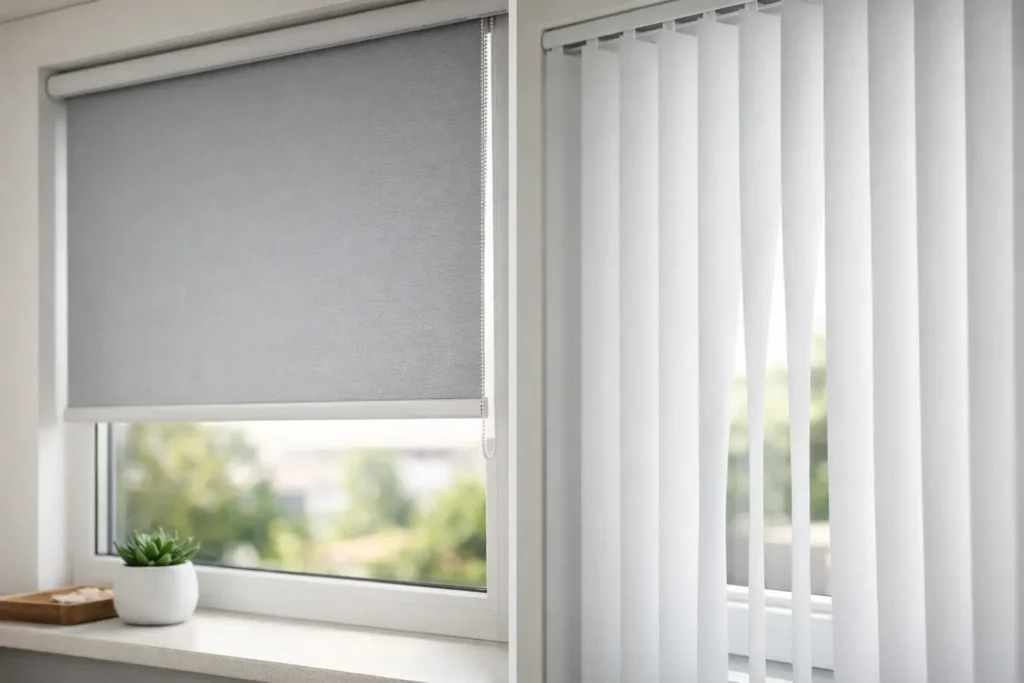
A wide glass door can make a room feel beautifully open until the afternoon sun turns the sofa into the hottest seat in the house. That is where the choice between roller blinds versus vertical blinds becomes more than a design decision. Both can improve privacy, control glare, and give a window a finished look, but they perform very differently depending on the size, direction, and purpose of the space.
For a Dubai apartment, villa, office, or hospitality setting, the best option is usually the one that suits the window first and the décor second. A custom measurement and professional fitting make the difference between a blind that simply covers glass and one that elevates the entire room.
Roller Blinds Versus Vertical Blinds: The Main Difference
Roller blinds use one continuous fabric panel that rolls neatly onto a tube at the top of the window. They move up and down, creating a clean, minimal look with very little visual distraction. Depending on the fabric selected, they can filter daylight, reduce glare, provide daytime privacy, or block light almost completely.
Vertical blinds are made from individual fabric, PVC, or aluminum slats that hang from a headrail. The slats can rotate to direct light and slide sideways to open. This side-to-side movement is their defining advantage, especially on wide windows, sliding doors, and floor-to-ceiling glazing.
Neither style is automatically better. Roller blinds are often favored for their streamlined appearance and broad fabric selection, while vertical blinds are valued for flexible light direction and practical coverage across larger openings.
When Roller Blinds Are the Better Choice
Roller blinds suit rooms where a calm, tailored finish matters. Their compact design sits close to the window and avoids the stacked fabric or slats that can make smaller rooms feel busy. They work especially well in bedrooms, kitchens, bathrooms, offices, and standard-sized living room windows.
A clean look for modern interiors
If your interior includes contemporary furniture, neutral walls, refined curtains, or minimal architectural lines, roller blinds tend to blend in effortlessly. The fabric becomes a subtle part of the window rather than a feature that competes with the rest of the room.
The range of materials is also a major benefit. Sunscreen roller fabrics allow outward visibility while helping reduce harsh glare. Light-filtering fabrics soften daylight without darkening the room. Blackout roller blinds are ideal when rest, movie viewing, or complete privacy is the priority. In bedrooms, a blackout roller blind can also be paired with decorative curtains for a more luxurious layered finish.
Simple operation and easy automation
Roller blinds are straightforward to operate by chain, spring mechanism, or motor. Motorized roller blinds are a particularly elegant option for high windows, hard-to-reach glazing, and smart homes. With the right automation setup, multiple blinds can be raised or lowered together to manage heat and sunlight throughout the day.
For offices, this can make meeting rooms more comfortable during presentations. For homes, it offers privacy at the touch of a button without interrupting the room’s design.
Points to consider
A roller blind generally offers light control in broad stages: fully raised, fully lowered, or somewhere in between. Although fabric choice makes a significant difference, it does not provide the same precise redirection of daylight as rotating vertical slats.
It may also be less convenient for a frequently used sliding door. Raising the blind to access the door is perfectly workable, but it is not as naturally suited to daily walk-through traffic as a vertical blind that opens to one side.
When Vertical Blinds Are the Better Choice
Vertical blinds were designed with wide openings in mind. They are a practical and polished solution for patio doors, balcony doors, office partitions, large picture windows, and expansive glass walls. When opened, the slats stack neatly to one or both sides, leaving a clearer route through the doorway.
Better control over changing sunlight
The ability to tilt each slat is where vertical blinds stand out. Rather than fully covering the glass, you can angle the slats to soften direct sun, retain a degree of privacy, and still bring natural light into the room. This is useful in living spaces that receive strong afternoon sun, as well as workspaces where screen glare changes throughout the day.
For large windows, this adjustable control can create a more comfortable atmosphere without making the room feel closed off. It is a functional choice that still offers a refined result when the blind is custom-fitted and made in a quality fabric.
Practical access for doors and commercial spaces
A vertical blind opens in the same direction as many sliding doors, making it a natural choice for balcony access. In offices and hospitality environments, it can also cover broad glass areas efficiently while allowing staff or guests to adjust light conditions as needed.
Vertical designs are available in fabrics and finishes that feel much more sophisticated than the basic options many people remember from older interiors. Textured neutrals, soft woven fabrics, and carefully coordinated colors can give the room a more considered, contemporary appearance.
Points to consider
Vertical blinds have more visible components than roller blinds, including individual slats, carriers, and a headrail. For some interiors, this added structure is useful and intentional. For others, especially compact or highly minimal rooms, it may feel visually heavier than a single roller fabric.
They also require slightly more attention during cleaning because each slat collects dust along its edge. A quality track and precise installation matter greatly here. Poor alignment can affect how smoothly the slats rotate and stack, while a properly fitted system should operate quietly and reliably.
How to Choose for Each Room
Start with the shape and use of the opening. Standard windows usually look best with roller blinds because the treatment follows the simple vertical movement of the window. Wide sliding doors and full-height glass often benefit from vertical blinds because they allow direct access without lifting the entire blind.
Then consider how you use light. Choose a roller blind when you want a consistent fabric finish, blackout capability, or a soft filtered glow. Choose vertical blinds when you want to fine-tune the angle of incoming sun during the day.
Privacy is another factor. Blackout roller blinds provide excellent privacy once lowered, making them highly suitable for bedrooms and rooms facing neighboring properties. Vertical blinds can offer flexible daytime privacy, although small gaps between slats may be visible depending on their angle and the viewing position.
For kitchens and bathrooms, moisture-resistant roller fabrics are often the more streamlined choice. For executive offices, meeting rooms, and broad reception glazing, vertical blinds can provide practical coverage and a professional finish. In a villa living room, either can work beautifully: roller blinds offer a quiet, modern foundation, while vertical blinds suit large doors that lead to terraces or gardens.
Style, Fabric, and Finish Matter as Much as the Blind Type
The right blind is not only about mechanism. Fabric openness, color, texture, mounting position, and coordination with curtains all shape the final result. A sunscreen roller blind in warm beige can soften a bright room without hiding the view. A charcoal blackout roller blind may bring drama and privacy to a media room. Vertical blinds in a textured off-white fabric can make a large glazed wall feel lighter and more welcoming.
Custom sizing is particularly important. Ready-made blinds may leave uneven gaps, sit awkwardly around handles, or fail to cover the window proportionately. Made-to-measure blinds allow the treatment to follow the exact dimensions of the opening, account for door movement, and sit at the right height for a clean finish.
At Elegant Blinds & Curtains, the selection process can include free measurement, fabric guidance, custom fabrication, and professional installation, so the final choice works as well in daily life as it does in the design plan.
Make the Decision With the Window in Front of You
Choose roller blinds when you want a compact, modern window treatment with excellent fabric options and easy motorization. Choose vertical blinds when you need adjustable light direction and convenient access across wide windows or sliding doors. For some homes and offices, the strongest result is a combination: roller blinds on standard windows and vertical blinds on large glazed openings.
Before committing, schedule a measurement rather than choosing from a photo alone. Seeing the light direction, window proportions, furniture layout, and access points in person turns a good-looking blind into a genuinely comfortable, elegant solution.