
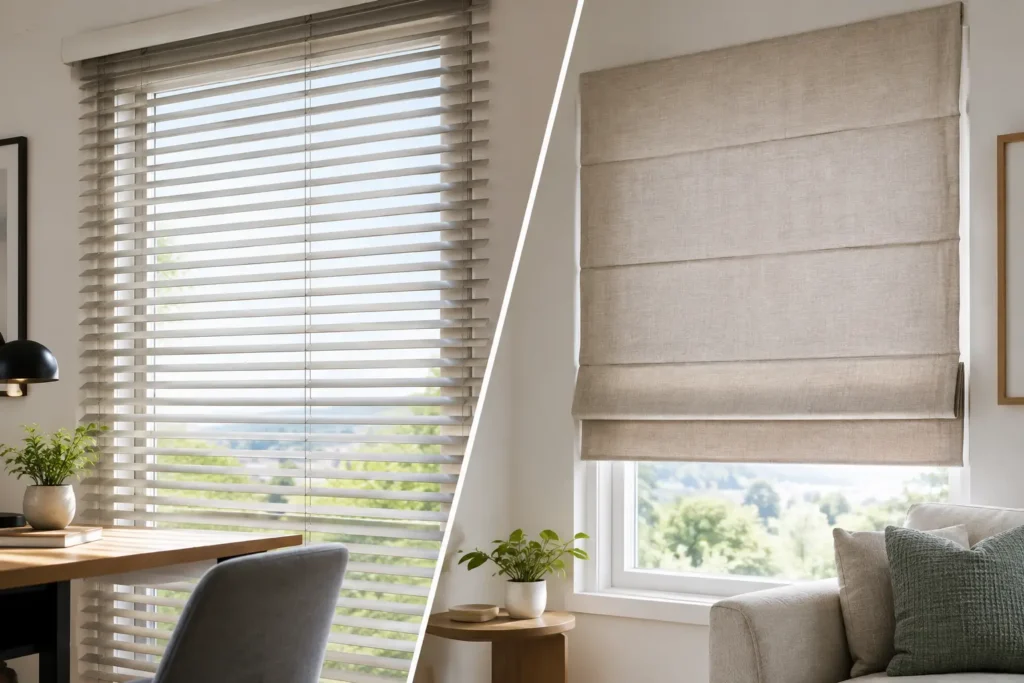
A window treatment can change the character of a room before you replace a single piece of furniture. In the choice of Venetian blinds vs Roman blinds, the deciding factor is rarely just color. One offers crisp lines and precise control; the other brings softness, texture, and a more tailored decorative finish.
For a sleek kitchen, a bright office, or a bathroom that needs an easy-clean solution, Venetian blinds often make immediate sense. For a bedroom, formal living room, boutique hotel suite, or any space that benefits from fabric warmth, Roman blinds can create a more layered, luxurious result. The right choice depends on how you use the room, how much sunlight it receives, and the atmosphere you want to create.
Venetian Blinds vs Roman Blinds: The Key Difference
Venetian blinds are made from horizontal slats, typically aluminum, wood, faux wood, or PVC. A tilt mechanism changes the angle of the slats, allowing you to filter daylight, direct glare away from screens, or close the blind for privacy. The blind can also be raised fully when you want an open view.
Roman blinds are fabric window coverings that lift into soft horizontal folds. Rather than adjusting individual slats, you raise or lower the whole blind to set the level of coverage. Their appeal lies in their refined, upholstered appearance: a Roman blind can look like a carefully chosen part of the room’s décor rather than simply a functional window covering.
This creates a straightforward distinction. Venetian blinds give you more control over the direction and amount of incoming light throughout the day. Roman blinds provide a softer visual statement and can deliver stronger coverage when lowered, especially when made with blackout or lined fabric.
Light Control and Privacy
Light behavior should be one of the first considerations, particularly in rooms with direct sun exposure. Venetian blinds are highly flexible because their slats can be tilted by small increments. You can allow daylight to enter while limiting glare, angle the slats upward for privacy without making the room feel closed off, or lift the blind completely for an uninterrupted view.
That precision is especially useful in home offices, kitchens, and commercial spaces. If a desk faces a sunlit window, adjusting Venetian slats can reduce glare on a monitor without plunging the room into darkness. In living areas, they can soften strong afternoon sun while retaining a light, airy feel.
Roman blinds operate differently. When partially lowered, they cover the upper or lower portion of the window depending on their position, but they do not offer the same fine-tuned light filtering as adjustable slats. Still, they can be an excellent choice where privacy and shading matter more than view-through control. A blackout-lined Roman blind is particularly effective in bedrooms, nurseries, and media rooms where darkness supports rest and comfort.
For street-facing windows, a Roman blind offers a clean, private barrier when fully lowered. Venetian blinds offer more daytime flexibility, but light can pass between slats depending on their angle. If privacy is your priority after dark, both styles should be properly measured and fitted to minimize gaps at the sides.
Style: Clean Structure or Fabric Softness?
Venetian blinds suit interiors that benefit from order, definition, and a contemporary edge. Aluminum finishes can feel modern and minimal, while wood or faux-wood slats add warmth without losing their structured appearance. They work beautifully with clean-lined furniture, stone surfaces, painted walls, and contemporary office interiors.
Roman blinds introduce visual softness. The fabric folds create depth at the window, which is valuable in rooms with hard finishes such as marble, glass, tile, or polished flooring. They also make it easier to introduce color, pattern, or texture. Linen-look fabric can feel relaxed and understated, while velvet, jacquard, or a subtle geometric weave can give a formal space a more considered finish.
The choice often comes down to whether the window should blend into a clean architectural scheme or become a decorative focal point. Venetian blinds tend to look neat and understated. Roman blinds can be quiet and elegant too, but they have more potential to express the personality of the room.
How each option works with curtains
Neither blind has to work alone. Roman blinds pair naturally with full-length curtains, creating a layered, hotel-inspired look that improves visual richness and helps with light control. A Roman blind can provide privacy during the day, while curtains frame the window and add extra blackout performance at night.
Venetian blinds can also be paired with curtains, especially in bedrooms and formal reception areas. However, the contrast between rigid slats and soft drapery should be intentional. This combination works best when the blind color is coordinated with the window frame, wall color, or curtain hardware.
Cleaning, Durability, and Everyday Use
Venetian blinds are generally easier to maintain in high-use or moisture-prone rooms. Most aluminum, PVC, and faux-wood slats can be dusted regularly and wiped with a lightly damp cloth. This makes them a practical option for kitchens, bathrooms, children’s rooms, and busy workspaces.
Wood Venetian blinds require a little more care, since excess moisture can affect natural materials. Faux wood offers a similar warm appearance with better resistance to humidity, making it a sensible alternative for humid environments.
Roman blinds need fabric-appropriate care. Light dusting with a vacuum upholstery attachment can help maintain them, while deeper cleaning should follow the fabric’s care requirements. In areas near cooking splashes, steam, or frequent moisture, fabric blinds may need more attention than slatted alternatives.
Durability also depends on the quality of the operating system and the accuracy of installation. A custom-fitted blind should raise, lower, and sit evenly without pulling to one side. Premium materials matter, but precise measurement and professional fixing are what give the final result its polished appearance and dependable daily performance.
Best Rooms for Venetian Blinds
Venetian blinds are often the more practical choice for kitchens, bathrooms, offices, and utility areas. Their adjustable slats manage glare effectively, while their wipe-clean surfaces are well suited to rooms where dust, humidity, or everyday activity is part of the picture.
They are also a strong option for contemporary apartments where a clean, minimal window treatment is preferred. White, black, metallic gray, natural wood, and faux-wood finishes can all be selected to complement cabinetry, flooring, and furniture.
In sunny Dubai homes and offices, Venetian blinds can be particularly useful on windows exposed to intense daylight. The ability to redirect sunlight rather than simply block it helps maintain comfort while preserving natural light.
Best Rooms for Roman Blinds
Roman blinds excel in bedrooms, living rooms, dining areas, nurseries, and hospitality settings where comfort and presentation carry equal weight. They are ideal for windows that need a more decorative finish but do not require constant slat adjustment throughout the day.
A lined Roman blind can make a bedroom feel calmer and more private. In a living room, a textured fabric can bring visual warmth to wide windows without the bulk of heavy drapery. For hotel rooms, tailored Roman blinds offer a polished look while allowing fabric and lining choices to match the desired level of light control.
If you love the softness of curtains but have limited space around the window, Roman blinds are an elegant middle ground. They provide the presence of fabric without requiring full panels at each side of the window.
Cost and Customization Considerations
There is no universal winner on price because material, window size, lining, hardware, automation, and installation all affect the final cost. Basic Venetian blinds may be more economical than fabric Roman blinds, but premium wood slats or custom motorized systems can raise the investment considerably.
Likewise, a simple unlined Roman blind can be more accessible than a fully lined blackout design in a luxury fabric. The advantage of made-to-measure window treatments is that you can prioritize what matters most: stronger blackout performance, a particular fabric, easy maintenance, motorized operation, or a specific finish that coordinates with the rest of the interior.
Automation can work with both styles. Motorized Venetian blinds are useful for hard-to-reach windows and busy offices, while motorized Roman blinds bring a refined, convenient touch to bedrooms and living rooms. For large homes, hospitality projects, or smart-home setups, automated controls can make daily light management far easier.
Make the Choice Around How You Live
Choose Venetian blinds when adjustable light control, easy cleaning, and a crisp contemporary look are at the top of your list. Choose Roman blinds when you want fabric texture, a more decorative finish, and the option of blackout comfort in spaces designed for rest or entertaining.
The best window treatment should look exceptional from across the room and work effortlessly when the sun is at its strongest. A professional measurement and design consultation can reveal details that are easy to overlook, from window depth and handle clearance to fabric lining and the best mounting position. Elegant Blinds & Curtains can help you compare both styles in your own space, then create a custom-fitted finish that feels right every time you open the room to the light.