
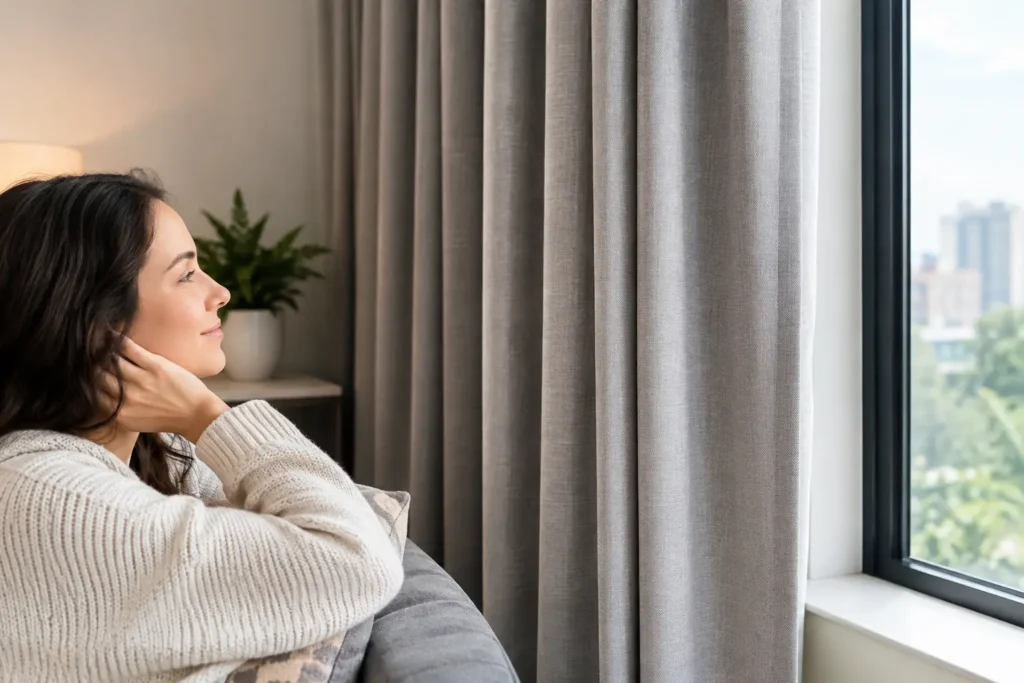
A bedroom can look beautifully finished yet still feel exposed when traffic, construction, hallway activity, or neighboring homes interrupt the quiet. So, can curtains block noise? They can reduce the amount of sound that enters and bounces around a room, but even premium curtains cannot make a window completely soundproof on their own.
The difference comes down to the curtain’s material, weight, fullness, coverage, and installation. A made-to-measure treatment that extends beyond the window frame will perform far better than a thin, ready-made panel hung close to the glass. For homeowners, offices, and hospitality spaces, the goal is usually not silence. It is a calmer, more comfortable room with less distracting noise and a more refined finish.
Can Curtains Block Noise From Outside?
Curtains work by absorbing a portion of sound energy instead of allowing it to reflect directly off hard surfaces such as glass, walls, and tile. This is especially useful for higher-frequency sounds, including voices, tire noise, and sharp city activity. Thick drapery can also soften echoes within the room, making conversations, television, and work calls feel more pleasant.
However, sound travels through every gap. If a window has poor seals, single-pane glass, an air-conditioning opening, or a lightweight wall around it, outside noise can still find its way indoors. Curtains are best viewed as one effective layer in an overall comfort strategy, not as a substitute for acoustic glazing or structural sound insulation.
For many apartments and villas, that extra layer makes a noticeable everyday difference. The room feels less live, less harsh, and more private. In a hotel room or executive office, those details contribute directly to the sense of quality guests and clients notice.
What Makes Curtains Better at Reducing Noise?
Not all curtains offer the same acoustic benefit. Decorative sheers provide softness and privacy during the day, but their light, open weave does little to reduce external sound. A heavier, closely woven fabric has more mass and a denser surface, allowing it to absorb and dampen more sound energy.
Fabric weight and density
Velvet, suede-like fabrics, dense polyester blends, and purpose-designed acoustic fabrics are often stronger choices for noise reduction than lightweight linen or voile. Blackout curtains can also help because they typically include a substantial backing or tightly woven construction. Their main function is light control, but their heavier build may offer useful sound-dampening benefits as well.
The best fabric is not always the heaviest one. A very thick curtain can change how a room looks and how easily the panels move. In warm, bright spaces, a custom design can balance acoustic performance with the drape, color, and texture that suit the interior.
Fullness creates more sound-absorbing surface
A flat curtain panel has limited ability to absorb sound. Full pleating creates folds, and those folds increase the fabric surface available to catch sound waves. For a premium appearance and better performance, curtains are commonly made at roughly two to two-and-a-half times the width of the window.
This is one reason custom tailoring matters. Panels that are too narrow may cover the glass, yet still look sparse and provide less acoustic value. Proper fullness gives curtains the rich, luxurious fall expected in a well-finished bedroom, living room, boardroom, or hotel suite.
Coverage and edge gaps matter
Sound does not only come through the center of the glass. It enters around the sides, top, and bottom of the window. A curtain should extend generously beyond the frame, ideally from near the ceiling to close to the floor. Wider coverage helps shield the window area and gives the treatment a more architectural, polished presence.
For the strongest result, choose a track or rod that allows the curtains to stack back fully while still extending past both sides of the window. Ceiling-mounted tracks are particularly effective in spaces where a sleek, custom look is desired. If light and sound leakage are concerns, a return at each side can bring the fabric closer to the wall.
Linings and layered treatments
A lining adds another barrier and can improve the curtain’s body, light control, and sound absorption. Blackout lining is popular in bedrooms, nurseries, media rooms, and hospitality settings because it supports a darker, more restful environment. Thermal linings may also add density while helping moderate heat transfer at the window.
Layering sheer curtains behind heavier drapes is another elegant option. The sheer layer maintains daytime privacy and a soft filtered glow, while the main curtain is ready to close when quiet, darkness, or complete privacy is needed. This approach gives a room a finished designer look without asking one fabric to do every job.
Where Noise-Reducing Curtains Make the Biggest Difference
Bedrooms are the most obvious place to start, particularly for homes facing busy roads, active communities, or shared parking areas. A full-height blackout curtain with a quality lining can make bedtime feel more protected and reduce the sudden brightness and sharp sound that interrupt sleep.
Living rooms also benefit, especially when they have large glass doors, high ceilings, tile floors, or minimal upholstered furniture. Curtains reduce the hard, echoing character of these spaces and make entertaining, watching television, and family time feel more relaxed.
In offices, sound-reducing curtains can help soften reverberation in meeting rooms and executive spaces. They will not prevent confidential conversations from traveling through walls, but they can improve speech comfort and reduce the distraction of exterior activity. For hotels, they support the quiet, cocooned atmosphere guests expect from a well-appointed room.
How to Choose Curtains for a Quieter Room
Start by identifying the sound you want to reduce. Constant road noise, occasional construction, internal echo, and voices from a corridor each behave differently. This will help determine whether curtains alone are likely to meet your expectations or whether window seals, glazing, rugs, upholstered furniture, or wall treatments should also be considered.
Then focus on a custom-fitted solution rather than selecting fabric by appearance alone. Exact measuring is essential. The curtain should be wide enough to cover the entire opening with generous overlap, long enough to minimize lower gaps, and supported by hardware that lets it close smoothly every day.
For rooms that need both convenience and comfort, motorized curtains are a sophisticated addition. They make it simple to close heavy, full-height panels at the touch of a button, on a schedule, or as part of a smart-home routine. In a bedroom, this can mean closing the drapes before sleep without leaving the bed. In a living room or office, it keeps large window treatments practical as well as elegant.
Set Realistic Expectations Before You Buy
The phrase “soundproof curtains” can be misleading. Even highly specialized curtains cannot block low-frequency bass, loud drilling, aircraft noise, or severe traffic sound as effectively as upgraded windows and professionally insulated walls. If the problem is intense, a combined solution is the wiser investment.
Still, the right curtains can noticeably improve daily comfort. They can reduce perceived noise, soften room acoustics, improve sleep conditions, control glare, and add privacy in one carefully designed treatment. That makes them a valuable choice for clients who want function without compromising on luxury.
At Elegant Blinds & Curtains, a professional consultation can help match fabric weight, lining, track placement, fullness, and automation to the needs of your room. From accurate measurement through custom fabrication and installation, each detail is considered so the finished curtains look as exceptional as they feel.
A quieter room often begins with the window, but the most satisfying result comes from choosing curtains that belong in the space: generously fitted, beautifully tailored, and designed for the way you live or work.