
Sheer curtains make a room feel lighter, softer, and more refined – until dust, cooking residue, or a faint yellow cast starts to show in the sunlight. Knowing how to clean sheer curtains properly protects their delicate weave, preserves their graceful drape, and helps your windows maintain the polished finish your interiors deserve.
Unlike heavy blackout curtains, sheers are usually made from fine polyester, voile, linen blends, cotton, or silk-look fabrics. They can snag, shrink, lose shape, or develop water marks if washed too aggressively. The right method depends on the fabric, its lining or trim, and the level of cleaning required.
Start With the Care Label and Fabric Type
Before taking the curtains down, check the care label. It is the most reliable guide to whether the fabric can be machine-washed, hand-washed, dry-cleaned, or should only be vacuumed. This small step can prevent a costly mistake, particularly with custom-made curtains that have weighted hems, decorative tape, embroidery, or layered headings.
Most synthetic voile and polyester sheer curtains can tolerate gentle washing. Natural linen and cotton blends may shrink or wrinkle more easily, while silk, delicate embroidery, and older fabrics often need specialist care. If your sheers are part of a layered window treatment, separate them from blackout panels before cleaning. Each fabric needs its own approach.
Take a quick look at the curtain hardware as well. Remove pins, hooks, rings, and tiebacks where possible. Metal pieces can rust, snag the fabric, or damage a washing machine drum.
How to Clean Sheer Curtains for Everyday Freshness
Sheer curtains do not always need a full wash. In many homes, routine dust removal keeps them looking fresh between deeper cleans and reduces the need for harsh treatments later.
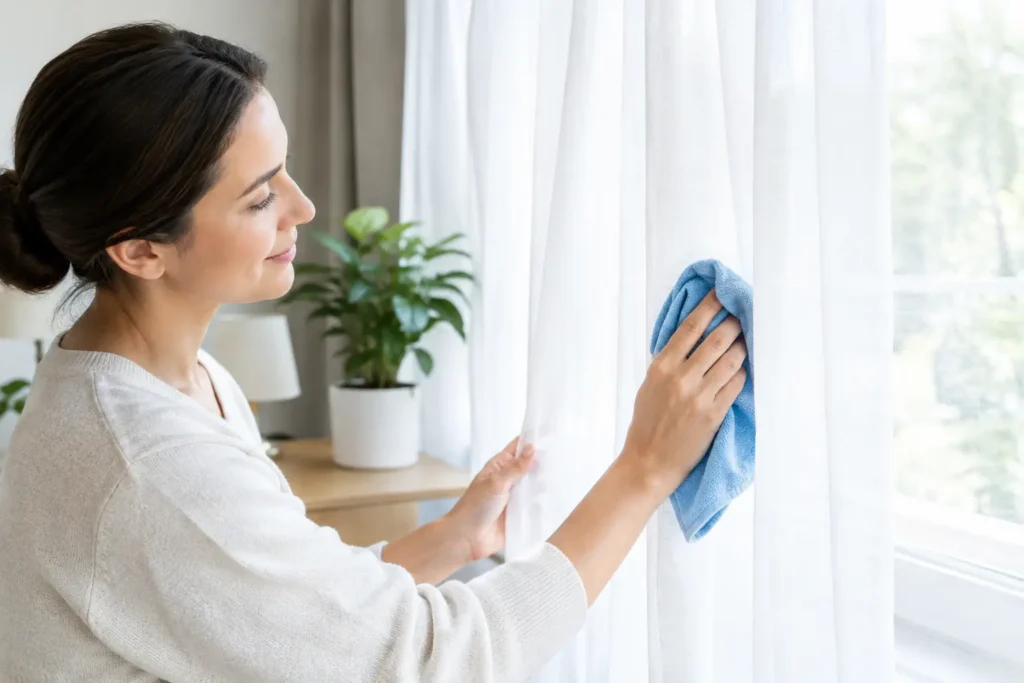
Use a vacuum with a soft brush attachment on the lowest suction setting. Work from top to bottom, supporting the fabric with your free hand so it is not pulled into the nozzle. A clean microfiber cloth or a feather-light duster can also work for a quick refresh, especially around the top headings where dust collects.
For homes near busy roads, construction areas, or sandy outdoor environments, dust can settle faster. A light vacuum every two to four weeks is a sensible habit. It also helps maintain better indoor air quality without disturbing the fabric’s finish.
If the curtains simply smell a little stale, open the windows on a dry, low-humidity day and allow fresh air to circulate. Avoid spraying strong air fresheners directly onto sheers. The residue can attract more dust and leave uneven spots on pale fabric.
Machine Washing Sheer Curtains Safely
Machine washing is often the most convenient choice for washable polyester or synthetic sheers, but only when done gently. Do not overload the machine. Curtains need room to move through the water, and crowding can cause deep creases or strain delicate seams.
Place each panel inside a large mesh laundry bag if available. This gives extra protection from snags and tangles. Select a delicate or hand-wash cycle, use cold water, and choose a mild liquid detergent formulated for delicate fabrics. Powder detergents may not dissolve fully and can leave visible residue in the weave.
Use only a small amount of detergent. More soap does not mean cleaner curtains. It can leave the fabric stiff, dull, or difficult to rinse. Skip bleach unless the care label specifically allows it. Chlorine bleach can weaken fibers and cause yellowing over time, especially on white polyester sheers.
A low-spin cycle is best. High spinning can twist the panels around themselves, stretch header tape, and set wrinkles that are difficult to remove. Once the cycle finishes, take the curtains out promptly rather than leaving them compressed in the machine.
A Note on White or Yellowed Sheers
White curtains can gradually appear gray or yellow because of dust, smoke, cooking oils, humidity, and sun exposure. Start with a gentle wash before reaching for whitening products. If the care label permits it, an oxygen-based fabric brightener designed for delicates can be a safer option than chlorine bleach.
Test any treatment on a hidden area first. Some creams, ivories, and warm-white fabrics are meant to have a soft tone, so trying to make them bright white may create uneven results. When the fabric is severely discolored or has delicate trims, professional curtain washing is the better choice.
Hand Washing Delicate Sheer Curtains
Hand washing gives you more control and is ideal for fine voile, lightweight linen blends, vintage curtains, or panels with delicate embellishments. Fill a clean bathtub or large basin with cool water and mix in a small amount of mild detergent before adding the curtains.
Submerge the fabric and move it gently through the water. Do not scrub, twist, or wring it. Let the curtains soak for around 10 to 15 minutes, then drain the soapy water and rinse with cool, clean water until no detergent remains.
To remove excess water, lift the panel carefully and let it drain. You can also lay it flat on a clean white towel, roll the towel loosely, and press gently. This absorbs water without stressing the fibers. Never wring sheers by hand, even if they feel heavy when wet.
Treat Stains Without Creating a Bigger Problem
Stains on sheer curtains need a restrained approach. A strong spot remover may remove one mark but leave a pale patch, a stiff area, or a noticeable ring around it. Treat stains as soon as possible, before they set into the fibers.
For a small food, drink, or fingerprint mark, blot it gently with a clean white cloth dampened with cool water. Then use a tiny amount of mild detergent diluted in water and dab from the outside of the stain toward the center. Blot again with clean water to remove soap.
Avoid rubbing. Sheer fabric is thin enough that friction can distort the yarns and make the treated area stand out. Oil, rust, mold, ink, or heavy smoke stains are more complicated. These stains are often best handled by a professional, especially when the curtains are custom-fitted or expensive to replace.
Drying Sheers So They Keep Their Shape
Air drying is the safest option for most sheer curtains. If possible, hang them back on their track or rod while they are still slightly damp. Their own weight helps release wrinkles, and they dry in their natural shape. Place towels beneath the windows if you are rehanging very wet panels indoors.
Keep the curtains away from direct, intense sunlight while drying. Strong sun can fade certain fabrics and may make damp fibers feel brittle. Avoid tumble drying unless the care label expressly permits it. Even then, use the lowest heat setting and remove the curtains while still slightly damp.
If wrinkles remain after drying, use a handheld steamer at a safe distance or set an iron to the lowest suitable temperature. Test a hidden section first, and place a thin pressing cloth between the iron and the curtain. Polyester can melt or develop a shine if exposed to excessive heat.
When Professional Curtain Cleaning Is Worth It
There are times when home cleaning is not the best value. Floor-to-ceiling sheers, motorized systems, double-layered curtains, and fabrics with fixed pleats can be difficult to remove, wash, and rehang without affecting the fit. The same applies to hotel curtains, heavily soiled panels, and delicate custom fabrics.
Professional cleaning is particularly useful when you want a complete refresh without the inconvenience of handling large panels yourself. An experienced team can assess the fabric, treat stains appropriately, and ensure the curtains are reinstalled with the fullness and alignment that make a window treatment look truly finished.
For homeowners and businesses in Dubai, Elegant Blinds & Curtains can provide curtain washing support alongside tailored window treatment services, helping you protect both the fabric and the overall look of the room.
Keep Sheer Curtains Beautiful Between Washes
Most sheer curtains benefit from a full clean every three to six months. Kitchens, smoking areas, homes with pets, and spaces exposed to frequent dust may need attention more often. Bedrooms and low-traffic rooms can often go longer with regular vacuuming.
The goal is not to wash sheers constantly. Overwashing can gradually wear the fibers and reduce the fabric’s softness. Instead, remove dust consistently, address stains promptly, and choose gentle cleaning methods that suit the material. A well-cared-for sheer curtain keeps filtering the light beautifully, giving your room the quiet luxury of a finish that still looks newly installed.