
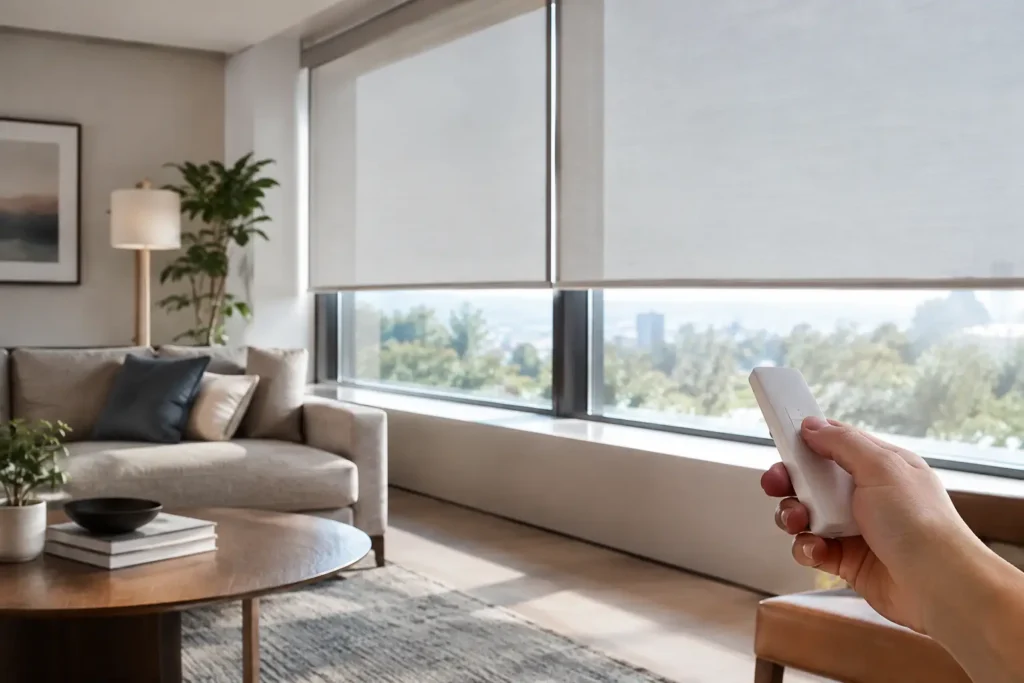
A living room can have beautiful furniture, premium finishes, and carefully chosen lighting, yet still feel incomplete when harsh sun cuts across the floor or privacy disappears after dark. Blind technology solves these everyday details with smarter control over light, visibility, comfort, and atmosphere. From discreet motorized roller blinds to layered automated curtains, the right system makes your windows work as beautifully as the rest of the room.
What Blind Technology Means for Your Windows
Blind technology is more than adding a remote control to a window covering. It is the thoughtful combination of custom-fitted blinds, motors, controls, and optional smart-home integration. The result is a window treatment that can open, close, tilt, or adjust at the touch of a button, on a schedule, or in response to your preferred routine.
For homeowners, this can mean blackout blinds lowering before bedtime, sheer curtains opening gently in the morning, or blinds closing during the hottest part of the afternoon. For offices and hospitality spaces, automation helps maintain a polished appearance while reducing glare on screens, improving guest comfort, and giving staff one less manual task to manage.
The technology should always support the design rather than distract from it. A motor can be concealed within a tailored track or blind system, allowing the fabric, color, texture, and precise fit to remain the visual focus. This matters in premium interiors, where even small finishing details shape the overall impression.
Why Motorized Blinds Are Worth Considering
Manual blinds remain a practical choice for many rooms, particularly smaller windows that are easy to reach. But motorization becomes especially valuable when windows are tall, wide, grouped together, or positioned behind furniture. Instead of pulling individual cords or chains, you can control the entire setting with a wall switch, handheld remote, or compatible smart-home system.
The everyday benefits are immediate. Motorized blinds offer accurate light control without the uneven look that can come from adjusting several blinds by hand. They also make it easier to preserve privacy at the right moment, whether you are relaxing in a villa living room, hosting guests, or managing a conference room with full-height glazing.
For families, cordless motorized systems can also create a cleaner, more considered finish around the window. For bedrooms, a scheduled blackout setup supports a calmer sleep environment. In spaces that receive strong sunlight, closing blinds before peak exposure can help reduce heat gain and protect furnishings from prolonged direct light.
There are trade-offs to consider. Motorized systems have a higher initial investment than standard manual blinds, and the best power option depends on the property. Battery-powered blinds can be a smart choice for finished homes where wiring would be disruptive. Hardwired systems are often ideal for new builds, renovations, large installations, and frequent daily use. A professional consultation helps determine which approach suits both the room and the project budget.
Choosing Blind Technology by Room
No single blind system is right for every window. The best choice depends on how the room is used, the level of privacy required, the amount of direct sunlight, and the style you want to achieve.
Bedrooms: Darkness, Privacy, and Easy Routines
Bedrooms benefit from blackout roller blinds, blackout curtains, or a layered system that pairs sheer curtains with blackout lining. With motorized operation, the room can shift from bright and airy to private and dark without interrupting your evening routine.
For a refined finish, consider motorized curtains over a blackout blind. The blind handles practical light control, while the curtains add softness, scale, and a luxurious tailored look. This combination works particularly well for large bedroom windows and sliding doors.
Living Rooms: Flexible Light Without Losing the View
Living areas often need flexibility rather than complete darkness. Zebra blinds provide adjustable bands that filter light while maintaining a modern profile. Roller blinds in sunscreen fabrics can soften glare and help preserve an outward view during the day, depending on the fabric openness and external lighting conditions.
For more decorative interiors, sheer curtains on a motorized track create movement and soften daylight beautifully. Add lined curtains when evening privacy or sun blocking is needed. The layers give you more control than any one treatment alone.
Kitchens and Bathrooms: Practical Materials Matter
Moisture, splashes, and frequent cleaning make material selection especially important in kitchens and bathrooms. Aluminum Venetian blinds, PVC-friendly options, or moisture-resistant roller blinds are often more suitable than delicate fabrics. Motorization can still work well, but the product must be selected with the environment in mind.
In a kitchen, easy-wipe surfaces and compact designs usually matter more than heavy drapery. In a bathroom, privacy should come first, followed by materials that can handle humidity without losing their shape or finish.
Offices and Hospitality Spaces: Consistency at Scale
In offices, blind technology can help control screen glare, manage daylight, and give meeting rooms a more professional appearance. Automating several blinds together is useful for presentation spaces, open-plan offices, and boardrooms with large glass walls.
Hotels, serviced apartments, and guest rooms require treatments that feel elegant while standing up to daily use. Motorized blackout curtains and blinds can elevate the guest experience, particularly when combined with carefully selected tracks, durable fabrics, and exact installation. For commercial projects, reliability, fabric performance, and ease of operation deserve as much attention as the visual design.
Smart Controls: Keep Them Simple and Useful
Smart blind technology can be controlled in several ways: remotes, wall-mounted switches, mobile apps, voice assistants, and timed schedules. The best setup is not necessarily the one with the most features. It is the one your household, staff, or guests will actually use comfortably.
A remote is straightforward and dependable for a single room. Wall switches offer a familiar built-in solution and are useful near entry points or bedside tables. App and voice controls add convenience for connected homes, especially when users want to operate blinds while away or coordinate them with lighting and air conditioning routines.
Schedules are often the most valuable automation feature. You might program bedroom blinds to rise at a preferred morning time, living room shades to close before intense afternoon sun, or office blinds to adjust before a daily meeting. Still, automated schedules should allow easy manual override. Needs change with the weather, the season, and how the space is being used.
Before choosing a smart system, confirm compatibility with your existing home automation platform if you have one. It is better to plan integration at the beginning than to assume every motor, app, and voice assistant will communicate perfectly later.
The Details That Make Automation Look Premium
Technology performs best when the underlying window treatment is accurately designed and installed. Poorly measured blinds can leave light gaps, sit unevenly, or fail to cover the window properly. A beautiful motor cannot compensate for a track that is undersized, fabric that is unsuitable, or brackets fixed in the wrong position.
Custom measurement is especially important for recessed windows, curved bays, extra-wide openings, ceiling-mounted tracks, and windows with handles or unusual frames. The installer must consider clearance, stack-back space for curtains, power access, mounting surfaces, and how the covering will move once furniture is in place.
Fabric selection matters just as much. A translucent fabric may look light and elegant but will not provide the same nighttime privacy as a lined curtain or blackout blind. A sunscreen roller blind can reduce glare, but the degree of visibility depends on the weave, openness factor, and lighting outside versus inside. Clear expectations create better results than choosing by color alone.
Elegant Blinds & Curtains approaches these decisions as part of a complete interior solution, from free measurement and product selection to custom tailoring and professional fixing. This end-to-end service is particularly useful when several rooms need different treatments but should still feel connected by one design direction.
Caring for Motorized Blinds and Curtains
Motorized window treatments are designed for convenience, but they still benefit from basic care. Dust blinds regularly with a soft cloth, feather duster, or suitable vacuum attachment. Follow the fabric-specific cleaning guidance for curtains, especially for delicate sheers, lined panels, and blackout materials.
Avoid pulling a motorized blind or curtain by hand when the motor is intended to operate it. If movement becomes uneven, noisy, or slow, arrange an inspection rather than forcing the mechanism. Battery-powered systems should also be checked periodically so the blinds continue operating when you need them.
A well-planned automated window treatment does not need to feel complicated. Choose the control level that fits your lifestyle, invest in materials suited to the room, and insist on precise measurement. The most elegant blind technology is the kind you barely notice – until the room becomes more comfortable, private, and perfectly lit at exactly the right time.