
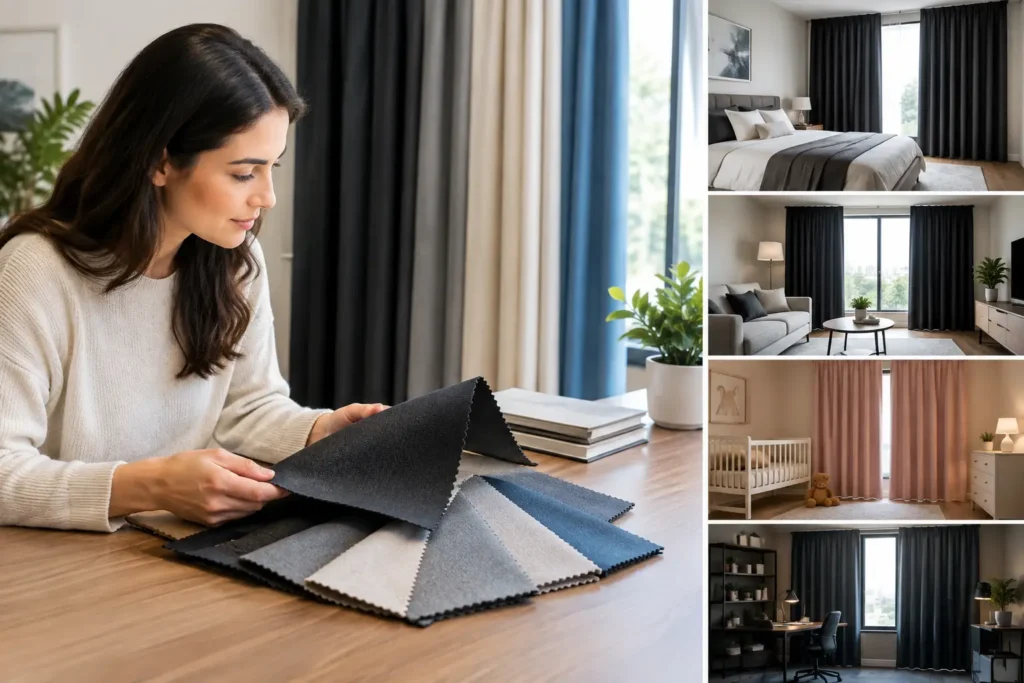
A bedroom can have beautiful furniture, a calming color palette, and a premium mattress, yet still feel uncomfortable at sunrise if light slips around the windows. That is why knowing how to choose blackout curtains is about more than selecting a dark fabric. The right curtains should control light, protect privacy, suit the room’s design, and fit with precision for a polished finish.
For villas, apartments, offices, and hospitality spaces, blackout curtains can bring a noticeable upgrade in comfort. They soften the room visually while helping create a more private, restful, and carefully finished environment.
Start With the Room’s Purpose
The best blackout curtain is not always the heaviest or darkest option. It is the one that performs well for the way a room is used.
In bedrooms, the priority is usually sleep quality and privacy. A true blackout fabric or a curtain with blackout lining helps reduce early daylight, street lighting, and glare from nearby buildings. This is especially valuable for nurseries, children’s bedrooms, shift workers, and anyone who prefers a darker sleeping environment.
Living rooms often need a more flexible solution. You may want privacy and heat control during the day without making the space feel closed off. Layering blackout curtains with sheer curtains works beautifully here. The sheers soften harsh daylight and preserve a light, elegant mood, while the blackout layer can be drawn in the evening for privacy or movie viewing.
For offices, meeting rooms, and media areas, blackout curtains can reduce screen glare and create a more focused setting. In hotels and guest rooms, they are a practical expectation as well as a luxury detail. Guests appreciate the ability to rest on their own schedule, regardless of the light outside.
Choose True Blackout or Room-Darkening Fabric
The terms blackout and room-darkening are often used interchangeably, but their performance can be very different.
Room-darkening curtains reduce a substantial amount of light but may still allow a glow through the fabric. They are a good choice for spaces where ambiance matters as much as light control, such as lounges, dining areas, or stylish offices.
True blackout curtains are designed to block the majority of incoming light. Many use a dense woven construction, a coated backing, or a separate blackout lining. They are the stronger option for bedrooms, home theaters, nursery rooms, and hospitality settings where darkness is the goal.
Do not judge performance by color alone. A navy, charcoal, or black curtain can still let light through if its fabric is thin or unlined. Likewise, a cream or taupe curtain with quality blackout lining can deliver excellent darkness while keeping the room light and refined during the day.
Consider the Fabric’s Look and Feel
Blackout performance should not come at the expense of design. Fabric changes how a room feels, especially across large windows.
Velvet creates a rich, luxurious look and naturally adds weight and softness. It suits formal living rooms, master bedrooms, and boutique-style hospitality interiors. Linen-look fabrics offer a relaxed, contemporary appearance, while textured weaves can add dimension to neutral spaces. Smooth polyester blends are often a practical choice for easy maintenance and consistent drape.
If you are furnishing a sunny home in the UAE, ask about fabrics that help manage glare and heat while maintaining a tailored appearance. The right material can make a room feel more comfortable without making it look overly heavy.
Measure for Coverage, Not Just Window Size
Even premium blackout fabric will underperform if the curtains are too narrow, too short, or fitted too close to the window opening. Light commonly enters through the top and sides, which is why precise measuring matters.
For fuller coverage, the curtain track or rod should extend beyond both sides of the window. This allows the panels to stack away from the glass when open and overlap the window area when closed. Mounting the track higher above the window also reduces light gaps at the top and makes ceilings appear taller.
Curtain width is equally important. A flat panel may cover the glass, but it will not create the fullness associated with a premium installation. As a general design principle, finished curtains need enough fabric to maintain soft, even folds when closed. The exact fullness depends on the fabric, heading style, and track system.
Floor-length curtains are usually the most elegant option for bedrooms and living spaces. They can sit just above the floor for a clean modern look, lightly touch the floor for softness, or create a small break for a more classic feel. In kitchens, bathrooms, or areas near furniture, a shorter custom style may be more practical.
Reduce Light Gaps With the Right Hardware
The track and installation method have a major effect on blackout results. Ceiling-mounted tracks are excellent for creating a sleek, hotel-inspired finish and minimizing top gaps. Wall-mounted rods can look equally attractive, but they need enough projection to clear handles, trims, and window frames.
For the strongest light control, consider a wraparound track, return panels at the sides, or a recessed ceiling pocket where the interior design allows it. These details are particularly useful in bedrooms and media rooms. A professional measurement appointment can identify obstacles that are easy to miss, including air-conditioning vents, cornices, window handles, or uneven ceiling lines.
Select a Heading Style That Matches Your Interior
The heading is the upper section that connects the curtain to the track or rod. It influences how the curtains hang, stack, and complement the room.
Wave curtains are a popular choice for modern apartments, villas, and commercial spaces because they create clean, continuous folds. They look especially polished on wide windows and sliding doors. Pinch pleat curtains offer a more formal, tailored appearance and work well in classic or luxury interiors. Eyelet curtains are simple and accessible, though they may leave more light at the top than a track-based system.
If blackout performance is your priority, a ceiling-mounted track with wave or pleated curtains is often more effective than decorative eyelets. The best choice still depends on the room’s style, ceiling height, and the level of darkness you expect.
Think About Privacy, Temperature, and Noise
Blackout curtains are chosen for darkness, but their value reaches further. Dense fabrics and quality linings improve privacy, particularly in apartments facing nearby homes or busy streets. They can also help reduce the intensity of solar heat at the window and add a layer of insulation near the glass.
They are not a substitute for dedicated acoustic treatment, but heavier curtains may soften echoes and reduce some outside noise. For rooms near traffic, construction, or active common areas, ask about sound-reducing curtain options rather than assuming every blackout fabric will perform the same way.
The trade-off is weight. Heavier curtains need reliable tracks, secure brackets, and professional installation. This is one area where a custom solution protects both the appearance and long-term operation of the window treatment.
Decide Whether Motorization Is Worth It
Motorized blackout curtains add a refined level of convenience, especially on tall windows, wide glass doors, and hard-to-reach installations. With a remote, wall switch, app, or compatible smart-home system, you can close the curtains at bedtime, open them gently in the morning, or set a schedule around your daily routine.
For hospitality and office projects, automation can also create consistency across multiple rooms. In homes, it is particularly useful when curtains are used every day or installed in layered combinations with sheers.
Motorization is an investment, so it is most worthwhile where convenience, accessibility, and visual impact matter. A well-designed manual track remains an excellent option for many rooms. What matters is selecting hardware that suits the curtain weight and gives you smooth, dependable movement.
Coordinate Blackout Curtains With the Rest of the Room
Blackout curtains should feel intentional, not like an afterthought. Choose a color that relates to the upholstery, rug, wall finish, or bedding rather than matching every item exactly. Warm neutrals create a quiet, sophisticated effect, while deeper shades can frame large windows and bring definition to a spacious room.
If you love a lighter interior, use a pale fabric with blackout lining instead of defaulting to dark panels. If the room already has patterned wallpaper or statement furniture, a textured solid curtain may provide balance. For a simpler space, subtle pattern or contrast trim can add character without overwhelming the window.
A professional consultation makes these decisions easier because you can compare fabric samples against the actual light, finishes, and proportions of your room. Elegant Blinds & Curtains can measure, tailor, and install a custom blackout solution that looks considered from every angle.
The most successful blackout curtains do not simply block the light. They make the room feel calmer at night, more private when needed, and more complete every hour of the day. Start with how you want the space to feel, then let fabric, fit, and expert installation bring that vision to life.