
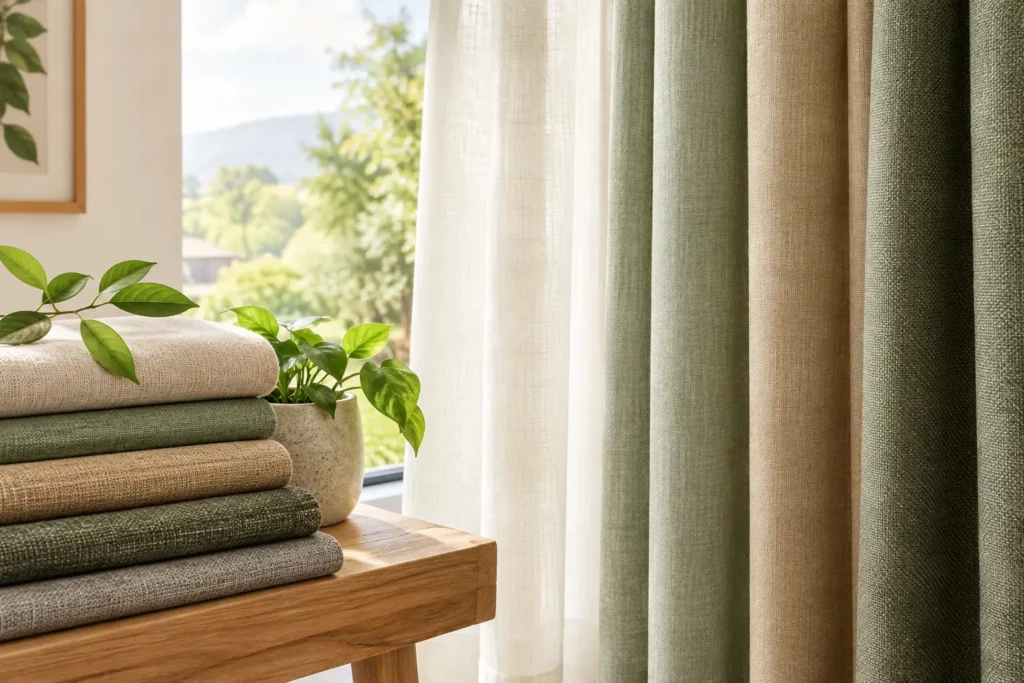
Curtains are no longer chosen for color alone. The strongest sustainable curtain fabric trends pair refined texture with thoughtful sourcing, lower-impact fibers, and the kind of tailored construction that keeps a window treatment looking beautiful for years. For homeowners, offices, and hospitality spaces, this means making a more considered choice without giving up softness, privacy, light control, or a luxurious finish.
In a climate where sunlight, heat, and dust can place real demands on interiors, sustainability is not simply about selecting a natural-looking fabric. It is about choosing the right fabric for the room, using the right lining and track system, and having it professionally measured and made to avoid wasteful replacements later.
Sustainable Curtain Fabric Trends Shaping Interiors
The most appealing sustainable curtain fabrics are understated rather than overly rustic. They bring depth, movement, and a tactile quality to a room, while working naturally with contemporary villas, apartments, offices, and hotels.
Natural fibers with visible character
Linen remains a leading choice for elegant, sustainability-minded interiors. Its relaxed weave, gentle irregularity, and soft drape give living rooms and bedrooms a calm, high-end appearance. Modern linen-look blends are also popular because they offer a similar visual effect with greater crease resistance and easier everyday care.
The practical choice depends on the room. Pure linen can look exceptional in a formal lounge or low-traffic bedroom, but it may need a lining to protect it from strong sunlight and help it hold its shape. A linen blend is often a smarter solution for large windows, busy family spaces, and commercial interiors where a consistently neat finish matters.
Organic cotton and cotton-rich fabrics are also gaining attention. They feel familiar, soft, and versatile, making them well suited to bedrooms, children’s rooms, and layered curtain designs. For a more tailored look, choose a tightly woven cotton blend with a quality lining rather than an unlined lightweight fabric that may fade or lose structure quickly.
Recycled fibers with a polished finish
Recycled polyester is changing expectations around synthetic curtain fabrics. Earlier versions could feel flat or overly shiny, while premium contemporary options can offer a convincing woven texture, a fuller drape, and excellent color consistency. This makes them especially useful for blackout curtains, wide windows, hotel rooms, and spaces that need reliable performance.
A recycled fabric is not automatically the best fit in every application. It should still be assessed for weight, softness, light filtering, washability, and suitability for the intended track or motorized system. The advantage is that it can provide durability and practical maintenance while reducing reliance on virgin synthetic materials.
Cellulosic fabrics for softness and flow
Fabrics made from responsibly managed wood-based fibers, including lyocell and similar regenerated cellulosic materials, are increasingly appearing in premium drapery collections. Their appeal is their fluid drape and smooth touch. They can create the soft, hotel-inspired folds many clients want without relying only on conventional polyester sheers.
These fabrics work particularly well in layered treatments. A translucent sheer can soften Dubai’s intense daylight during the day, while a lined decorative curtain adds privacy and warmth in the evening. The finished look feels generous and luxurious, but the layers each have a clear purpose.
Texture Is Replacing Excess Pattern
One of the clearest design shifts is toward texture-led fabrics. Bouclé-inspired weaves, subtle slubs, basket weaves, and fine crosshatch textures create visual interest without making a room feel busy. This is an elegant response to the all-white sheer curtain look that has dominated many interiors.
Warm neutrals remain popular, but the palette is becoming more nuanced. Think oat, sand, mushroom, soft olive, clay, tobacco, and smoky blue rather than plain beige alone. These colors work beautifully with wood, stone, brushed metal, and natural upholstery, and they make a room feel finished without competing with its furniture.
For offices and hospitality projects, textured fabrics also have a practical benefit: they can disguise minor marks and everyday dust better than very pale, ultra-smooth materials. That said, a fabric’s performance should never be judged by appearance alone. Sample testing under the actual room lighting is always worthwhile.
Better Linings Make Curtains Last Longer
A curtain’s sustainability is often decided behind the face fabric. A well-selected lining can protect decorative fabric from UV exposure, improve drape, increase privacy, and support better temperature control. It can also extend the useful life of curtains that might otherwise fade or deteriorate too quickly near bright windows.
For bedrooms, a blackout lining remains a valuable choice when rest and privacy are priorities. In living rooms, a dimout lining may offer a softer balance, reducing glare while allowing a little daylight to remain. The right option depends on the direction of the window, the amount of natural light, and whether the room is used mostly during the day or at night.
Thermal linings are also becoming more relevant as clients look for interiors that feel more comfortable throughout the year. Curtains will not replace proper glazing or air-conditioning planning, but a full, professionally fitted treatment can help reduce direct solar gain and improve the sense of insulation around large glass areas.
Made-to-Measure Is a Sustainability Choice
A trend has value only if it lasts beyond a season. Custom-made curtains help reduce unnecessary fabric use because widths, drops, heading style, and fullness are planned for the actual window rather than guessed. They also provide a more elegant result: hems sit correctly, panels stack neatly, and the fabric has enough fullness to look intentional.
This matters especially for floor-to-ceiling windows, bay windows, and large sliding doors. Ready-made curtains can leave awkward gaps, drag on the floor, or fall short of the ceiling line. Those details affect light control, privacy, and the overall quality of the room.
At Elegant Blinds & Curtains, the design process begins with understanding how the room is used. A family bedroom may need soft sheers with true blackout curtains. A formal majlis may call for fuller drapery, richer texture, and discreet motorization. A hotel project may need fabrics selected for durability, maintenance needs, and required safety specifications. The best sustainable choice is the one that performs properly in its setting for a long time.
Smart Curtain Systems Support Everyday Efficiency
Motorized curtains are becoming part of the conversation around responsible interiors because they make good habits easier to maintain. Timed opening and closing can help manage daylight, privacy, and heat exposure, particularly on large windows or in rooms that are empty during working hours.
Automation is most useful when it solves a genuine daily need. It is ideal for high ceilings, heavy drapes, wide glazing, and smart-home routines. For a small guest room used occasionally, a manual track may be the more sensible and cost-effective choice. Quality installation remains essential either way, since a smooth-running track reduces strain on the fabric and keeps curtains looking aligned.
How to Choose a Fabric With Confidence
Start with the role your curtains must play. If privacy is the priority, focus on fabric density and lining. If glare and heat are concerns, consider layered treatments and a lining designed for stronger light control. If visual softness matters most, examine the fabric’s drape and how it gathers at the heading.
Then ask about composition, care requirements, and expected wear. A beautiful natural fiber may suit a low-traffic room perfectly, while a recycled performance fabric could be the better long-term choice for an office, rental property, or hospitality environment. Request large samples where possible and view them against your wall color, flooring, and daylight before confirming.
Finally, do not overlook maintenance. Regular gentle vacuuming, prompt attention to stains, and professional curtain cleaning when needed can preserve the appearance of premium fabrics and delay replacement. Sustainable design is often less about chasing a label and more about selecting well, fitting precisely, and caring for what you own.
A thoughtfully chosen curtain fabric can bring softness to the architecture, control the light with greater comfort, and make a room feel distinctly yours. Book a professional measurement and fabric consultation to turn these sustainable ideas into a finish that looks refined today and continues to serve your space beautifully over time.