
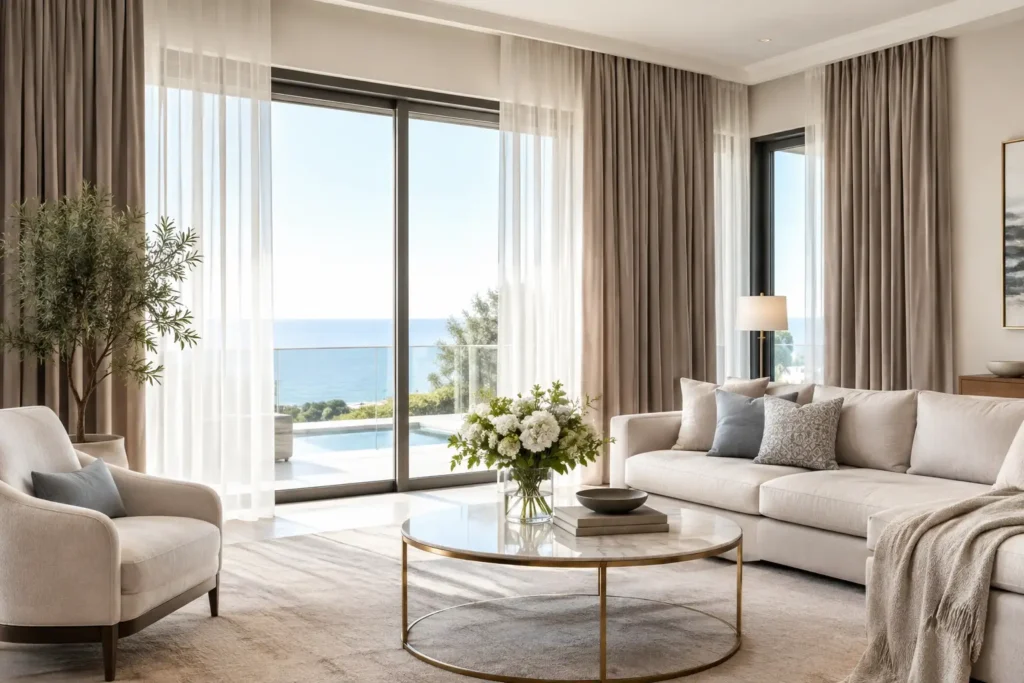
A villa curtain project is not simply a finishing touch. In a home with high ceilings, wide glazing, feature walls, and multiple living zones, curtains shape how each room feels from morning to night. The right fabric softens architectural lines, controls the intense daylight common in UAE homes, protects interiors, and gives every space a more considered, luxurious finish.
For villa owners, the most successful result comes from treating window coverings as part of the interior design plan rather than a last-minute purchase. Fabric selection, track placement, fullness, lining, and automation all need to work together. A well-planned installation looks effortless because every technical detail has already been resolved.
Start Your Villa Curtain Project Room by Room
A villa rarely needs one curtain style repeated everywhere. Bedrooms require privacy and restful darkness, formal living rooms may need dramatic height and elegant daylight filtering, while kitchens and bathrooms need materials that are practical around moisture and daily use. Designing each room for its purpose creates a home that looks coordinated without feeling repetitive.
In a main living room, full-height sheer curtains can make large windows appear even more generous while diffusing hard sunlight into a softer glow. Pairing them with lined drapes gives you flexibility for evenings, privacy, and media viewing. For a double-height space, custom tracks and accurately calculated fabric drops are essential. Curtains that stop too high or hang too short can make even an expensive room look unfinished.
Bedrooms benefit from a layered approach. Sheers maintain daytime privacy, while blackout curtains help create a darker, calmer environment for sleep. This is especially valuable for children’s rooms, master suites, and any bedroom facing bright outdoor lighting. Blackout does not have to mean heavy or plain – premium lined fabrics can provide excellent light control while still fitting a modern, elegant color scheme.
For studies, family lounges, and entertainment rooms, consider how glare affects screens. A fabric that looks beautiful in a sample may not provide enough light control once installed across a wall of glass. Roller blinds or blackout drapes can be integrated behind decorative curtain panels for a refined appearance with dependable performance.
Choose Fabrics for Light, Privacy, and Presence
Fabric is where a curtain design becomes personal. Neutral linens, textured weaves, velvets, and soft dim-out fabrics each create a different atmosphere, and the best option depends on the room’s light exposure, furniture, and intended use.
Sheer curtains are ideal when you want daylight without feeling exposed. They soften the view, reduce harsh brightness, and add movement to a room. In villas with gardens, pools, or attractive views, a sheer can frame the outlook without blocking it. White and warm ivory remain timeless choices, but muted taupe, sand, greige, and soft gray can bring more depth to contemporary interiors.
For main drapes, consider how the fabric will look at scale. A small swatch can appear subtle, yet the same texture across six meters of window may become a major design feature. Solid colors are versatile and polished, while gentle patterns can add character to a quieter space. If the room already has statement wallpaper, patterned rugs, or bold upholstery, a textured plain fabric is often the more balanced choice.
Lining is equally important. A quality lining improves drape, adds body, protects face fabric from sun exposure, and enhances privacy. Blackout lining is the practical choice for bedrooms and cinema rooms. In formal areas, standard lining or dim-out lining may be preferable when you want a softer fall and some natural daylight.
Precision Measurement Makes the Difference
Luxury curtains rely on proportion. The track width, mounting height, stack-back allowance, and fabric fullness must be measured carefully before tailoring begins. This is why a professional site visit is more than a convenience – it prevents expensive visual and functional mistakes.
Mounting curtains close to the ceiling usually makes a villa room feel taller and more polished. Ceiling-mounted tracks can also be concealed in a recessed pocket, creating a clean, hotel-inspired finish. Where a ceiling pocket is not possible, a carefully selected decorative rod or slim track can still complement the room.
Track width should extend beyond the window frame whenever space allows. This lets the curtains stack away from the glass when open, bringing more daylight into the room and making the window look larger. It also improves privacy when the drapes are closed by reducing gaps at the sides.
Fullness is another detail that should never be guessed. Too little fabric creates a flat, budget appearance; too much can feel bulky and may not stack neatly. The appropriate fullness depends on the fabric weight, pleat style, and track system. Wave curtains create smooth, contemporary folds, while pinch pleats bring a more formal and tailored look. Both can work beautifully in a villa when fitted with the correct hardware.
Add Motorized Curtains Where Convenience Matters
Motorized curtains are a natural choice for large villa windows, double-height spaces, and hard-to-reach tracks. With a remote, wall switch, or smart-home integration, you can open and close curtains without handling heavy fabric panels each day. The result feels elegant, but it also solves a practical issue: curtains are more likely to be used consistently when operation is effortless.
Automation is particularly useful in master bedrooms, living rooms with multiple windows, and spaces exposed to direct afternoon sun. Programmed schedules can close curtains during the hottest hours to support comfort and reduce glare, then open them at a preferred time for natural morning light.
Not every window needs a motor. Manual curtains remain an excellent option for smaller rooms, guest bedrooms, and less frequently used areas. The right choice depends on window size, access, lifestyle, and budget. A thoughtful villa curtain project may combine motorized tracks in key rooms with manual systems elsewhere, maintaining a premium look throughout the home.
Coordinate Curtains With Blinds and Other Finishes
Curtains do not have to do every job alone. In kitchens, bathrooms, and compact windows, roller blinds, zebra blinds, Roman blinds, or Venetian blinds can offer cleaner operation and easier maintenance. They can also be layered with side curtains in larger rooms where you want both precise light control and a decorative finish.
For example, a sunscreen roller blind can reduce glare during the day while allowing you to retain a partial view outside. Adding full-height drapes over it creates a warmer evening setting and improves privacy. In a formal dining room, Roman blinds can bring softness to smaller windows while matching the curtain fabric used on doors or wider glass panels.
Color coordination should extend beyond the windows. Curtain fabrics can pick up a subtle tone from the flooring, upholstery, wall paint, or cushions without being an exact match. This creates a more layered result than selecting everything in one identical shade. If you are planning wallpaper, upholstery, or PVC folding doors as part of a larger interior update, choosing finishes together helps avoid competing textures and colors.
Work With a Full-Service Curtain Specialist
A villa installation often involves several rooms, different ceiling conditions, and a mix of fabrics and systems. Managing measurements, fabric sourcing, tailoring, tracks, motors, and fixing through separate suppliers can quickly become frustrating. A full-service specialist keeps the process organized from first consultation to final installation.
At Elegant Blinds & Curtains, the process begins with understanding how you use each room and what you want the finished home to feel like. Free measurement allows the team to assess window sizes, ceiling details, sunlight, and installation requirements before recommending suitable curtains, blinds, and automation options. Custom fabrication then ensures each panel is tailored to the exact dimensions of your villa.
Professional fixing matters as much as fabric quality. Tracks must be secure, curtain drops must be even, and motorized systems must be properly aligned and tested. The goal is a finished installation that moves quietly, hangs beautifully, and continues to perform through daily use.
Give the Design Time to Settle
Before making a final selection, view fabric samples in the actual room at different times of day. Daylight, warm interior lighting, and the colors outside your windows can all change how a fabric appears. If possible, place the sample beside flooring, upholstery, and wall finishes rather than judging it in isolation.
The best villa curtains feel like they have always belonged in the home. Give each room the light control, privacy, and softness it needs, then let precise tailoring and professional installation turn that plan into a finish you will appreciate every day.