
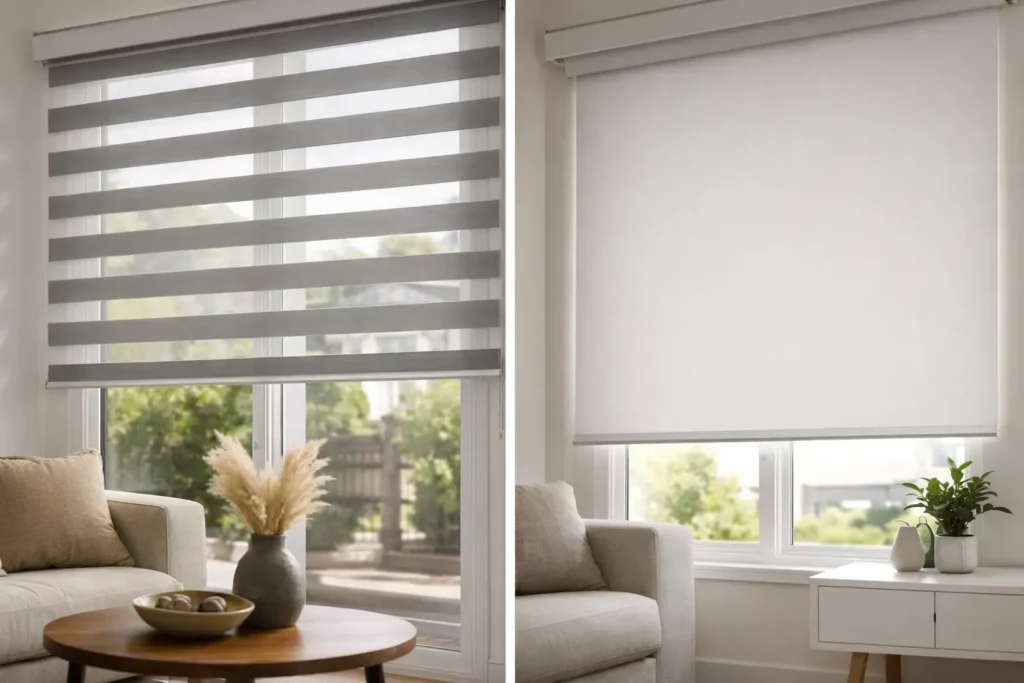
A window can change character several times between sunrise and evening. That is why the choice between zebra blinds vs roller blinds is more than a matter of color or fabric. It determines whether you can soften bright daylight, create private comfort after dark, enjoy an open view, or achieve near-total darkness when the room needs it.
Both styles bring a clean, contemporary finish to homes, offices, and hospitality spaces. The better choice depends on how you use the room, the direction of the window, the level of privacy you expect, and whether you want a more layered or minimalist look. Here is how to choose with confidence.
Zebra Blinds vs Roller Blinds: The Core Difference
Roller blinds use one continuous panel of fabric that rolls neatly around a top tube. Lower the blind to the desired height for coverage, or raise it fully to reveal the window. Their beauty lies in their simplicity: one sleek surface, a compact profile, and a broad choice of fabrics ranging from sunscreen and light-filtering materials to full blackout options.
Zebra blinds, sometimes called day and night blinds, use a double-layer fabric with alternating sheer and opaque horizontal bands. By moving the layers, you can align sheer with sheer to welcome filtered daylight or opaque with opaque to increase privacy and shade. Raise the blind fully when you want the entire window open.
The practical difference is control. A roller blind controls light primarily through height and fabric opacity. A zebra blind gives you an additional middle setting, allowing daylight to enter through the sheer stripes while reducing glare and direct visibility from outside.
Choose Zebra Blinds for Flexible Daylight and a Layered Look
Zebra blinds are an excellent fit for rooms that need privacy without feeling closed off. In a living room with strong afternoon sun, for example, the sheer bands can soften the brightness while preserving a lighter, more open atmosphere. This makes them especially appealing for apartments, villas, meeting rooms, and reception areas where natural light is part of the design.
Their distinctive horizontal bands add visual detail without the fullness of curtains. In neutral shades such as white, sand, gray, or taupe, they can complement modern furniture and polished interiors beautifully. The alternating layers also give the window a more architectural appearance than a standard blind.
Where zebra blinds work best
Zebra blinds are particularly suited to living rooms, home offices, dining areas, and bedrooms where you want the option to adjust the mood throughout the day. They are also a refined choice for offices that need to reduce screen glare while maintaining a bright, professional setting.
However, zebra blinds are not usually the first choice for absolute darkness. Even when the opaque bands are aligned, small lines of light can remain at the fabric transitions and around the edges of the blind. For a bedroom where daytime sleep, movie watching, or complete blackout is essential, a blackout roller blind is often more effective.
Choose Roller Blinds for Clean Lines and Stronger Coverage
Roller blinds suit spaces where a crisp, understated finish matters most. Because the fabric is continuous, the blind looks exceptionally smooth when lowered. It can almost disappear into the window frame or sit neatly above it, making roller blinds ideal for minimalist interiors, compact rooms, and large runs of glass.
Fabric selection is where roller blinds become highly versatile. A sunscreen roller blind filters heat and glare while allowing an outward view during the day. A light-filtering fabric creates a soft glow and protects interiors from harsh sunlight. A blackout roller blind provides the strongest light control, making it a preferred solution for bedrooms, nurseries, media rooms, and hotel guest rooms.
Where roller blinds work best
For a bedroom facing morning sunlight, blackout roller blinds offer practical comfort and a calm visual finish. In kitchens and bathrooms, moisture-resistant roller fabrics can provide privacy while remaining easy to maintain. In offices, sunscreen roller blinds keep workspaces comfortable without making the room feel dark or disconnected from the outside.
Roller blinds are also easier to coordinate across multiple windows when you want a unified look. Their uncomplicated design works well with sheer curtains or decorative drapes, allowing you to combine everyday light control with a more luxurious, layered window treatment.
Privacy, View, and Light Control
If your top priority is adaptable daylight, zebra blinds have the advantage. Their sheer-and-solid band design makes it easy to move from filtered light to privacy without raising the entire blind. This is useful in busy neighborhoods or rooms with close-facing windows, where you may want daylight but not full visibility.
If your top priority is reliable coverage, roller blinds are stronger. A blackout roller blind creates a more consistent barrier across the window than a zebra blind. The final result still depends on installation: gaps can occur if the blind is not measured correctly or mounted in the wrong position. A custom-fitted blind, chosen for the window recess and installed professionally, makes a noticeable difference in both appearance and performance.
Neither style offers the same privacy at night when interior lights are on unless it is made with an opaque or blackout fabric and fully closed. For bedrooms and ground-floor spaces, discuss nighttime privacy during your measurement appointment rather than choosing based on daytime appearance alone.
Style, Fabric, and Room Design
Zebra blinds tend to feel more decorative because the horizontal bands are visible even when the blind is open. They are a natural match for contemporary interiors that benefit from texture and controlled contrast. Choose a quiet neutral for a subtle effect, or select a darker shade to frame a large window with more definition.
Roller blinds place the focus on the room rather than the window covering. They can be almost invisible in a soft white sunscreen fabric, or become a deliberate design element in charcoal, textured linen-look material, or a coordinated color. Their simplicity makes them remarkably flexible across modern, classic, commercial, and hospitality interiors.
For spaces with high ceilings or wide glazing, consider proportion carefully. A narrow zebra stripe may look delicate and tailored, while a large roller blind can create a clean, uninterrupted plane. The right choice should relate to the scale of the window, surrounding furniture, and whether curtains will be added.
Automation: Both Options Can Deliver Everyday Convenience
Motorization works beautifully with both zebra and roller blinds. With a remote, wall control, or compatible smart-home system, you can adjust hard-to-reach windows, manage sunlight at set times, and close blinds effortlessly in the evening. This is particularly valuable for tall windows, large villas, executive offices, and hospitality environments.
Roller blinds are often selected for automated projects because their straightforward construction and broad fabric options suit large window installations. Zebra blinds are equally attractive when the goal is to fine-tune daylight from a sofa, desk, or bedside. The better choice comes back to the control you want: lift-and-lower simplicity, or the added adjustment provided by the zebra fabric layers.
For either style, automation should be planned before installation. Motor placement, power access, window size, and the total weight of the blind all influence the right system. A site measurement prevents costly compromises later.
What to Consider Before Ordering
Start with the room’s real daily needs. Think about when sunlight enters, whether neighbors can see in, how often the blind will be adjusted, and whether you need blackout performance. A beautiful blind that does not solve glare, privacy, or heat will quickly feel like the wrong investment.
Also consider fabric performance in the UAE climate. Sun-facing windows may benefit from sunscreen or blackout materials that help reduce harsh light and protect furnishings. Kitchens, bathrooms, and high-use commercial spaces need fabrics selected for practical maintenance as well as style.
Finally, do not treat measurement as a minor detail. Window recess depth, handles, frames, ceiling clearance, and mounting position all affect how a blind operates and how finished it looks. Made-to-measure fabrication creates cleaner lines than off-the-shelf sizing, especially on wide, tall, or unusually shaped windows.
The Right Blind Should Make the Room Easier to Live In
Choose zebra blinds when you want a polished, contemporary look with flexible filtered daylight. Choose roller blinds when you want clean minimalism, a wider range of performance fabrics, and the strongest blackout potential. In many homes, the best result is not one style everywhere: zebra blinds can elevate social spaces, while blackout roller blinds bring comfort to bedrooms.
An in-home measurement lets you see fabric samples against your actual walls, flooring, and daylight before making a decision. Elegant Blinds & Curtains can help you compare custom options, plan automation, and achieve a precise installation that gives every window the finish it deserves.