
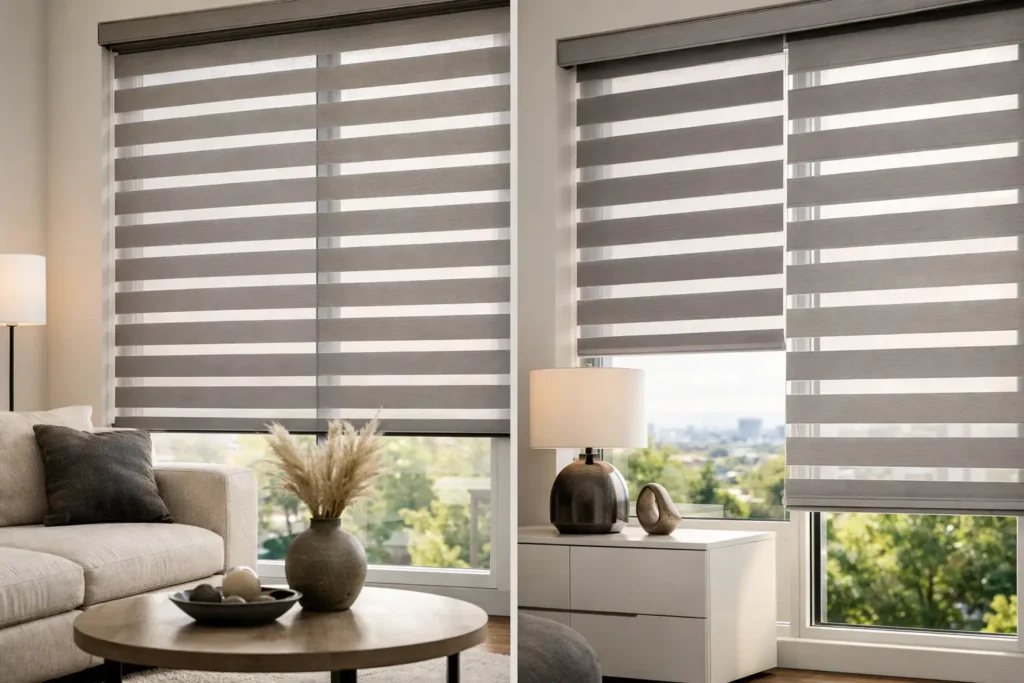
A window can make a room feel open and refined, but direct sun, afternoon glare, and overlooked interiors can quickly change that experience. This zebra blind light control review looks at why these distinctive layered blinds have become a favorite for modern homes, offices, and hospitality spaces. They offer more flexibility than a standard roller blind, with a clean finish that works beautifully in contemporary interiors.
Zebra blinds are not a one-setting solution. Their appeal lies in the ability to soften daylight, create privacy, or close the window coverage more fully with a simple adjustment. For clients who want polished light management without the visual weight of traditional drapery, they are a strong option.
How Zebra Blind Light Control Works
A zebra blind, also called a dual-layer or day-and-night blind, is made from one continuous fabric panel with alternating sheer and opaque horizontal bands. As the blind moves, the bands align in different positions. Match sheer to sheer, and natural light enters the room through filtered horizontal sections. Match opaque to opaque, and the view is screened for greater privacy and shade.
This construction gives zebra blinds a more graduated response to changing sunlight than many basic roller blinds. Instead of choosing only fully raised or fully lowered, you can fine-tune the alignment to reduce glare while keeping the room naturally bright.
The visual effect is sleek and architectural. When measured and fitted correctly, the horizontal lines sit evenly across the window, creating a tailored finish that suits apartments, villas, meeting rooms, and reception areas. The fabric also rolls up neatly into a compact top tube when you want the window completely open.
Zebra Blind Light Control Review: What They Do Well
The biggest advantage is everyday versatility. In a living room, the sheer bands can diffuse strong daylight without making the space feel shut in. This is particularly useful near large windows where direct sun can wash out a television screen, create glare on polished floors, or make seating areas uncomfortable.
For privacy, the opaque bands offer an elegant middle ground. During the day, you can filter the view from outside while still enjoying a gentle level of light indoors. In the evening, adjusting the blind to its more closed position provides better privacy and a more intimate atmosphere.
Zebra blinds also perform well aesthetically because they avoid the bulky appearance of layered curtains and blinds. Their clean, minimal profile complements neutral interiors, statement furniture, textured wallpaper, and modern wall finishes without competing for attention. They are available in a wide range of soft neutrals, warm earth tones, grays, and deeper shades, making them easy to coordinate with an existing room scheme.
Another strength is control of visual comfort. Light entering through the sheer strips is softened rather than blocked abruptly. For home offices, this can make a meaningful difference when working near screens. In lounges and dining rooms, it creates a brighter, more relaxed daytime setting than a fully closed blackout blind.
Motorized zebra blinds add another level of convenience. With remote, wall-switch, or smart-home control, it is easy to adjust multiple windows at once, including tall or hard-to-reach installations. Automation is especially appealing in villas, offices, hotel suites, and rooms with expansive glass where manual operation becomes less practical.
Where Zebra Blinds Have Limits
The main trade-off is that standard zebra blinds are not designed to provide complete blackout conditions. Even when the opaque bands are aligned, small areas of filtered light may remain between layers, and light can also pass around the edges of the blind depending on the window recess and installation style.
That does not make them the wrong choice for bedrooms. It simply means expectations should match the product. A zebra blind can create a calm, dimmed bedroom environment, but clients who need near-total darkness for daytime sleep, nursery rooms, media rooms, or shift-work schedules should consider blackout roller blinds or a layered solution with blackout curtains.
Privacy also depends on the time of day and the setting. In daylight, zebra blinds offer very good screening when adjusted carefully. At night, when interior lights are brighter than outdoors, the sheer portions are naturally less private. Closing the opaque bands improves coverage, but a bedroom or street-facing room may benefit from curtains as an additional layer.
Zebra blind fabrics are also more detailed than a simple single-sheet roller fabric. The alternating bands need to remain aligned and the mechanism needs smooth operation. This is why precise measurement, quality components, and professional installation matter. A blind that is too narrow, mounted unevenly, or fitted without enough clearance will not deliver the crisp appearance clients expect from this style.
Which Rooms Benefit Most?
Zebra blinds are an excellent match for living rooms, kitchens, home offices, dining rooms, offices, and reception spaces. These are rooms where people usually want daylight, glare reduction, and daytime privacy in equal measure. Their simple operation makes them practical for windows used frequently throughout the day.
In a living room, consider a light-filtering fabric in white, cream, beige, or soft gray to maintain an airy feel. A darker fabric can add definition against pale walls, but it may also make the blind more visually prominent when closed. The best choice depends on whether the room needs the blind to blend into the background or contribute to a more dramatic interior look.
For offices, zebra blinds help maintain a professional appearance while reducing reflections on monitors and conference-room displays. Motorization is worth considering for boardrooms or full-height glazing, where a coordinated adjustment creates a more polished client-facing environment.
Bedrooms call for a more personalized decision. Zebra blinds work well when the priority is stylish daytime light control and moderate evening privacy. Pairing them with custom blackout curtains creates a more luxurious and practical arrangement, allowing the blind to manage daytime light while the curtains provide fuller coverage at night.
Bathrooms and high-humidity areas require added care. Choose materials suitable for moisture exposure, and make sure the blind is positioned away from direct splashing. In some cases, a moisture-resistant roller blind may be the more practical option.
Custom Fitting Changes the Result
Ready-made blinds can appear attractive at first, but zebra blinds reveal measurement errors quickly. Uneven windows, shallow recesses, handles, tiled edges, and wide glazing all affect the installation approach. A made-to-measure blind accounts for those details so the fabric, brackets, and operating chain or motor sit correctly.
The mounting choice matters as well. Inside-recess installation gives a neat, integrated look when the window depth allows it. Face fixing above or beyond the frame can provide better coverage where recesses are shallow or where extra light reduction is needed. Neither method is automatically better. The right answer depends on the architecture of the window and how the room is used.
Fabric selection deserves just as much attention. Sheer portions vary in openness, which changes how much daylight and outside visibility remain. Opaque bands vary in color, thickness, and texture. Viewing samples at the actual window is the best way to judge how the fabric responds to sunlight, wall color, and interior lighting.
Is a Zebra Blind Worth Choosing?
For rooms that need flexible daylight control with a modern, tailored appearance, zebra blinds are absolutely worth considering. They are more adaptable than standard roller blinds and less visually heavy than a full curtain treatment. They are particularly effective when the goal is to reduce glare, keep daytime interiors bright, and add privacy without sacrificing a clean design.
They are less suitable as a standalone answer when full blackout is non-negotiable. In that situation, a blackout blind or custom curtains will provide a stronger result. The most elegant choice is often not about selecting one product over another, but combining the right layers for the room’s habits, orientation, and comfort needs.
Elegant Blinds & Curtains can help you compare fabrics, test the best mounting option, and create a custom-fitted zebra blind solution that looks as refined in daily use as it does on installation day. Schedule a free measurement and let the light in on your terms.