
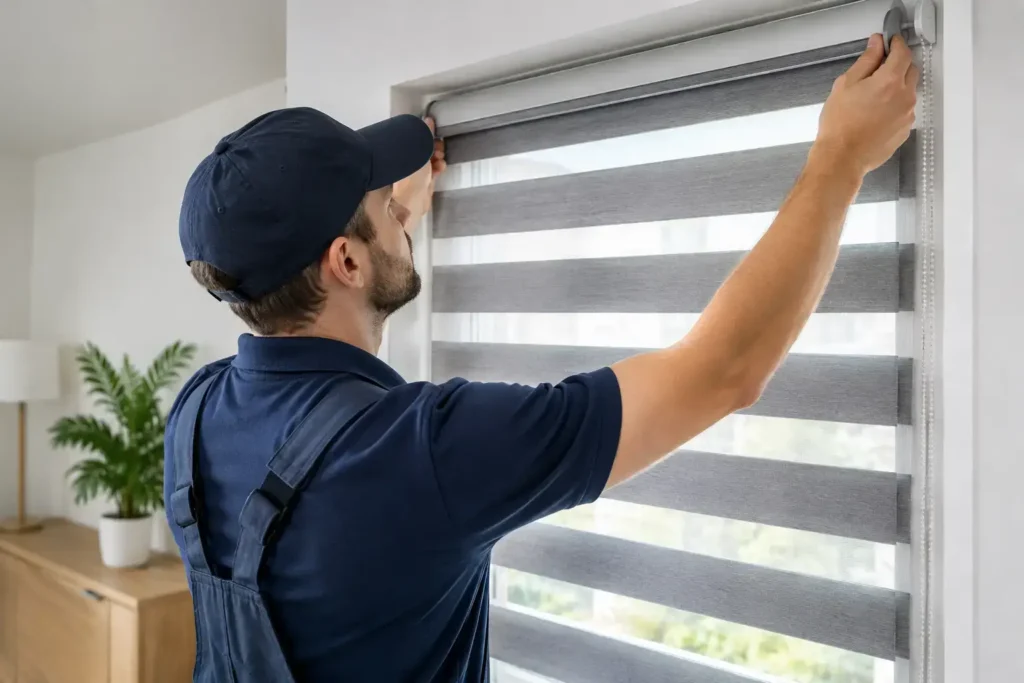
A zebra blind can look beautifully minimal from across the room, but its performance depends on details that are easy to miss at the window. Proper zebra blind installation determines whether the fabric aligns cleanly, rolls smoothly, blocks the right amount of sunlight, and sits as a tailored part of the interior rather than an afterthought.
For villas, apartments, offices, and hospitality spaces, these blinds offer an appealing balance: sheer sections soften daylight, while opaque bands add privacy and shade. The look is contemporary, but the fitting must be precise. A few millimeters can affect the final finish, particularly on wide windows, recessed frames, or rooms with uneven walls.
Zebra Blind Installation Starts With Measurement
Before selecting fabric, cassette style, or control type, the window must be measured correctly. Zebra blinds operate with alternating sheer and solid fabric bands, so their proportions need to sit evenly within the window area. This is especially important when several blinds are installed side by side across sliding doors, bay windows, or a large living-room wall.
The first decision is whether the blind will be inside mounted or outside mounted. An inside mount fits within the window recess and creates a neat, integrated appearance. It is an excellent choice when the recess is deep enough, reasonably square, and free of handles or obstructions. It does, however, allow small light gaps at the sides because the blind sits inside the frame.
An outside mount is fixed above or beyond the recess. It can make a compact window appear larger and provides stronger coverage for bedrooms, media rooms, and spaces where glare is a concern. It is also often the better answer for shallow recesses, tilted frames, or windows with limited clearance. The trade-off is visual: the blind becomes a more visible design feature, which makes fabric selection and placement even more important.
Professional measurement checks more than width and height. The installer should assess recess depth, wall condition, nearby AC vents, curtain tracks, handles, switches, ceiling details, and the direction in which the blind will roll. In Dubai and across the UAE, intense sun exposure also makes orientation worth discussing. A west-facing window may need a more light-filtering or room-darkening fabric choice than a shaded hallway or a private office.
Choosing the Right Mounting Position
A well-planned mounting position protects both the blind and the room’s proportions. For an inside mount, brackets must be level and positioned so the roller clears the frame and any opening mechanism. For an outside mount, the blind should extend beyond the glass sufficiently to create practical coverage without crowding a false ceiling, cornice, or decorative molding.
Ceiling mounting can be an elegant option for tall windows or full-height glazing. It creates a longer visual line and works particularly well in modern interiors where the window treatment is intended to feel architectural. On the other hand, a wall mount may be more practical when a ceiling has recessed lighting, a gypsum bulkhead, or access limitations.
If zebra blinds will be paired with curtains, planning both treatments together is essential. The curtain track and blind need enough separation to operate independently, and neither should interfere with handles or doors. This layered approach can be especially effective in bedrooms and formal living spaces: zebra blinds manage daytime privacy and filtered light, while blackout curtains provide fuller darkness and a more luxurious finish at night.
Brackets, Surfaces, and Secure Fixing
The brackets carry the full load of the roller and fabric, so they must suit the mounting surface. Concrete, drywall, wood, aluminum, and tiled surfaces each require the right fixing method. Using unsuitable anchors may cause a blind to loosen over time, tilt out of level, or damage a finished wall.
This is not a place to guess. A lightweight blind on a narrow kitchen window may be straightforward, but wide zebra blinds and motorized systems need dependable support. Professional installers identify hidden services where relevant, select appropriate screws and plugs, and position the brackets for an even load distribution.
Once the brackets are fixed, the roller is clipped or locked into place according to the system design. The blind should sit level before any final adjustment begins. If it is even slightly uneven, the fabric can track poorly, the bands may not align, and the finished room can look noticeably less refined.
Aligning the Fabric for Light and Privacy
The defining feature of a zebra blind is its dual-layer fabric. As the blind moves, sheer and opaque bands glide across one another. When the sheer bands line up, daylight enters with a soft, filtered effect. When the opaque bands overlap, the blind creates greater privacy and shade while retaining its clean horizontal pattern.
After fitting, the blind should be raised and lowered several times to check alignment. The bottom bar must remain straight, the fabric should not rub against the frame, and the chain or motor should operate without hesitation. Small adjustments at this stage make a meaningful difference. A blind that looks correct when lowered can still reveal tracking issues when lifted, so the full operating range should always be tested.
Chain-operated blinds are practical, reliable, and well suited to many residential and commercial rooms. The chain should hang at a convenient height and include a properly fitted safety tension device, particularly in family homes or children’s rooms. Motorized zebra blinds offer a more elevated experience for tall windows, hard-to-reach glazing, and smart-home settings. They can be controlled by remote, wall switch, or selected automation systems, depending on the specification.
Motorization requires additional planning. Power access, cable routing, charging needs for battery-operated options, and control placement should be agreed upon before installation. A concealed power solution creates the cleanest result, but a well-planned battery motor can be ideal where electrical work is not desirable.
Common Installation Errors That Affect the Finish
Many zebra blind issues are not product issues at all. They begin with an incorrect measurement, an unlevel bracket, or a mounting choice made without considering how the window is used. A blind can be beautifully made and still underperform if a door handle catches the fabric or if the roller is positioned too close to a recess edge.
Another common mistake is selecting a fabric color from a small sample without viewing it against the room’s lighting. Sheer sections can look different in strong daylight than they do under warm evening lamps. For a coordinated interior, consider the wall color, flooring, furniture finishes, and whether curtains will be added. Soft neutrals create a calm, timeless effect, while charcoal, black, or textured fabrics can give offices and contemporary spaces a stronger visual presence.
Cleaning is also part of long-term performance. Regularly dust the fabric with a soft, dry cloth or a vacuum brush on low suction. Avoid soaking the material or using harsh cleaning products, as this can affect the fabric’s structure and finish. If the blind stops moving smoothly, do not force the chain or motor. A quick professional inspection can prevent a minor adjustment from becoming a larger repair.
When Professional Installation Is the Better Choice
DIY fitting can be suitable for a simple, standard-size blind on a straightforward wall. However, professional installation is the more dependable choice for custom widths, large windows, motorized blinds, paired window treatments, ceiling mounts, and high-value interiors. It also saves time when several rooms need to be completed to a consistent standard.
At Elegant Blinds & Curtains, the process is designed around that finished result: accurate measurement, tailored fabric selection, secure fixing, and careful testing before the work is complete. For homes, offices, and hospitality projects in Dubai, Abu Dhabi, Sharjah, and Ras al Khaimah, expert fitting helps ensure every blind looks intentional and operates as it should.
Book a free measurement when you are ready to turn a window into a more private, comfortable, and polished part of your space.