
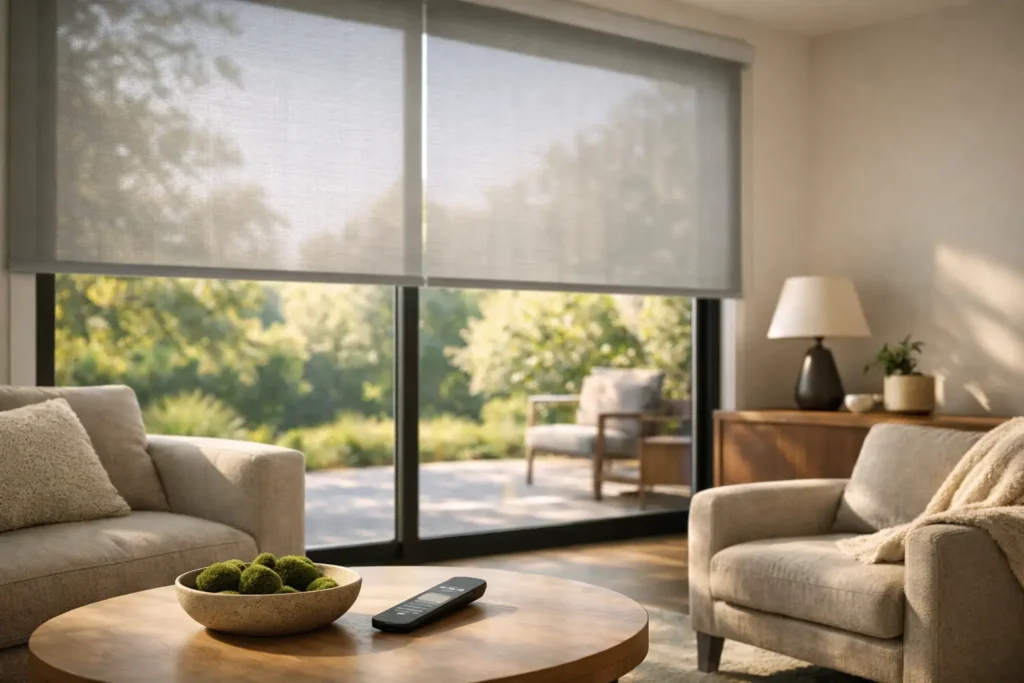
The strongest smart homes do not announce themselves with blinking screens or complicated controls. They simply feel right. Morning light arrives gently, the afternoon glare disappears before it heats the room, and privacy is in place when the sun goes down. Smart home shading brings that level of comfort to the windows – while preserving the tailored, luxurious look that makes a space feel complete.
For homeowners, villa residents, offices, and hospitality spaces, automated curtains and blinds offer more than a convenient remote. They turn light control into a considered part of everyday living. The result is a room that looks polished at every hour, with less effort from the people using it.
What Smart Home Shading Does for a Room
Smart shading uses motorized curtains, motorized blinds, or both, operated through a remote, wall switch, app, timer, or compatible home automation system. Instead of walking from window to window, you can adjust an entire room or property with one command.
The practical benefit is immediate. In a living room with large windows, sheer curtains can open in the morning to keep the view and soften direct sunlight. Later, blackout curtains or roller blinds can close to reduce glare on screens, protect furnishings, and create a more private setting. In a bedroom, scheduled shading can support a calmer wake-up routine and a darker environment at night.
The visual benefit matters just as much. Motorization removes the need for dangling pull cords and lets wide or high windows receive the same precise finish as accessible ones. When curtains are custom tailored and mounted correctly, they open and stack evenly, then close with a quiet, refined movement.
Motorized Curtains or Blinds: Which Fits Best?
The best choice depends on the room, the window, and the atmosphere you want to create. Motorized curtains are a natural fit for bedrooms, formal living areas, villas, hotel rooms, and spaces where fabric softness is part of the design. They can be paired with sheers for daytime elegance and blackout lining for nighttime privacy and light control.
Motorized blinds bring a cleaner, more architectural finish. Roller blinds work beautifully in modern kitchens, offices, media rooms, and apartments where a streamlined profile is preferred. Zebra blinds provide flexible light filtering through alternating sheer and opaque bands, while Venetian blinds allow more detailed adjustment of light direction and privacy.
In many premium interiors, the most effective approach is layered shading. A sheer curtain or light-filtering blind manages daylight without closing the room off. A second blackout curtain or blind handles sleeping, movie viewing, heat, and total privacy. This combination offers more flexibility than asking one product to do every job.
There are trade-offs. Curtains add texture, acoustic softness, and a fuller decorative effect, but they need enough space beside the window to stack back properly. Roller blinds are compact and easy to maintain, although they do not offer the same fabric presence. A professional measurement is the difference between a product that merely functions and one that looks intentionally designed.
Smart Home Shading for Different Spaces
Bedrooms: Better Darkness, Better Routine
Bedrooms benefit from blackout curtains or blackout roller blinds, especially for people who work shifts, have young children, or want stronger protection from early light. Automation lets the room darken on schedule without anyone needing to remember it. A gentle opening time can also make mornings feel more natural than a sudden alarm followed by harsh sunlight.
For an elevated finish, combine blackout drapes with a sheer layer. The sheers maintain daytime privacy while allowing a soft glow into the room. At night, the blackout layer creates the calm, enclosed feeling expected from a well-designed bedroom.
Living Rooms: Light Without the Glare
Living rooms often need the most adaptable solution because they serve many purposes throughout the day. They are used for relaxing, entertaining, working, and watching television. Smart shades can respond to those changes in seconds, protecting the room from intense sunlight while keeping it bright and welcoming.
For larger windows, a motorized curtain track makes daily operation effortless. If the room has a contemporary, minimal look, motorized roller or zebra blinds may be a better visual match. The choice should follow the interior scheme rather than automation alone.
Offices and Meeting Rooms: A More Professional Setting
In workspaces, sunlight can quickly become a productivity issue. Glare on monitors, excessive heat, and a lack of privacy can make a well-finished office feel uncomfortable. Automated blinds allow teams to close several windows before a presentation or adjust light levels without interrupting a meeting.
Light-filtering roller blinds are often ideal for daytime office use because they soften brightness while maintaining a sense of openness. Blackout options are valuable in boardrooms and training rooms where screens need clear visibility. For offices with tall glazing, motorization is not a luxury detail – it is often the most practical way to operate the shading properly.
Hospitality Spaces: Consistency Guests Notice
Hotels, serviced apartments, and guest suites need window treatments that look polished and work reliably every day. Smart controls allow curtains and blinds to be managed consistently across multiple rooms, while custom fabrication helps each window receive the correct coverage and finish.
Guest comfort depends on details: quiet operation, proper overlap at the edges, a blackout layer that actually blocks light, and fabric that complements the room rather than fighting it. These are the details that create a premium impression before a guest has unpacked a bag.
Choosing the Right Controls and Automation
Not every project needs the same level of automation. A simple remote control can be ideal for one bedroom or living room. Wall switches provide an intuitive option near the entrance or bedside. Timers are useful for predictable routines, such as closing shades before the strongest afternoon sun reaches a west-facing room.
For a connected home, smart home integration can allow window treatments to operate as part of a wider routine. Curtains may close when the lights dim for movie time, or blinds may lower during the hottest part of the day. The goal should be convenience, not unnecessary complexity. A system that everyone in the household can use comfortably is always the better choice.
Power planning deserves attention early in the project. Hardwired motors offer a clean, permanent solution and are especially suitable during new construction or renovation. Battery-powered motors can be useful where wiring is difficult or disruptive. Rechargeable options reduce the need for frequent battery replacement, but they still require occasional charging. The right setup depends on window access, usage frequency, and the stage of your interior project.
Design Details That Make Automation Look Premium
Automation works best when it is designed into the window treatment rather than added as an afterthought. The fabric, track, brackets, blind cassette, and installation height all affect the final appearance. A beautiful motorized curtain can still look underwhelming if it is too short, too narrow, or installed on a track that does not suit the room.
For curtains, consider fullness, lining, fabric weight, and how far the panels should stack when open. For blinds, consider whether the mounting should sit inside the recess or outside it, how much side light is acceptable, and whether the room needs blackout performance or soft filtered daylight. These decisions are especially important for bedrooms, media rooms, and any window exposed to intense sun.
Color selection also changes how smart shading performs. Lighter fabrics can keep an interior airy and reflective, while darker blackout materials may offer stronger room-darkening results. The right answer is rarely just one color or one fabric. It is the combination that supports the room’s use and the overall design direction.
Why Professional Measurement Matters
Smart window treatments involve more than selecting a motor and pressing a button. The installer needs to account for window width, ceiling height, curtain stack-back, electrical access, bracket placement, fabric weight, and the path of the moving treatment. Small measurement errors become much more visible once a system is motorized.
Professional consultation also helps avoid common disappointments, such as curtains that do not cover the window fully, blinds that leave unwanted light gaps, or controls placed where they are inconvenient to reach. For residents and businesses in Dubai, Elegant Blinds & Curtains can manage the process from design discussion and free measurement to custom tailoring, motor selection, and precise installation.
A tailored approach is particularly valuable when a project includes several room types. A bedroom may need blackout curtains, an office may require screen-friendly roller blinds, and a living space may call for layered sheers and drapes. Coordinating them through one experienced team keeps the finishes consistent without forcing every room into the same solution.
Bring More Ease to Your Windows
The best smart shading feels almost invisible because it anticipates what the room needs: softer daylight, less glare, more privacy, or a darker place to rest. Book a professional measurement and choose a made-to-measure solution that gives your windows the same level of attention as the rest of your interior.