
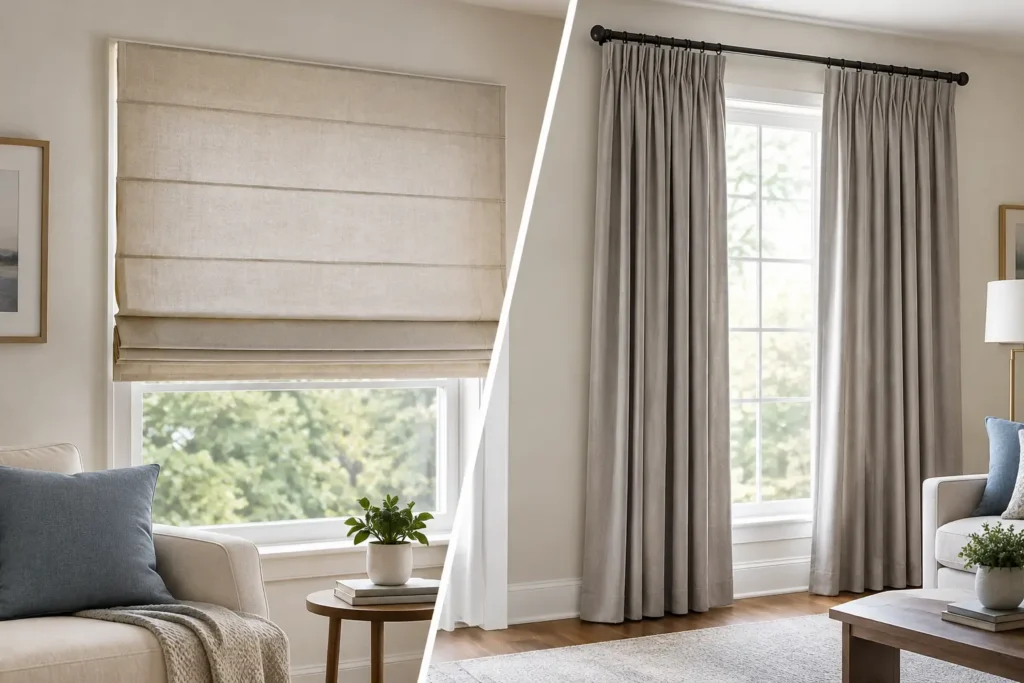
A window can make a beautifully furnished room feel unfinished when it is left bare, poorly covered, or dressed with the wrong fabric. The choice between roman blinds vs curtains shapes more than the view: it affects privacy, sunlight, room proportions, everyday comfort, and the overall level of refinement. Both options can look exceptional when made to measure, but they create very different effects.
For a sleek apartment, a family villa, a hospitality suite, or a polished office, the best choice depends on how the room is used and the atmosphere you want to create. Roman blinds bring tailored structure and a clean profile. Curtains add softness, movement, and a more layered sense of luxury. Here is how to choose with confidence.
Roman Blinds vs Curtains: The Essential Difference
Roman blinds are fabric window coverings that lift upward into neat horizontal folds. When lowered, they sit flat against the window and create a streamlined, tailored finish. Their compact design makes them particularly effective where a full curtain track would feel too heavy or where furniture sits close to the window.
Curtains hang vertically from a rod or track, usually extending from near the ceiling to the floor. They can be sheer, lined, blackout, sound-reducing, or layered for a more decorative result. The fullness of the fabric gives curtains their visual presence, allowing them to soften sharp architectural lines and make a room feel more complete.
Neither is inherently better. Roman blinds are often chosen for precision and space efficiency, while curtains are selected for drama, softness, insulation, and a more expansive finish.
Style and Visual Impact
Roman blinds suit interiors with a clean, considered design direction. They look at home in contemporary kitchens, home offices, bathrooms, breakfast areas, and compact bedrooms. A linen-look Roman blind can feel relaxed and refined, while a patterned fabric can introduce personality without overwhelming the room. Because the blind sits within or close to the window frame, it keeps the focus on the architecture and view.
Curtains make a stronger design statement. Ceiling-mounted curtains can visually heighten a room, while full-length panels add an elegant sense of scale to living rooms, bedrooms, formal dining areas, and hotel-inspired spaces. In a large villa or open-plan lounge, curtains can prevent wide glazing from feeling cold or exposed.
Fabric selection matters as much as the product itself. A soft sheer curtain filters bright daylight and creates a light, inviting mood. A textured blackout curtain brings depth and privacy. Roman blinds can use many of the same fabrics, but their folded construction gives patterns and textures a more structured appearance.
When Roman Blinds Look Their Best
Roman blinds are especially effective on smaller or individual windows, including windows above a kitchen counter, desk, sofa, or bathtub. They are also a smart choice when you want a window treatment without fabric pooling near the floor. In rooms where every inch matters, this tidy profile can be a major advantage.
When Curtains Create the Better Finish
Curtains are often the more luxurious choice for floor-to-ceiling windows, sliding doors, and wide expanses of glass. They frame the view rather than simply cover it. They are also ideal when a room needs softness, whether that means a calming master bedroom, a welcoming majlis, or a hotel room designed for comfort.
Light Control and Privacy
Light control is where the practical differences become clear. A Roman blind can be raised to expose the window fully or lowered for privacy and shade. Depending on the fabric and lining, it can provide soft light filtration or near-total darkness. However, small light gaps may remain at the sides, especially with outside-mounted blinds.
Curtains provide more flexibility when layered. Sheer curtains can remain closed during the day to reduce glare and preserve daytime privacy, while blackout curtains can be drawn at night for a darker, more private setting. This combination is highly popular in bedrooms and living rooms because it adapts easily to changing light throughout the day.
For bedrooms, nurseries, media rooms, and guest rooms, blackout curtains usually offer the strongest result. Properly measured, lined curtains with a well-fitted track can reduce light leakage more effectively than most standard Roman blind installations. For a kitchen or study, a light-filtering Roman blind may offer all the control you need without making the space feel enclosed.
Privacy also depends on the window’s position. Street-facing rooms and homes overlooked by neighboring properties benefit from opaque fabrics, blackout linings, or a layered sheer-and-curtain arrangement. A design consultation should account for sightlines, not simply window dimensions.
Space, Operation, and Everyday Living
Roman blinds have a smaller footprint. They stack at the top of the window when raised, though the stacked fabric will cover a portion of the upper glass. This is worth considering if you have a low window frame or want to preserve every bit of daylight.
Curtains need room to stack on either side of the window when open. On wide windows, this can be planned carefully so the fabric sits beyond the glass and keeps the view clear. A ceiling track is often the most discreet and flexible option, particularly in modern interiors with recessed curtain pockets.
For frequent use, both choices can be practical. Chain-operated Roman blinds offer controlled adjustment, while curtains can glide smoothly on quality tracks. Motorization raises the convenience level for either style. Motorized curtains are excellent for large, heavy panels or hard-to-reach windows, while motorized Roman blinds offer a neat solution for offices, bedrooms, and smart-home settings.
In Dubai and across the UAE, automation is particularly valuable for rooms with intense afternoon sun. Timed operation can help manage glare and protect furnishings from harsh sunlight without requiring daily manual adjustments.
Insulation, Acoustics, and Comfort
Curtains generally provide stronger thermal and acoustic benefits because they use more fabric and can be lined. Heavy, well-fitted curtains help reduce heat transfer at the glass, soften outside noise, and make rooms feel more comfortable. They are a worthwhile consideration in bedrooms facing busy roads, offices requiring greater focus, and hospitality spaces where guests expect quiet.
Roman blinds can also improve comfort, especially when made with blackout or thermal lining. Their close fit to the window can help reduce direct heat and glare, but they do not create the same wide fabric barrier as full curtains. If temperature control and noise reduction are top priorities, lined curtains are usually the better investment.
For the best of both worlds, consider Roman blinds paired with side curtains. The blind handles everyday light control, while decorative curtain panels add softness and visual balance. In a bedroom, a Roman blind can also be paired with functional blackout curtains for a highly tailored layered look.
Cleaning and Maintenance
Roman blinds require careful cleaning because of their folds, cords, and fabric construction. Regular vacuuming with a soft brush attachment helps remove dust. Spot cleaning may be possible depending on the fabric, but some bespoke Roman blinds require professional care to preserve their shape and lining.
Curtains are often easier to remove for professional cleaning, particularly if installed on accessible tracks. Sheer fabrics may need more frequent attention because they show dust more readily, while heavier curtains can conceal light buildup between cleans. The correct cleaning method always depends on the fabric, lining, and trim.
In high-humidity spaces, material choice is essential. Bathrooms and kitchens may be better suited to moisture-resistant blind solutions than heavy fabric curtains. A specialist can recommend fabrics that balance appearance with practical durability.
Cost: What Are You Really Paying For?
The cost of Roman blinds vs curtains is not just about fabric. It includes window size, fabric quality, lining, hardware, tailoring, installation complexity, and whether automation is included. A single Roman blind may use less fabric than full curtains, but its detailed construction can still make it a premium product.
Curtains can cost more for large windows because they require generous fabric fullness, quality tracks, and precise installation. Yet they also deliver greater visual impact on expansive glazing. Choosing only on initial price can lead to an underwhelming result. A well-designed treatment should suit the room for years, not simply cover the glass quickly.
Custom measurement is particularly important. Ready-made products rarely account for uneven ceilings, deep window reveals, air-conditioning units, furniture placement, or the stacking space required for curtains. Precise fitting is what makes a window treatment look intentional rather than improvised.
How to Choose for Each Room
Choose Roman blinds when you want a compact, neat treatment for kitchens, offices, bathrooms, smaller bedrooms, or windows with furniture beneath them. They are ideal for homeowners who prefer a structured look and straightforward light adjustment.
Choose curtains when you want softness, full-length elegance, improved darkness, or a stronger sense of luxury. They work beautifully in living rooms, primary bedrooms, dining rooms, villas, hotel rooms, and large glazed areas.
If you are torn between the two, layering is often the answer. A sheer curtain with blackout drapes offers exceptional versatility, while a Roman blind with curtains combines tailored practicality with a richly finished interior. Elegant Blinds & Curtains can measure the space, assess daylight and privacy requirements, and create a custom solution that feels right from every angle.
The best window treatment is the one that supports the way you live: calm morning light in the kitchen, true darkness at bedtime, privacy without sacrificing style, and a finish that makes the whole room feel considered. Schedule a professional measurement before deciding, and let the proportions, light, and purpose of your room lead the choice.