
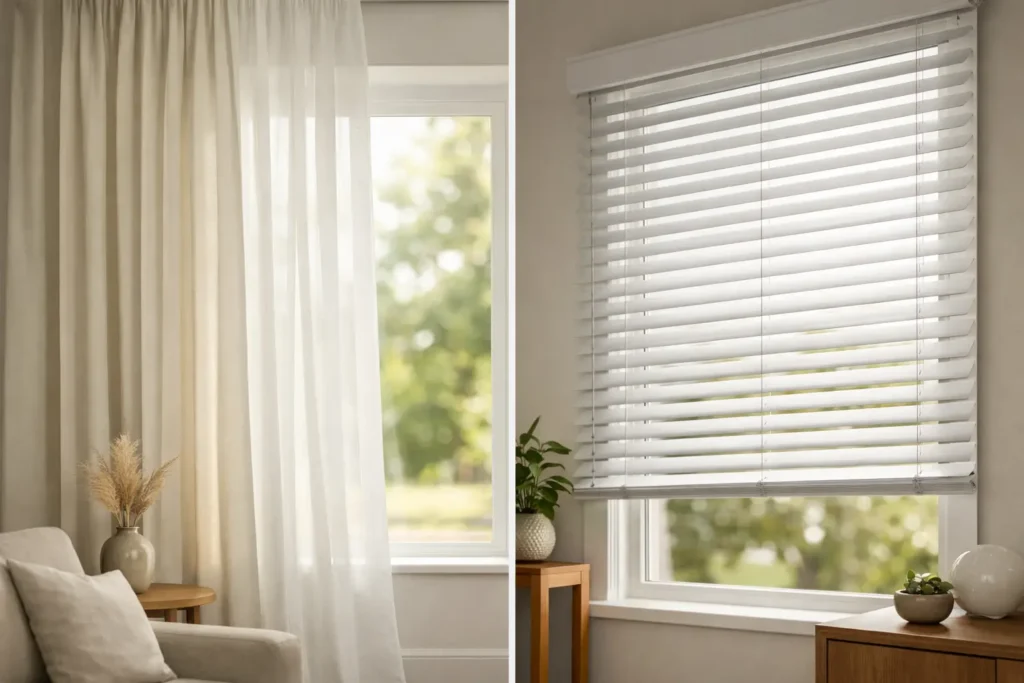
A window can make a room feel finished or frustrating. Too much glare, not enough privacy, fabric that feels too heavy, or blinds that look too plain – these details change how a space works every day. When homeowners and business clients compare curtains vs blinds, they are usually not just choosing a product. They are choosing how a room should feel, function, and present itself.
In premium interiors, that decision deserves more than a quick guess. The right window treatment should suit the architecture, support your lifestyle, and look tailored to the room rather than added as an afterthought. That is why the better question is not whether curtains or blinds are universally better. It is which one is better for your space.
Curtains vs Blinds: The Real Difference
Curtains bring softness, movement, and a more layered visual finish. They can make ceilings feel taller, windows feel larger, and formal spaces feel more complete. In living rooms, bedrooms, villas, and hospitality interiors, curtains often create the richer, more luxurious look many clients want.
Blinds are more structured and compact. They offer a cleaner profile and a more architectural appearance, which makes them a strong choice for modern apartments, offices, kitchens, and rooms where neat lines matter. They are also practical when wall space is limited or when you want the window treatment to feel minimal rather than decorative.
This is where many buyers get stuck. Curtains are not automatically more elegant in every room, and blinds are not automatically the smarter modern option. A sleek office, for example, may benefit from roller or Venetian blinds for precise light control. A bedroom may need blackout curtains for comfort, acoustic softness, and a more refined finish.
What Matters Most: Style or Performance?
For most projects, both matter. The difference is which one needs to lead.
If your main goal is visual warmth, curtains usually have the advantage. Fabric adds texture in a way blinds cannot fully replicate. Sheer curtains soften daylight beautifully, while heavier drapes create depth and presence. In larger homes or formal reception areas, this layered effect can elevate the entire interior.
If your priority is sharper control over sunlight and privacy, blinds often perform better on their own. Roller blinds, zebra blinds, and Venetian blinds are especially effective when you want to adjust light throughout the day without opening or closing a full curtain panel. In rooms with strong sun exposure, that flexibility becomes a daily convenience rather than a design extra.
Still, performance is not one-dimensional. Curtains can help with insulation, blackout control, and even sound reduction, depending on fabric and lining. Blinds can look elegant and premium when custom fitted correctly and chosen in the right material. The best results come from matching the product to the room instead of trying to force one solution everywhere.
Which Looks More Luxurious?
If the goal is a high-end, dressed finish, curtains usually win. Floor-to-ceiling curtains in premium fabric create a custom look that instantly feels polished. They frame the room, soften edges, and photograph beautifully. This is one reason they are so popular in master bedrooms, majlis spaces, formal lounges, and hotel interiors.
That said, luxury is also about precision. Poorly fitted curtains can look heavy or dated, while well-made blinds can feel sleek, expensive, and intentional. Roman blinds, for instance, sit between the two categories nicely. They offer the softness of fabric with the clean function of a blind, making them ideal for clients who want refinement without bulk.
Motorization also changes the conversation. Automated blinds and curtains add convenience, but they also create a more premium user experience. When window treatments open and close smoothly at the touch of a button, the entire space feels more considered.
Curtains vs Blinds by Room
Some rooms are more forgiving than others. In a bedroom, curtains are often the stronger choice because comfort matters as much as appearance. Blackout curtains can block light more effectively, create a restful atmosphere, and add softness that makes the room feel complete. Blinds can still work well here, especially blackout roller blinds, but many clients prefer curtains or a layered combination for a fuller finish.
In living rooms, it depends on the design direction. If the room is formal, spacious, or designed around a luxury palette, curtains usually add the right amount of elegance. In smaller apartments or more minimalist interiors, blinds may keep the room feeling clean and open. Sheer curtains paired with blackout drapes are a popular solution when clients want flexibility from day to night.
Kitchens and bathrooms usually favor blinds because they are practical in tighter, more functional spaces. Moisture resistance, easy operation, and a compact fit matter more here than softness. A well-selected blind can provide privacy and light control without overwhelming the room.
For offices, blinds are often the first choice because they support a neat, professional appearance and better glare management. Roller blinds and Venetian blinds are particularly useful in workspaces where screen visibility and daylight control need to be balanced.
Hospitality spaces can go either way, but many premium projects use curtains for guest rooms and a mix of blinds and curtains in public areas. The goal is usually to combine style, privacy, and operational ease.
Maintenance, Durability, and Everyday Use
This is where preferences become very practical. Blinds are generally easier to manage in busy spaces because they are compact and simple to operate. Depending on the material, they can also be easier to wipe down regularly. That makes them attractive for kitchens, offices, and commercial environments.
Curtains require more care, especially if they are made from delicate or premium fabrics. They may need periodic cleaning to keep them looking fresh and well kept. Still, many clients accept that extra maintenance because the visual payoff is worth it.
Durability also depends on custom quality. Off-the-shelf products often disappoint because they are not fitted properly, use lower-grade materials, or fail under daily use. A made-to-measure solution lasts longer, operates better, and sits more cleanly within the window or along the wall.
Cost: Which One Offers Better Value?
Blinds are often seen as the more budget-friendly option, and in many cases that is true. Simple roller blinds can be a cost-effective way to improve privacy and light control quickly. For straightforward installations, they often deliver strong functional value.
Curtains can cost more, especially when fabric quality, lining, fullness, tailoring, and installation are all done properly. But value is not only about the starting price. A custom curtain solution can transform a room visually, improve comfort, and add a more upscale finish that supports the overall interior investment.
For many clients, the smartest route is not choosing the cheapest product. It is choosing the product that prevents compromise. Spending less on a window treatment that looks unfinished or performs poorly often leads to replacement far sooner than expected.
When the Best Answer Is Both
One of the strongest design solutions is combining curtains and blinds. This works especially well when clients want the clean control of blinds and the softness of curtains in the same room. A sheer curtain with a blackout blind, or a roller blind behind decorative drapes, gives you flexibility without sacrificing style.
Layering also creates a more custom, designer look. It allows you to filter daylight during the day, protect privacy in the evening, and add texture to the room all at once. In premium homes and hospitality settings, this is often the solution that feels most complete.
At Elegant Blinds & Curtains, this is where professional guidance makes a visible difference. A room-by-room recommendation, accurate measurement, tailored fabrication, and proper installation help clients avoid the common mistake of choosing based only on appearance or price.
How to Choose with Confidence
If you want softness, height, and a richer finish, start with curtains. If you want precision, minimal lines, and compact function, start with blinds. If you want the room to feel fully resolved, layered options are often worth considering.
The key is to think beyond the product name. Consider the sunlight, the privacy level, the room size, the furniture style, and how you want the space to feel at different times of day. A bedroom, office, and living room rarely need the same answer.
A well-chosen window treatment should do more than cover glass. It should improve how the room looks, how it feels, and how easily you live or work in it. If you are deciding between curtains and blinds, the right choice is the one that feels made for your space – because it is.