
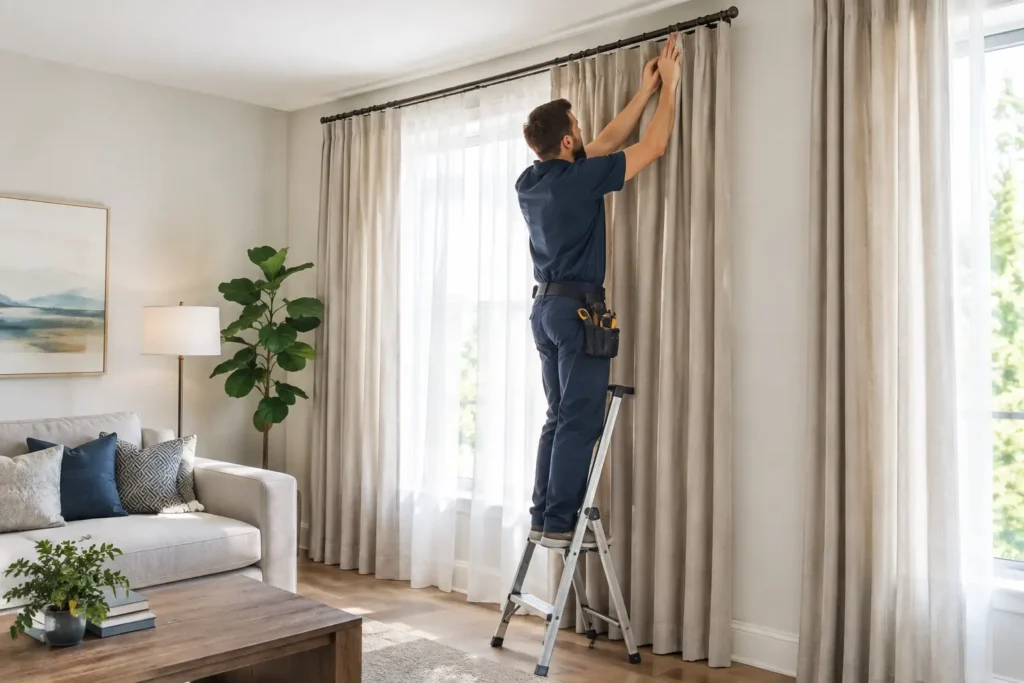
A beautiful curtain can still look unfinished if it is mounted too low, too narrow, or allowed to drag unevenly across the floor. Professional curtain installation turns fabric and hardware into a considered design feature, giving a room the height, softness, privacy, and light control it was meant to have.
For homes, offices, villas, apartments, and hospitality spaces, the difference is visible immediately. Well-fitted curtains frame the view rather than crowd it, open and close smoothly, and sit in proportion with the ceiling, windows, furniture, and surrounding finishes. The result feels polished because every detail has been planned.
Why Curtain Installation Is More Than Fixing a Rod
Curtain installation begins long before the brackets are secured to the wall. The right solution depends on the window size, ceiling height, wall construction, curtain style, fabric weight, and how the room is used. A sheer layer in a bright living room needs a different approach from blackout curtains in a bedroom or heavy hotel curtains in a guest suite.
Measurements must account for more than the glass itself. The width of the return, the space needed for the curtain stack when open, nearby air-conditioning vents, crown molding, false ceilings, and furniture placement all affect the final result. Installing a track only to the visible window width can leave the room feeling darker than necessary because the curtains cannot clear the glass fully when opened.
Height matters just as much. In many interiors, mounting curtains closer to the ceiling creates a taller, more refined appearance. However, this is not a universal rule. Low ceilings, bulkheads, recessed curtain pockets, and uneven surfaces may require a tailored placement to keep the treatment balanced and practical.
Start With the Room, Not Just the Window
The most successful curtain choices serve the room’s daily needs while supporting its visual character. Before selecting a fabric or track, consider what the space needs to do.
Bedrooms usually benefit from privacy and deeper light reduction. Layered sheer and blackout curtains offer flexibility, allowing soft daylight during the day and restful darkness at night. In a nursery or media room, blackout fabric can also reduce glare and create a more comfortable environment.
Living rooms often call for a lighter approach. Sheer curtains soften strong sunlight without disconnecting the room from the view, while decorative drapes add warmth and a more luxurious finish. If the room receives intense afternoon sun, a lined curtain or roller blind behind the sheers can offer better control without making the space feel heavy.
For offices, meeting rooms, and hospitality settings, ease of operation is a priority. Durable tracks, neatly finished headings, and fabrics selected for their performance help maintain a professional appearance over time. Soundproof curtains may be worth considering where outside noise, echo, or privacy is a concern, but expectations should be realistic. They can improve acoustic comfort, not create a fully sound-isolated room.
Kitchens and bathrooms need materials that suit moisture, heat, and frequent cleaning. Blinds are often more practical near sinks, cooktops, or humid areas, while carefully chosen curtains can still work in adjacent spaces where a softer finish is desired.
Choosing the Right Mounting Style
Curtains can be installed on decorative rods, discreet tracks, ceiling-mounted systems, or recessed tracks hidden inside a ceiling pocket. Each option creates a different look and has practical advantages.
A decorative rod makes the hardware part of the design. It suits traditional interiors, textured fabrics, and rooms where a visible finish in black, brass, chrome, or wood complements the furniture. The trade-off is that rods may not provide the same clean, wall-to-wall coverage as a ceiling track, especially across wide windows or sliding doors.
Ceiling tracks offer a streamlined, contemporary appearance. They are ideal for full-height curtains, large glass walls, and layered sheers with blackout drapes. A ceiling-mounted track can also make a compact apartment feel more generous by drawing the eye upward. Where a false ceiling includes a dedicated curtain recess, concealed tracks produce an especially elegant finish with no visible hardware.
For wide openings, bay windows, corner glazing, or curved layouts, custom tracks are often the better investment. Standard hardware can create awkward gaps, restricted movement, or unsupported fabric weight. A made-to-measure system ensures the curtains glide properly and hang evenly across the entire opening.
Curtain Fullness Changes the Final Look
Fabric width affects how luxurious curtains appear when closed. Too little fullness can make even premium material look flat and sparse. Too much fullness can feel bulky, particularly with thick blackout fabric or in tight spaces.
The right amount depends on the heading style and fabric. Wave curtains need carefully calculated fullness to keep their soft, consistent folds. Pencil pleat curtains offer flexibility and suit many interiors. Eyelet curtains create a more casual, visible-rod look but are less suitable when maximum blackout coverage is required. A professional consultation helps match the heading to the room, track, and level of privacy you expect.
The Details That Protect a Premium Finish
High-quality curtain installation is as much about what you do not notice as what you do. Brackets should be securely fixed into the correct surface, whether that is concrete, drywall, wood, or a ceiling structure. Heavy lined curtains and motorized systems place more load on hardware, so fixing methods cannot be treated as an afterthought.
Curtain length also deserves precision. A slight float above the floor creates a clean, easy-to-maintain look. A gentle break can add softness in a formal bedroom or lounge. Pooling fabric on the floor can look dramatic, but it is less practical in high-traffic homes, commercial spaces, or rooms where regular cleaning is needed. There is no single best length – the right choice depends on the look you want and how the space is lived in.
Returns and overlaps are equally important. These are the sections that help curtains wrap toward the wall and meet neatly in the center. When they are planned correctly, they reduce side light gaps and create a more complete blackout effect. This detail is particularly valuable for bedrooms, hotel rooms, and areas exposed to strong sunlight.
When Motorized Curtains Are Worth It
Motorized curtains add a level of comfort that quickly becomes part of daily life. With a remote, wall switch, app, or smart-home integration, you can control difficult-to-reach windows, large curtain runs, and multiple rooms with less effort. They are particularly useful for double-height spaces, wide sliding doors, villas with extensive glazing, and offices where a consistent presentation matters.
Automation also protects the fabric and track by encouraging smoother operation. Instead of pulling curtains by hand, which can strain headings or cause uneven movement, the system opens and closes at a controlled pace. Still, motorization is not necessary for every room. A simple manual track may be the more sensible choice for a small guest room or a window that is rarely used.
The key is to plan motorized curtain installation early, especially during renovation or new construction. Power access, track position, ceiling details, and control preferences should be decided before final finishing work is complete. Retrofitting is possible in many cases, but early planning gives the cleanest result.
What to Expect From a Professional Installation Service
A reliable service should make the process feel organized from the first measurement to the final adjustment. It begins with understanding your preferred style, privacy needs, light conditions, and budget. Measurements are then taken on site so the curtains, blinds, tracks, and accessories can be tailored precisely to the space.
After fabrication, installation should include secure mounting, smooth track testing, steaming or dressing the fabric where needed, and checking the final drop and alignment. For layered treatments, both sheer and blackout panels should move independently without snagging or covering more glass than intended.
At Elegant Blinds & Curtains, this end-to-end approach helps clients avoid the common frustration of coordinating separate suppliers for fabric, hardware, tailoring, and fitting. It also allows the final design to be assessed as one complete element of the interior rather than a collection of disconnected parts.
Keep Your Curtains Looking Tailored
Once installed, curtains need modest care to retain their shape and color. Vacuum gently with a soft brush attachment, avoid pulling fabric sideways when opening or closing, and address stains according to the fabric type rather than using harsh household cleaners. Delicate sheers, lined drapes, and blackout curtains may require specialist curtain washing to protect their finish.
If curtains begin to catch, sit unevenly, or no longer close smoothly, have the track and hooks checked promptly. Small adjustments are easier than allowing repeated friction to damage the fabric or hardware.
A room feels complete when the window treatment looks intentional from every angle. Schedule a professional measurement before choosing your final fabric or hardware, and the finished curtains will bring comfort, control, and lasting elegance to the space.