
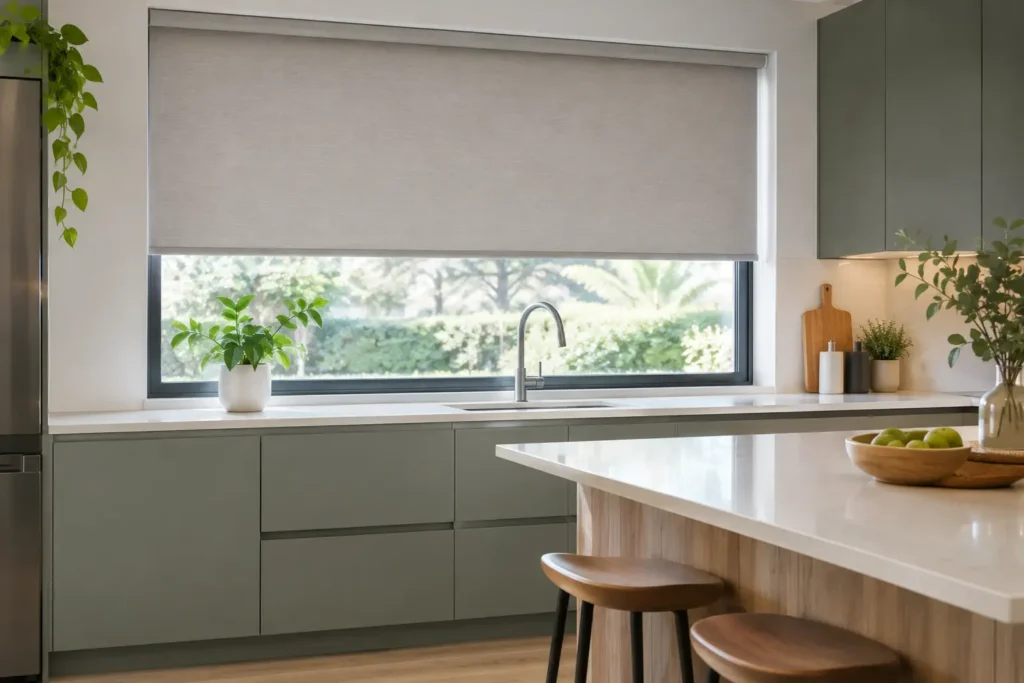
A kitchen window has to work harder than almost any other window in the home. It faces steam from the kettle, heat from the cooktop, occasional splashes, strong afternoon sun, and the everyday need for easy privacy. So, can roller blinds fit kitchens? Absolutely – provided they are chosen and installed for the conditions of the room rather than treated as an afterthought.
A well-made roller blind gives a kitchen a clean, tailored finish without taking up valuable space around the window. It can soften harsh sunlight over a breakfast counter, protect cabinetry and finishes from UV exposure, and deliver privacy at night with one simple movement. For modern apartments, villas, offices, and hospitality kitchens, the right fabric and fitting can look as refined as it is practical.
Can Roller Blinds Fit Kitchens With Heat and Moisture?
Yes, but not every roller blind material is equally suitable. Kitchens are humid, active spaces, which makes moisture-resistant, wipe-clean fabrics the sensible choice. PVC, vinyl-coated, screen, and selected polyester performance fabrics generally cope well with steam and day-to-day marks. They keep their shape, resist absorbing odors, and are far easier to maintain than delicate natural fabrics.
Fabric roller blinds can still be an elegant option in a kitchen, especially in a dry prep area or a window set away from the sink and cooktop. The key is selecting a fabric with a protective finish and positioning it carefully. A blind directly above a high-splash sink or next to an open flame needs more consideration than one over a dining nook.
Heat also matters. Roller blinds should not hang so close to a gas burner, oven vent, or other heat source that they could be damaged or become a safety concern. A professional site measurement identifies these details early, including the window depth, handle clearance, ventilation, and whether the blind should sit inside or outside the recess.
Why Roller Blinds Work So Well in Kitchens
The appeal starts with their uncluttered profile. Unlike fuller window treatments, roller blinds stack neatly at the top of the window when open. This keeps the room feeling bright and organized, particularly in compact kitchens where every visual inch matters.
They also offer controlled light rather than an all-or-nothing choice. A sunscreen roller blind filters glare while preserving a view outside, which is ideal for a kitchen overlooking a garden, balcony, or city skyline. A light-filtering fabric softens strong daylight and creates a more welcoming atmosphere for casual meals. For windows with intense sun exposure, a blackout or dimout option can reduce glare and help protect cabinetry, countertops, and flooring from fading.
Privacy is another reason to choose them. Ground-floor homes and closely spaced apartment buildings often need coverage in the evening without making the kitchen feel closed in during the day. Roller blinds are quick to adjust and visually discreet when raised.
Their simple surfaces are especially useful in a room where cleaning cannot be ignored. Most kitchen-friendly roller blinds only need regular dusting and a gentle wipe with a soft cloth. Compared with heavy drapery that can retain cooking odors or require more involved laundering, this is a practical luxury.
Choose the Right Fabric for Your Cooking Space
The best roller blind depends on how you use the kitchen and the direction the window faces. A beautiful choice should never compromise everyday comfort.
Sunscreen blinds for bright, open kitchens
Sunscreen fabrics are excellent where daylight is plentiful but direct sun creates glare on glossy cabinets, stone counters, or screens. Their open weave filters sunlight and offers daytime privacy while maintaining an outward view. The openness varies by fabric, so a lower openness factor generally provides more privacy and sun control, while a higher one keeps the view clearer.
This style suits contemporary kitchens with a view, but remember that sunscreen blinds do not provide full nighttime privacy once interior lights are on. They work best when that trade-off is acceptable or when paired with another privacy solution.
Dimout and blackout blinds for stronger control
A dimout blind reduces harsh sunlight without fully darkening the room. It is a refined choice for bright kitchens where you want less glare but still prefer a soft daylight feel. Blackout roller blinds offer the greatest coverage and privacy, particularly when fitted outside the window recess with appropriate overlap.
For true blackout performance, the fitting matters as much as the fabric. Light can enter around the sides, top, and bottom of a standard blind. In a kitchen, many homeowners prefer dimout fabric because it balances practical light control with a lighter visual effect.
Moisture-resistant finishes for sink areas
For a window above or near the sink, choose a wipeable material specifically designed to tolerate humidity and splashes. Avoid loose weaves, untreated linen-look fabrics, or highly textured materials in this location. They may look appealing at first, but can be harder to clean and less durable in a busy kitchen.
A plain, smooth roller fabric in warm white, soft gray, sand, or a muted stone shade is often the most timeless option. It complements stainless steel, wood, marble, quartz, and painted cabinetry without competing with the rest of the design.
Inside Mount or Outside Mount?
This decision changes both the look and performance of kitchen roller blinds. An inside mount fits within the window recess, producing a sleek, built-in appearance. It is particularly attractive on deep windows with clean lines and no obstructions. However, the recess must have enough depth for the roller mechanism, and window handles must still operate comfortably.
An outside mount is installed above or around the window opening. It can make a small window appear larger, cover uneven edges, and provide better light coverage. It is also useful when the recess is shallow or when tiles, handles, or opening windows limit an inside fitting.
Windows above kitchen sinks often present unique installation questions. Is there enough headroom below upper cabinets? Will the blind touch the faucet when lowered? Can the window still open for ventilation? These are small details, but they decide whether the finished result feels effortless or inconvenient. Made-to-measure installation is valuable because it resolves them before fabrication begins.
Manual or Motorized Roller Blinds?
Manual chain-operated roller blinds remain a reliable choice for many kitchens. They are simple, cost-effective, and easy to adjust throughout the day. For safety and a polished finish, chains should be properly tensioned and secured, especially in homes with young children.
Motorized roller blinds bring a more elevated level of convenience. They are particularly useful for hard-to-reach windows above counters, kitchen islands, or high ceilings. With a remote, wall switch, or compatible smart-home control, you can lower the blinds during the hottest part of the afternoon and raise them again without leaning over a work surface.
Automation is not necessary for every kitchen, but it is worth considering for large windows, multiple blinds, and homes where comfort and smart control are priorities. The clean, cord-free appearance also suits minimalist interiors beautifully.
Design Details That Make the Difference
A roller blind may be simple in form, but the final result is shaped by details. Matching the bracket finish, choosing a neat bottom bar, and setting the roll direction correctly all contribute to a more considered look. Front rolling can conceal the roller from view, while back rolling can position the fabric closer to the glass. The best option depends on the window frame, handles, and desired light control.
Color deserves equal attention. White and pale neutral blinds maximize brightness, but they can show cooking splashes more readily near a sink. Mid-tones such as taupe, mushroom, warm gray, and soft charcoal are forgiving while still sophisticated. A darker blind can create striking contrast against pale cabinetry, although it may absorb more heat in a sun-facing window.
If the kitchen is part of an open-plan living area, coordinate the blind with nearby curtains, upholstery, wallpaper, or dining finishes. The goal is not to match every surface exactly. It is to create a calm visual connection from one zone to the next.
A Better Fit Starts With Professional Measurement
Kitchen windows rarely follow a standard formula. Tile lines, cabinet edges, extractor hoods, window handles, uneven recesses, and plumbing locations can all affect the fitting. Measuring width alone is not enough. The installer must assess where the brackets will sit, whether the surface can support them, and how the blind will operate in daily use.
Elegant Blinds & Curtains provides tailored consultation, precise measurement, custom fabrication, and professional installation for homes and commercial spaces across the UAE. This approach helps ensure the blind complements your kitchen design while meeting the practical demands of heat, light, moisture, and movement.
The most successful kitchen blind is the one you barely have to think about: it filters the afternoon sun, wipes clean after a busy dinner, clears the faucet and window handles, and looks perfectly at home with the rest of the room. Schedule a measurement before choosing your fabric, and let the window itself guide the final design.