
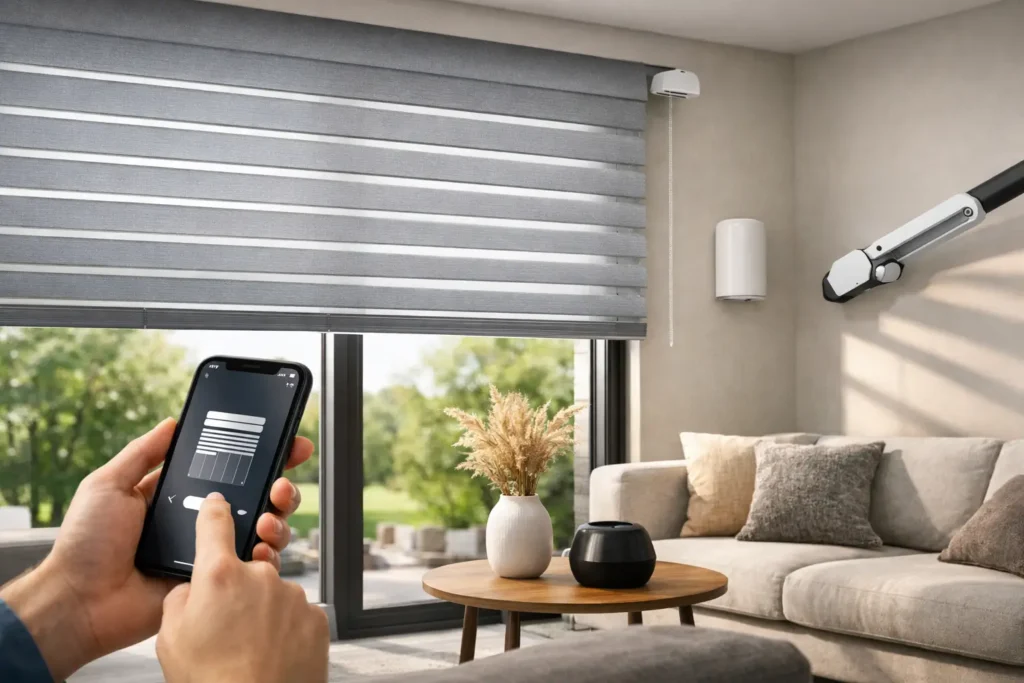
A window treatment can look beautiful and still feel inconvenient if you have to adjust every blind by hand, every day. The best smart blinds features bring together refined design and effortless control, helping you manage sunlight, privacy, comfort, and ambiance with a tap, a schedule, or a simple voice command.
For a modern apartment, villa, office, or hospitality space, smart blinds are more than a technology upgrade. They are a considered finishing detail. The right system should complement the room, operate quietly, fit precisely, and make daily life easier without distracting from the interior design.
Best Smart Blinds Features That Matter Most
Not every motorized blind delivers the same experience. A well-chosen solution balances automation with fabric performance, window size, control preferences, and the way the room is used. These are the features worth prioritizing when planning a custom installation.
Quiet, dependable motorization
The motor is the heart of a smart blind. A quality motor should raise, lower, or tilt the blind smoothly with minimal noise, whether it is installed in a bedroom, executive office, nursery, or hotel suite. Quiet movement matters most in spaces designed for rest or concentration, where a loud motor can quickly make a premium product feel less refined.
Motor strength also needs to match the blind type and dimensions. A compact roller blind on a small window has different requirements from wide blackout blinds covering a wall of glass. Custom sizing and professional installation help ensure the motor has the right capacity, the fabric tracks evenly, and the finished result remains polished over time.
App, remote, and voice control
Convenience should fit your lifestyle rather than force you into one method of control. Most smart blind systems can be operated with a handheld remote, wall switch, smartphone app, or compatible voice assistant. A remote is simple and familiar, while an app is particularly useful when you want to adjust several rooms at once or control blinds while away from home.
Voice control adds another layer of ease. It is useful when your hands are full, when you are settling into bed, or when blinds are installed in hard-to-reach locations. Still, voice control should be viewed as an added convenience, not the only way to operate the system. A reliable manual control option gives every household member, guest, or employee an easy backup.
Scheduled opening and closing
Scheduling is one of the best reasons to choose smart blinds. Instead of remembering to close bedroom blackout blinds each evening or lower office shades before afternoon glare arrives, you can set a routine that handles it automatically.
In a home, blinds can open gradually in the morning to welcome natural light and close at sunset for privacy. In an office, scheduled roller blinds can help reduce screen glare during working hours. For properties in Dubai, where intense sunlight can affect comfort and interiors, timed operation can make a noticeable difference without requiring constant attention.
The most useful schedules are practical rather than complicated. Start with one or two routines for the spaces you use most, then refine them as you learn how the light moves through the room.
Light sensors and smart scenes
Smart scenes allow multiple window treatments to respond together. For example, a “movie night” scene can lower blackout roller blinds in the living room, while an “away” scene can close blinds throughout the home to increase privacy. This is especially valuable in larger villas, open-plan spaces, and commercial interiors with many windows.
Some systems can also work with sunlight sensors. When direct sun becomes too strong, the blind lowers automatically to soften glare and protect furniture, flooring, artwork, and fabrics from prolonged exposure. The exact benefit depends on the fabric selected. Solar screen materials preserve more of the outward view, while blackout fabrics provide the strongest light blockage.
Automation works best when it supports the room rather than constantly changing it. In a bright kitchen, frequent sensor adjustments may be helpful. In a formal living room, a carefully planned schedule may feel more consistent and elegant.
Precise privacy and glare control
Smart operation is only as effective as the blind itself. Selecting the right style is essential for getting the privacy, light control, and visual finish you expect.
Motorized roller blinds offer a clean, contemporary look and work beautifully with blackout, sunscreen, and light-filtering fabrics. Zebra blinds give you flexible light adjustment through alternating sheer and opaque layers, making them a strong choice for living rooms and offices. Venetian blinds allow for precise tilt control, while Roman blinds bring a softer, more decorative finish to bedrooms, lounges, and boutique hospitality spaces.
For bedrooms and media rooms, blackout fabrics are often the preferred choice. For daytime areas, sheer or sunscreen options can diffuse harsh light while maintaining a brighter atmosphere. The best solution may also combine treatments, such as smart blackout blinds behind elegant curtains, giving the room both practical performance and a layered luxury look.
Smart-home compatibility
If your home or office already uses connected lighting, climate control, security, or entertainment systems, smart-home compatibility can be an excellent feature. Integrated blinds can become part of a wider routine: lights dim, curtains close, and the room shifts into evening mode at the same time.
Compatibility should be confirmed before installation, especially for clients building a new smart home or renovating several rooms. Different systems use different hubs, apps, protocols, and power arrangements. Choosing components that work together from the beginning avoids unnecessary complexity later.
For a single room, a remote-controlled motorized blind may be all you need. For a full property, centralized control and integrated scenes can create a more cohesive experience. The right choice depends on the scale of the project and how much automation you will genuinely use.
Battery, wired, and solar power options
Power source is a practical detail that affects both appearance and maintenance. Battery-powered smart blinds can be ideal where wiring is difficult or where you want a cleaner retrofit with minimal disruption. They are popular for completed homes, apartments, and individual rooms, though batteries will need periodic charging or replacement depending on use.
Wired motors are a strong option for new builds, major renovations, and large installations. They provide dependable continuous power and are often preferred when automating many window treatments together. Planning the electrical points early helps keep cables discreet and the installation neat.
Solar charging can reduce battery maintenance in suitable windows with enough daylight. However, it is not appropriate for every setting, particularly where the solar panel would be shaded or where the chosen blind style does not accommodate it well. A professional site assessment helps determine the most suitable option before fabrication begins.
Design Details Still Define the Result
Technology should never come at the expense of appearance. The best smart blinds are tailored to the window and coordinated with the room’s finishes, including wall color, flooring, furniture, curtain fabrics, and hardware. A precise fit prevents distracting gaps, uneven rolling, and visible brackets that can undermine an otherwise elegant interior.
Fabric selection deserves equal attention. Consider the room’s direction, the desired level of privacy, cleaning needs, and whether the blind will be the main window treatment or paired with curtains. In a commercial setting, durability and consistent performance across many windows may be the priority. In a bedroom, softness, blackout capability, and quiet operation are often more important.
Professional measurement is particularly valuable for wide windows, bay windows, floor-to-ceiling glazing, and windows with handles, recesses, or unusual shapes. These details influence the bracket position, blind clearance, motor placement, and overall finish.
How to Choose the Right Smart Blind Setup
Begin with the daily problem you want the blinds to solve. If afternoon heat and glare are the concern, prioritize scheduled operation and sunscreen or blackout fabric. If privacy is the main issue, choose a fabric and blind style that gives dependable coverage at night. If the goal is a more luxurious home experience, focus on quiet motors, coordinated scenes, and finishes that match the rest of the interior.
Then consider whether your project needs one smart blind or a complete automated window treatment plan. A single motorized roller blind can transform a home office. A whole-home solution may include blackout blinds in bedrooms, zebra blinds in living areas, motorized curtains in formal spaces, and centralized control across the property.
Elegant Blinds & Curtains can help turn these decisions into a finished installation, with tailored advice, exact measurement, custom fabrication, and professional fixing. The right smart blind should disappear into your routine while elevating every moment spent in the room – from a brighter morning to a more private, comfortable evening.