
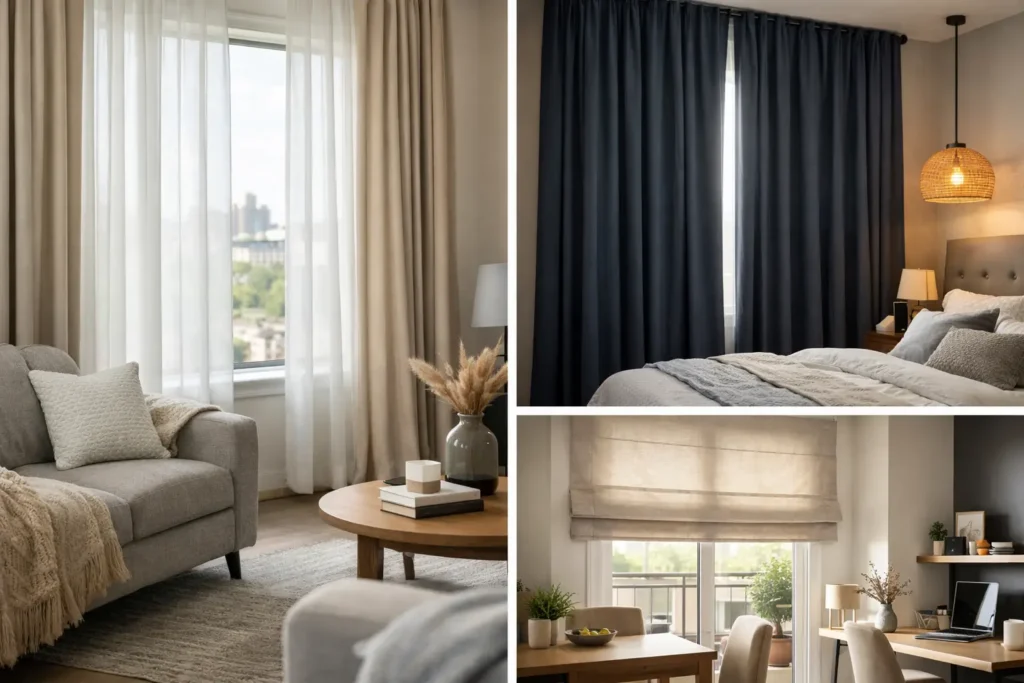
A curtain can make an apartment feel intentionally designed, or make an otherwise beautiful room look unfinished. The best curtains for apartments do more than cover glass: they soften hard architectural lines, control daylight, create privacy from neighboring buildings, and give every room a more comfortable sense of scale.
For apartment living, the right choice is rarely one fabric or one style throughout. A sunny living room has different needs than a compact bedroom, a home office, or a kitchen window. The most polished results come from choosing curtains around how each space is used, then having them measured and tailored for an exact fit.
What Makes the Best Curtains for Apartments?
Apartment windows can be surprisingly varied. You may have floor-to-ceiling glazing in the living area, smaller recessed bedroom windows, sliding balcony doors, or a view that brings in beautiful light but little privacy. Ready-made panels often create awkward gaps, drag on the floor, or appear too narrow once they are pulled closed.
Custom curtains solve these details with proportion. The track or rod can be positioned to make a window look taller and wider, while the fabric fullness is calculated so the curtains still look luxurious when closed. This matters especially in apartments, where every visual decision has more impact in a compact footprint.
The right curtain should balance four essentials: light control, privacy, insulation, and appearance. A dramatic velvet may suit a formal lounge but feel too heavy in a small, sun-filled bedroom. A sheer fabric can make a room feel open and elegant, but it will not provide nighttime privacy on its own. Layering is often the answer.
Choose by Room, Not by Trend
Living rooms: sheers with a tailored blackout layer
Living rooms benefit from flexibility. Sheer curtains filter harsh sunlight during the day while preserving a bright, airy atmosphere. They also soften a city view without completely hiding it, which is ideal for high-rise apartments where the windows are part of the room’s appeal.
Pairing sheers with lined drapes or blackout curtains gives you privacy after dark and better glare control for television viewing. Choose warm neutrals, soft gray, stone, taupe, or a color drawn from your rug or upholstery for a coordinated finish. If the room is small, curtains in a tone close to the wall color can create a more expansive look because they do not visually break up the wall.
For a contemporary apartment, ceiling-mounted tracks are a refined option. They allow the fabric to fall in a clean vertical line and make standard-height ceilings appear taller. A wave heading is especially well suited to modern interiors, creating consistent, elegant folds with minimal effort.
Bedrooms: blackout curtains that support real rest
Bedrooms need stronger light control than most spaces. Streetlights, early morning sun, and illuminated towers opposite your building can all affect sleep. Blackout curtains are a practical luxury here, particularly when they are custom-fitted to reduce side gaps and light leakage.
Do not assume blackout means thick, dark, or visually heavy. Many premium blackout linings can be paired with linen-look, textured, or softly colored face fabrics. This gives you the calming appearance of a decorative curtain with the performance of a sleep-friendly window treatment.
In a bedroom with limited floor space, consider recessed tracks or wall-mounted rods that extend beyond the window frame. When the curtains are open, they can stack back neatly instead of covering valuable daylight or making the window feel smaller. Add sheer curtains if you want daytime privacy without closing the room off completely.
Home offices: control glare without losing focus
A home office needs light, but it also needs screen visibility and concentration. Sheer curtains can soften direct sun, while roller blinds offer precise adjustment when glare becomes disruptive. For apartments with large windows behind a desk, a combination of a light-filtering blind and decorative side panels can look polished while remaining highly functional.
Neutral fabrics and simple headings work well in workspaces because they provide visual calm. If the office is also a guest room or part of an open-plan living area, motorized curtains or blinds offer a particularly convenient upgrade. With one command, you can reduce glare for a video call, increase privacy in the evening, or open the room to daylight in the morning.
Kitchens and bathrooms: practical fabrics first
Full-length drapery is not always the best choice near sinks, stoves, or humid bathrooms. Roller blinds, Roman blinds, and moisture-resistant options are easier to maintain and keep clear of splashes and heat. Choose materials that can be wiped clean and fitted neatly inside or just above the window recess.
This does not mean these rooms need to look purely practical. A textured Roman blind can introduce warmth to a kitchen, while a clean roller blind in a soft neutral can make a bathroom feel more considered. The goal is a finish that looks elegant without asking delicate fabric to do the wrong job.
Fabric, Lining, and Color Change the Result
Fabric determines how curtains hang, filter light, and shape the mood of a room. Linen and linen-look fabrics offer relaxed texture and a breezy character. Cotton blends are versatile and easy to style. Velvet adds depth, sound absorption, and a more formal sense of luxury, although it may be too visually weighty for a very compact apartment unless used carefully.
Lining is just as important as the front fabric. A standard lining improves drape and helps protect the fabric from fading. Thermal or blackout lining adds insulation and stronger light control. In apartments exposed to intense sun, lining can also help protect furniture, flooring, and artwork from fading over time.
Color should work with the amount of natural light in the room. Light colors reflect daylight and make smaller spaces feel open. Deeper shades create drama and intimacy, especially in bedrooms or media areas. Patterned curtains can be beautiful, but they need enough wall space to breathe. In a studio or a room with bold furniture, a textured solid often delivers a more timeless result.
Measure for Height, Width, and Fullness
The most common apartment curtain mistake is buying panels based only on window width. Curtains should generally extend beyond the sides of the window so they can frame the glass when open and provide better coverage when closed. Hanging them higher than the frame, ideally near the ceiling where possible, creates a more generous, custom-designed appearance.
Length matters too. For a premium finish, curtains should either just touch the floor or hover slightly above it. Puddling fabric on the floor can look romantic in a large formal room, but it is less practical in busy apartments and can make a compact space feel cluttered. Curtains that stop noticeably above the floor tend to look accidental.
Fullness is the final detail that separates tailored curtains from flat fabric panels. Sheers typically need more fullness to achieve soft, graceful folds, while heavier drapery can look luxurious with slightly less. Accurate measuring before fabrication ensures the heading, track, fabric weight, and final drop all work together.
When Blinds May Be the Better Apartment Choice
Curtains are not the answer for every window. Roller blinds are excellent for narrow windows, kitchens, bathrooms, and minimalist interiors. Zebra blinds provide adjustable privacy and light control through alternating sheer and opaque bands. Roman blinds suit apartments that need softness but do not have room for fabric stacking at each side of the window.
For sliding balcony doors, curtains often remain the most graceful option because they move easily with the door and cover a wide expanse of glass. Motorized curtain tracks are especially useful for tall or hard-to-reach windows, as well as for anyone who wants the ease of automated daily routines.
The strongest interiors often combine treatments rather than forcing one solution everywhere. A roller blind may be perfect in the kitchen, while wave sheers and blackout drapes elevate the bedroom and living room.
Professional Fitting Is Part of the Design
High-quality fabric cannot compensate for a poorly placed track, uneven hem, or insufficient width. Professional measurement considers the window position, ceiling height, wall clearance, air-conditioning vents, balcony access, furniture placement, and the way a curtain will stack when open. These details determine whether the finished treatment feels effortless.
A tailored consultation also helps avoid expensive compromises. You can see how fabrics respond to your apartment’s daylight, compare lining options, and select a heading style that suits the interior rather than relying on a showroom impression alone. The finished result is more comfortable, more functional, and noticeably more polished.
If your apartment deserves more than off-the-shelf panels, schedule a professional measurement and choose window treatments designed around your rooms, routines, and view. The right curtains turn daily privacy and light control into an elegant part of coming home.