
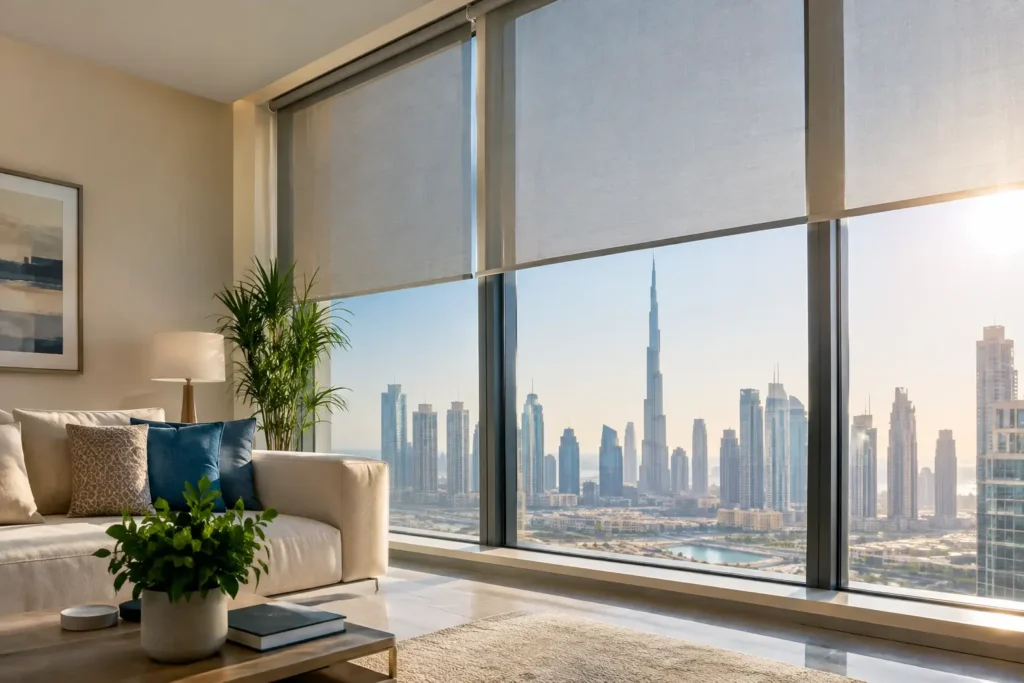
Floor-to-ceiling glass is one of the great pleasures of apartment living in Dubai – until the afternoon sun turns a beautiful view into glare on every screen and heat across the room. This Dubai apartment shading guide helps you choose window treatments that protect comfort and privacy without hiding the architecture that made you choose the apartment in the first place.
The right answer is rarely one standard blind or one curtain fabric used everywhere. Your apartment’s orientation, window size, view, room use, building regulations, and preferred interior style all matter. A tailored shading plan gives each space the control it needs while keeping the entire home visually refined.
Start With the Sun, Not the Fabric
Before choosing a color or style, consider when direct sunlight reaches each room. West-facing apartments often receive the strongest late-afternoon heat and glare. East-facing bedrooms can be bright very early, while south-facing glass may experience long periods of intense light. North-facing windows can still need privacy and soft light control, even when heat is less of a concern.
This is why a living room, bedroom, and home office should not automatically receive the same treatment. A west-facing lounge may need layered blackout curtains and sunscreen roller blinds. A bedroom may prioritize complete darkness and quiet. An office may need daylight without reflections across a laptop screen.
Large corner windows and balcony doors deserve special attention. They create a premium visual statement, but they also introduce more heat, more glare, and more complicated measurements. Custom fitting ensures curtains stack neatly, blinds operate smoothly, and the treatment does not interfere with door handles or access to the balcony.
Choose the Right Shade for Each Room
Living rooms: preserve the view and soften the light
Living rooms benefit from flexibility. Sheer curtains are an elegant choice during the day because they diffuse sharp sunlight, reduce the exposed feeling of glass walls, and preserve a sense of openness. They are particularly effective in apartments with impressive city, marina, or sea views.
For stronger control, pair sheers with lined drapes or blackout curtains. This layered approach lets you enjoy filtered daylight in the morning, privacy in the evening, and deeper shade when the room becomes too warm. It also gives the windows a fuller, more luxurious finish than a single treatment.
Roller blinds are another smart option for a contemporary living room. A sunscreen roller blind can reduce glare while maintaining an outward view, while a blackout roller blind offers more privacy and heat protection. The trade-off is aesthetic: roller blinds have a clean, architectural look, while curtains add softness, texture, and a more decorative presence.
Bedrooms: make sleep the priority
In bedrooms, blackout performance should come before appearance. Early sun, nearby towers, exterior lighting, and irregular schedules can all affect rest. Blackout curtains made to extend beyond the window frame help block light more effectively than narrow, ready-made panels.
A blackout blind can be practical, but small light gaps around the edges are common with inside-mounted blinds. For the best result, combine a blackout blind with blackout curtains, particularly in rooms where daytime sleeping or complete darkness matters. A properly installed track, adequate overlap, and the right fabric lining make a noticeable difference.
For a polished bedroom scheme, sheer curtains can sit behind the blackout layer. This gives the room a softer look during the day without requiring the main drapes to stay closed.
Home offices: reduce glare without closing the room
A darkened office is not always a productive office. The goal is usually controlled daylight rather than full blackout. Sunscreen roller blinds, zebra blinds, or Venetian blinds can limit glare on monitors while allowing natural light to remain part of the space.
Zebra blinds are especially useful when you want quick adjustment throughout the day. Their alternating sheer and opaque bands allow you to filter light, increase privacy, or close the blind more fully. Venetian blinds offer precise control over the direction of light, although they require more regular cleaning than a smooth roller blind.
If your office overlooks another apartment or a busy street, consider how the treatment looks from outside after dark. Daytime privacy fabrics do not always prevent inward visibility when interior lights are on. A second layer, such as curtains or a blackout blind, may be needed for nighttime privacy.
Kitchens and bathrooms: choose materials that work hard
Kitchens and bathrooms need window coverings that tolerate humidity, are easy to wipe clean, and do not crowd practical areas. Roller blinds, aluminum Venetian blinds, and moisture-resistant materials are generally more suitable than heavy fabric curtains.
For kitchens, keep safety and function in view. The treatment should remain clear of stovetops, sinks, and frequently used handles. In a compact apartment kitchen, a clean-fitting roller blind often gives better light control without making the room feel busy.
The Best Dubai Apartment Shading Guide Starts With Layers
Layered shading is one of the most effective ways to balance luxury, function, and comfort. Rather than asking one product to solve every issue, it gives you a daytime layer and a nighttime layer.
A common premium combination is sheer curtains with blackout drapes. The sheers soften the glass and protect daytime privacy, while the drapes provide deeper shade, insulation, and evening privacy. Another practical pairing is sunscreen roller blinds with decorative curtains. The blind handles glare during the day, and the curtains complete the interior design.
Layering is particularly valuable in open-plan apartments. A single room may be used for entertaining, watching television, working, and relaxing. Adjustable treatments let the space change with the occasion without sacrificing its visual calm.
Fabric, Color, and Heat: What Really Matters
Light-colored fabrics can make a room feel airy, but color alone does not determine how well a treatment handles sunlight. Fabric density, lining, weave, and the amount of coverage matter more. A lined curtain with proper fullness generally performs better than a thin, unlined fabric, even if both appear similar from across the room.
Darker fabrics can provide a dramatic, sophisticated look, but they may make a compact room feel heavier when used wall to wall. Neutral tones, warm whites, stone shades, soft gray, and sand-inspired colors suit many Dubai apartments because they complement natural light and modern finishes. These shades also allow furniture, artwork, and flooring to remain the focus.
If you want a bolder color or patterned fabric, use it intentionally. A feature window in a bedroom or formal sitting area can carry more personality, while the rest of the apartment remains coordinated through matching tracks, hardware, or complementary sheer fabrics.
Why Precise Measurement Changes the Result
Shading that looks beautiful in a showroom can disappoint when it is measured or installed casually. Ceiling heights, false ceilings, curtain pockets, AC vents, sprinkler heads, balcony doors, and window recesses all affect the final design.
Curtains mounted close to the ceiling can make an apartment feel taller and more finished. Extending the track beyond the window allows the panels to stack away from the glass, bringing in more daylight when open. For blinds, the decision between inside and outside mounting affects light gaps, privacy, and the overall appearance of the window.
Motorized curtains and blinds also need planning before installation. Power access, track placement, control preferences, and smart-home compatibility should be considered early. Motorization is especially valuable for high windows, wide glass walls, and rooms where you adjust shades several times each day. It adds convenience, but it should feel quiet, reliable, and integrated rather than like an afterthought.
Avoid These Common Apartment Shading Mistakes
The most frequent mistake is choosing a treatment based only on a photo. What looks elegant on a small window may not provide enough coverage for a sun-exposed wall of glass. Another is selecting blackout fabric but overlooking the gaps around the sides and top of the treatment.
Avoid mounting curtains too low or too narrowly. This can make windows appear smaller and prevents panels from clearing the glass properly. It is also wise not to overlook the practical details: whether balcony doors can open freely, whether the blind chain is safely positioned, and whether the fabric can be maintained in a high-use space.
Finally, do not treat all apartment windows as identical. A beautiful result comes from solving the specific conditions in each room while creating a connected look throughout the home.
A thoughtful shading plan can make your apartment cooler, more private, and far more enjoyable at every hour of the day. Elegant Blinds & Curtains can help you turn that plan into a custom-fitted finish with professional measurement, tailored fabrics, precision installation, and motorized options designed around the way you live. Schedule a free measurement to see what your windows can do for your space.