
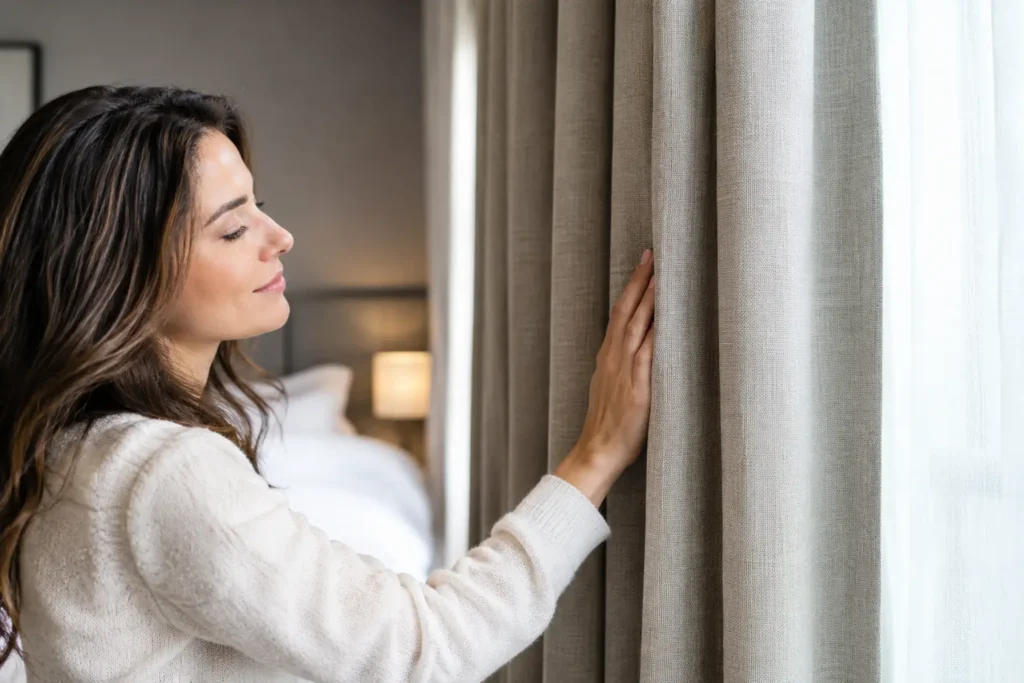
A beautiful curtain face fabric can set the mood for a guest room, but hotel drapery linings determine how that curtain performs after the lights are off, the afternoon sun arrives, and daily housekeeping begins. The right lining gives drapery its body, improves privacy, protects decorative fabrics, and helps each room feel calm, refined, and intentionally finished.
For hospitality projects, lining is not a minor detail hidden behind the fabric. It is a practical design decision that affects guest comfort, maintenance expectations, energy use, and the perceived quality of the room. A tailored solution considers the window orientation, room function, fabric weight, track system, and the level of light control the property promises its guests.
Why Hotel Drapery Linings Matter
Guests may not ask what sits behind a curtain, but they notice the results immediately. A drapery panel without the appropriate lining can appear flat in daylight, allow unwanted light to pass through at night, and fade more quickly under intense sun. In a hotel setting, these issues can quickly turn into reviews about poor sleep, lack of privacy, or rooms that feel less premium than expected.
A lining adds structure so curtain pleats hold their shape and the panels fall with a fuller, more luxurious drape. It also creates a protective layer between the face fabric and the glass. This matters especially in bright locations, where ultraviolet exposure can weaken fibers and gradually alter color. Luxury fabrics deserve that added protection, particularly when replacement across multiple rooms would be costly and disruptive.
The performance benefits extend beyond appearance. Depending on the material selected, lining can support blackout conditions, reduce glare, improve thermal comfort near the window, and soften some of the sharpness of outside noise. It will not make a room fully soundproof on its own, but it can contribute to a quieter, more restful atmosphere when combined with properly fitted curtains, quality tracks, and other acoustic finishes.
Choosing the Right Hotel Drapery Linings
There is no single best lining for every hotel. A beachfront resort with strong morning sun has different needs from a city business hotel, while a suite may require more decorative depth than a compact standard room. The most effective choice begins with the desired guest experience, then balances visual appeal, operational durability, and budget.
Blackout lining for uninterrupted sleep
Blackout lining is often the first choice for bedrooms, suites, and any room where guests need reliable darkness during the day or early morning. It blocks a significant amount of incoming light and improves privacy after sunset. For hotels near active streets, airports, illuminated signage, or pool areas, this can make a meaningful difference to sleep quality.
The result depends on more than the lining itself. Light can still enter around curtain edges, through an improperly sized panel, or above a track that sits too far from the ceiling. For stronger blackout performance, drapery should be measured with sufficient fullness and overlap, with tracks and returns planned carefully. A premium fabric and blackout backing cannot compensate for inaccurate installation.
Blackout options can feel heavier than standard linings, which is usually an advantage for hotel curtains because it creates a polished, substantial fall. However, very heavy constructions may require stronger hardware and careful consideration for motorized systems. The fabric weight, curtain width, and track capacity should be specified together rather than chosen separately.
Dimout lining for softer light control
Dimout lining is suitable when a room needs privacy and softened daylight without complete darkness. It works beautifully in lobbies, restaurants, lounges, meeting spaces, and guest rooms where a more natural morning light is preferred. It can also be paired with sheer curtains to create a flexible layered treatment that looks elegant throughout the day.
This option is often lighter than blackout lining and can preserve a softer drape, especially with delicate or decorative fabrics. The trade-off is straightforward: dimout lining will not deliver the same sleep-focused darkness. It is best selected where ambience and filtered light matter more than total light exclusion.
Standard cotton or poly-cotton lining for shape and protection
A standard lining remains a smart choice for decorative side panels, public areas, and windows where blackout performance is unnecessary. It gives curtain fabric better opacity, a cleaner finish, and added protection from sunlight. It also helps lighter face fabrics hang more evenly, preventing a thin or transparent appearance against the window.
For formal hospitality interiors, this lining can add a classic, tailored character without the weight of a blackout construction. It is a cost-conscious option for areas with limited direct sun, but properties should still assess fabric durability and cleaning requirements before making a final selection.
Thermal and specialty linings for demanding rooms
Thermal linings are designed to help moderate heat transfer at the window. In hot, sun-exposed environments, they can support air-conditioning efficiency by reducing the intensity of solar heat entering through glazing. They are not a substitute for high-performance glass or a well-designed HVAC system, but they can be a worthwhile part of an energy-conscious room design.
Specialty lining choices may also include moisture-resistant options for selected hospitality settings or flame-retardant materials required by project specifications. Fire safety requirements vary by property type and jurisdiction, so certification should be confirmed at the procurement stage. For a hotel project, it is better to verify performance documentation before fabrication than to discover a compliance concern after installation.
The Details That Separate Good Curtains From Great Ones
Lining selection should always be considered alongside the face fabric. A richly textured fabric may need a lining that supports its weight without making it stiff. A light linen-look fabric can benefit from a soft lining that keeps its relaxed elegance rather than creating an overly formal appearance. The goal is not simply to add another layer. It is to create a finished curtain that looks intentional from every angle.
Fullness is equally important. Hotel drapery needs enough fabric to look generous when closed, not stretched across the window. The ideal amount varies by fabric type, heading style, and lining weight. Wave curtains, pinch pleats, and ripple-fold systems each require different calculations to maintain even folds and reliable operation.
Consider the curtain heading and track before ordering. Heavier blackout-lined drapes need professional-grade tracks, smooth gliders, and secure fixing. In high-use guest rooms, the system should withstand repeated opening and closing without pulling, catching, or losing its shape. For motorized curtains, the motor capacity must match the completed weight of the lined drapery, not the face fabric alone.
Maintenance also deserves attention. Hospitality curtains experience far more handling and cleaning than residential treatments. A lining that performs beautifully but is difficult to care for may create unnecessary operating costs. Select fabrics and linings with cleaning methods appropriate to the property’s housekeeping plan, and consider spare panels or a phased maintenance schedule for large installations.
A Layered Window Treatment Creates More Value
Many of the most successful hotel rooms use two layers: a sheer curtain for soft daytime privacy and a lined drape for night, rest, and full privacy. This combination gives guests control over the atmosphere of their room. They can enjoy daylight without feeling exposed, then close the main drapes for a more private and sleep-friendly setting.
Layering also adds visual depth. Sheers make a window feel lighter and more expansive, while lined drapes frame the architecture and bring warmth to the room. In suites and premium rooms, this detail can reinforce the sense of comfort guests associate with thoughtful hospitality design.
For meeting rooms and executive spaces, layering supports different operational needs. A sheer can reduce glare during the day, while lined curtains can be closed for presentations, privacy, or a more focused environment. When paired with motorized operation, staff can control large window treatments quickly and consistently.
Professional Measuring Is Part of the Performance
A lining cannot deliver its full value if the curtains are undersized, poorly placed, or installed on unsuitable hardware. Accurate measurements account for window width and height, ceiling position, track projection, air-conditioning vents, furniture placement, and the amount of overlap needed to reduce side light.
This is where a custom service makes a visible difference. Rather than choosing a ready-made option that comes close, a hotel can specify curtain fabric, lining, fullness, headings, tracks, and automation as one coordinated solution. Elegant Blinds & Curtains provides tailored consultation, precise measurement, custom fabrication, and professional installation for hospitality spaces that need a refined finish without the burden of managing multiple suppliers.
The best hotel drapery linings are the ones guests never have to think about. They simply make the room darker when rest is needed, more private when the curtains close, and more elegant every time the drapes fall perfectly into place. Schedule a professional measurement to create window treatments that perform as beautifully as they look.