
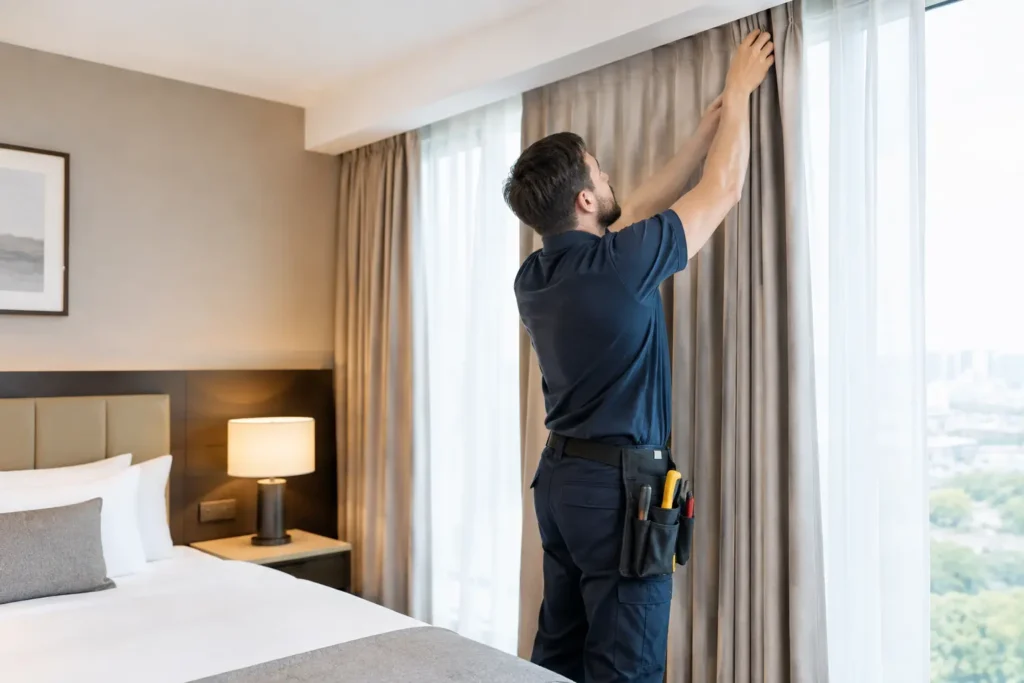
A guest may never comment on the curtain track above the window, but they will notice light leaking around the edges at 6 a.m., a curtain that catches when it closes, or a room that feels exposed after dark. This guide to hotel curtain installation focuses on the details that shape sleep quality, privacy, visual refinement, and long-term performance in guest rooms and hospitality spaces.
Hotel curtains are not simply decorative panels. They work harder than most residential window treatments, opening and closing repeatedly, facing frequent cleaning, and helping each room meet expectations for comfort. The best result comes from treating curtains as part of the room’s operational design, not as a final accessory added after construction.
Start With the Guest Experience
Before choosing fabric, tracks, or headings, define what the window treatment must achieve in each area. A guest room usually needs near-total darkness, daytime softness, privacy, and a polished view from both inside the room and the exterior. Suites, lobbies, meeting rooms, restaurants, and staff areas may require a different balance of light control, acoustics, and style.
For most guest rooms, a layered treatment is the preferred approach: a sheer curtain for filtered daylight and a blackout curtain for sleep and privacy. The sheer keeps the room bright without placing guests in full view of nearby buildings. The blackout layer should overlap generously at the center, sides, top, and bottom. A beautiful blackout fabric cannot compensate for gaps created by an undersized track or poor wall placement.
Consider the room orientation as well. West-facing rooms may need higher-performing blackout linings and heat control, while rooms overlooking busy roads can benefit from heavier fabrics that add a modest acoustic buffer. Curtains will not make a noisy room silent, but the right material and full coverage can soften the space and make it feel more restful.
Measure the Window and the Installation Zone
Accurate measurement is the foundation of hotel curtain installation. Measure the window opening, but do not stop there. The installation team also needs to assess the full width of the wall, the ceiling height, the depth of the ceiling recess if one exists, air-conditioning grilles, sprinklers, lighting, furniture placement, and any obstruction that could interfere with the curtain’s movement.
Ceiling-mounted tracks often create the most refined hotel finish because they make the room appear taller and allow the fabric to fall in one uninterrupted line. When a recessed curtain pocket is available, the track can be concealed for a clean, tailored look. Surface-mounted tracks are also effective when installed precisely and coordinated with the ceiling finish.
The track should extend beyond the window on both sides so the blackout panels can stack away from the glass when open. This preserves the view and improves daylight during the day. The amount of extension depends on the available wall space, curtain fullness, and whether the window is paired with a balcony door or fixed furniture.
Height matters just as much. In most hospitality interiors, curtains should finish just above the floor or lightly kiss it. Panels that hang too high look unfinished, while excessive puddling can collect dust, interfere with cleaning, and create a trip risk. In rooms with thick carpet, final measurements should account for the completed floor level, not just the slab or underlay.
Check the Fixing Surface Before Ordering
A curtain track may carry substantial weight, especially with wide blackout drapes, double-track systems, or motorized operation. The installer must identify whether the fixing surface is concrete, gypsum board, timber backing, metal framing, or another substrate. A track fixed only into weak drywall may loosen over time, causing noisy operation and expensive repairs.
For new builds and renovations, it is wise to plan reinforcement behind the ceiling or pelmet area before finishes are completed. This small construction detail protects the investment in premium fabric and hardware. It also gives the installer freedom to position brackets correctly rather than working around unsuitable fixing points.
Choose Hardware Built for Hospitality Use
Hotel curtain hardware should be selected for daily use, not just showroom appearance. A quality aluminum track with smooth runners is typically the right choice for guest rooms. It should support the fabric weight without flexing and allow a quiet, consistent glide from one end to the other.
For layered curtains, use separate tracks for the sheer and blackout panels. This gives guests control over daylight without compromising privacy. Center-opening blackout curtains are familiar and convenient for many rooms, while one-way draw curtains can suit layouts where a bed, balcony door, or furniture arrangement makes a central stack impractical.
Motorized curtain tracks are especially valuable in premium suites, large glazing areas, smart hotels, and rooms designed for accessibility. They can be operated by wall switches, remotes, bedside controls, or integrated automation systems. However, motorization requires early coordination. Power access, control locations, emergency manual operation, and maintenance access should all be confirmed before installation.
The cheapest track is rarely the most economical option in a hotel. Hardware failures affect room readiness, guest satisfaction, and maintenance schedules. Durable tracks, properly spaced brackets, and reliable gliders reduce callbacks and preserve the tailored look of the room.
Get Fabric Fullness and Blackout Coverage Right
Curtain fullness affects both luxury and function. A panel that is too flat looks sparse and can leave unwanted gaps when closed. Excessive fullness, on the other hand, can create a bulky stack that blocks part of the window and places unnecessary strain on the track.
The ideal fullness depends on the fabric type and heading style. Sheer fabrics generally need more fullness to look soft and elegant, while heavier blackout curtains may require a more controlled allowance. Wave headings are popular for contemporary hotels because they create uniform folds and a neat, architectural appearance. Pinch pleats can feel more formal and are well suited to classic interiors, though they need carefully selected carriers and tracks.
For blackout performance, pay attention to more than the fabric label. Use a sufficiently wide track, overlap the center panels, extend coverage past the sides of the window, and consider side channels or returns where complete darkness is a priority. A pelmet or recessed ceiling pocket can also reduce top light leakage while giving the installation a more finished appearance.
Install in the Right Sequence
The best time to install hotel curtains is after messy construction work, painting touch-ups, and major ceiling work are complete, but before the final room handover. Installing too early exposes fabric to dust, paint, and damage. Installing too late can delay room readiness and force contractors to work around completed furniture.
A professional installation usually begins with a site verification measure, followed by track positioning, secure fixing, glider testing, panel hanging, steaming, and final hem adjustments. Every panel should be checked from several viewpoints: standing at the entrance, sitting on the bed, looking toward the window, and observing the room from outside where relevant. The curtain should open smoothly, close fully, and align evenly without dragging.
In multi-room projects, consistency is essential. Standardized track positions, fabric batches, heading specifications, and installation checks help ensure Room 101 feels as considered as Room 501. Keep a record of the fabric, track model, carrier type, and panel measurements for future replacement or expansion.
Plan for Cleaning and Ongoing Care
Hotel curtains need a maintenance plan from day one. Select fabrics that suit the cleaning method and turnover demands of the property. Some fabrics can be professionally washed, while others need dry cleaning or specialized care to preserve their coating, color, and blackout backing.
Routine vacuuming with a soft upholstery attachment helps remove dust before it settles into the fibers. Maintenance staff should also inspect tracks, hooks, hems, and tiebacks during room checks. A small issue such as a broken glider is easy to resolve early, but repeated pulling on a jammed curtain can damage the fabric and track.
For hospitality projects in Dubai, consider the effects of intense sunlight, dust, and air-conditioning on fabric selection and maintenance frequency. High-quality, properly lined fabrics hold their appearance better and make the room feel consistently cared for between deep cleans.
Leave the Final Details to Skilled Fitters
A hotel curtain installation succeeds when guests barely have to think about it. They simply sleep in darkness, enjoy daylight when they want it, and see a room that feels complete. That experience depends on precise measurement, appropriate fabric, dependable tracks, secure fixing, and thoughtful finishing.
For a new hotel, a refurbishment, or a collection of serviced apartments, Elegant Blinds & Curtains can coordinate custom hotel curtains from fabric selection and free measurement through tailored fabrication and professional installation. Schedule a site consultation early in the project, before ceiling details and electrical points become fixed, and the finished rooms will look as elegant as they perform.