
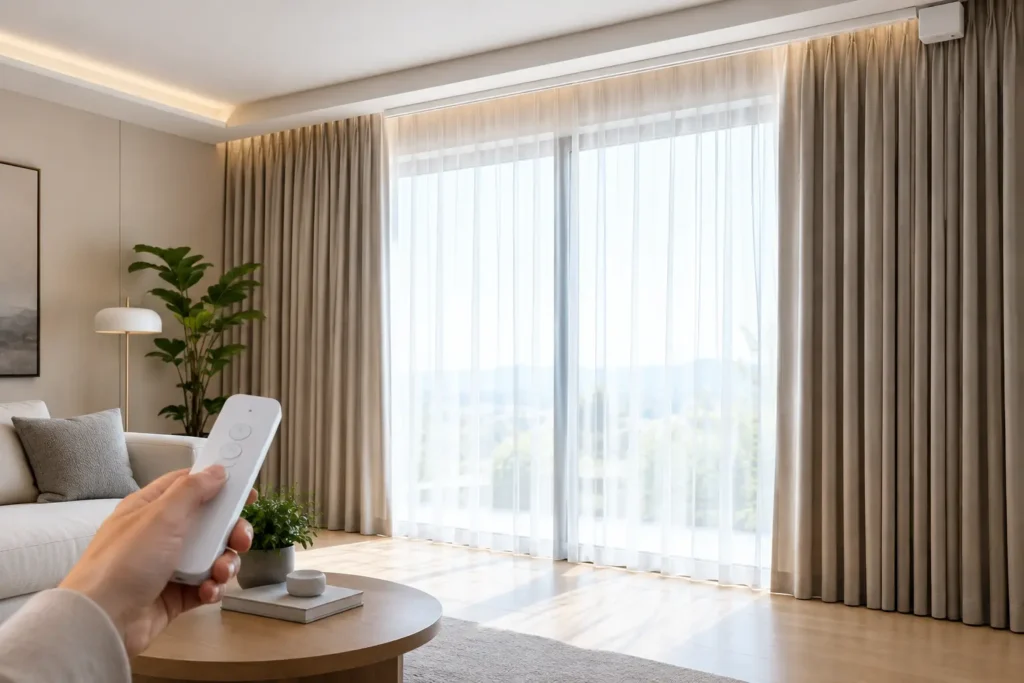
A motorized curtain setup changes more than the way curtains open and close. It changes how a room feels at the moments that matter: bright mornings in a bedroom, a sun-filled afternoon in the living room, a presentation in an office, or the quiet arrival of guests in a hotel suite. With the right fabric, track, motor, and controls, your window treatment becomes a polished part of the interior rather than another task to manage.
For homeowners and businesses investing in premium interiors, the best results come from planning automation around the room, not simply adding a motor to an existing curtain. The size of the window, ceiling detail, curtain weight, desired light control, power access, and smart-home preferences all shape the final installation.
Start With the Room, Not the Motor
Every successful motorized curtain setup begins with a practical design conversation. A bedroom may need blackout curtains that close fully at the touch of a button, while a living room may benefit from layered sheer and blackout curtains for softer daylight control. In an office, motorized curtains can reduce glare on screens and create privacy for meetings without interrupting the workday.
The window itself also matters. Wide glass walls, corner windows, bay windows, and double-height spaces require carefully measured tracks and correctly specified motors. A curtain that is beautiful but too heavy for the selected motor will move slowly or place unnecessary strain on the system. Likewise, a small curtain on an oversized system can look out of proportion and add cost without adding value.
For villas and apartments with large windows, motorization is especially useful because it makes tall or difficult-to-reach treatments easy to operate. In hospitality spaces, it also creates a more considered guest experience while helping staff manage multiple rooms efficiently.
Choose the Right Curtain Style and Fabric
Automation should complement the room’s visual direction. The track and motor perform the work behind the scenes, while the fabric creates the atmosphere guests and residents notice first.
Blackout curtains are a natural choice for bedrooms, media rooms, hotel rooms, and spaces with strong sunlight. They support deeper rest, greater privacy, and better control over early morning light. Sheer curtains offer a lighter, more open look, filtering harsh daylight while retaining a connection to the view. Many clients choose both layers on separate tracks so they can enjoy gentle daylight during the day and complete coverage at night.
Heavier textured fabrics, lined drapery, and sound-reducing curtains can all be motorized, but they require a motor with enough capacity for the total fabric weight. The finished curtain fullness matters as well. Generous pleating gives curtains a luxurious appearance, yet it also adds material and weight. Professional measurement helps balance a rich, tailored look with reliable daily performance.
For a contemporary interior, a discreet ceiling-mounted track can create the impression that curtains fall directly from the ceiling. For more traditional spaces, a decorative pelmet or custom valance can conceal the track while adding depth and refinement. Neither approach is automatically better. It depends on the architecture, ceiling height, and whether the design calls for clean minimal lines or a more layered finish.
Plan the Motorized Curtain Setup Before Finishing Work
Timing is one of the biggest differences between an average installation and an exceptional one. If motorized curtains are considered during renovation or fit-out work, wiring can be hidden inside ceilings, walls, or curtain pockets. This produces a cleaner finish and avoids visible cables near a carefully designed window.
Hardwired motors are often preferred for new builds, full renovations, commercial projects, and frequently used large curtains. They offer dependable power and eliminate the need to recharge batteries. Battery-powered motors can be an excellent alternative for completed homes where opening a wall or ceiling is not practical. They preserve the convenience of automation with less disruption, although periodic charging must be part of the routine.
A professional site visit identifies where the power source, track, brackets, and curtain stack will sit. The curtain stack is the space occupied by the fabric when it is fully open. This detail is easy to overlook, but it can affect how much glass remains visible and whether curtains interfere with furniture, air-conditioning grilles, or nearby doors.
Ceiling Mount or Wall Mount?
Ceiling mounting is popular in modern homes because it visually heightens the room and can cover the full window from top to bottom. It works particularly well when the track is recessed into a gypsum ceiling or positioned inside a dedicated curtain pocket.
Wall mounting may be the better choice when the ceiling cannot support the track, when structural details limit installation, or when the existing interior is already complete. The key is precise bracket positioning. A track installed too close to the wall may prevent the curtains from falling naturally, especially when there are window handles, deep frames, or blinds behind the drapery.
Select Controls That Fit Your Routine
The most elegant automation is the kind you barely think about. A wall switch gives a fixed, intuitive control point. A handheld remote works well for bedrooms, lounges, and guest rooms. App-based control is useful when you want to adjust curtains from elsewhere in the home or check whether they were left open.
Smart-home integration adds another level of convenience. Curtains can be scheduled to open in the morning, close before the strongest afternoon sun, or respond as part of a scene that adjusts lighting and temperature together. For example, a “movie night” setting can close blackout curtains and dim the lights in one action.
Voice control can be appealing, but it should not be the only method of operation. A physical switch or remote remains valuable for guests, children, and anyone who prefers a simple button over an app. The right control package should feel effortless for everyone who uses the space.
Why Professional Measurement and Installation Matter
Motorized curtains rely on small details working together. The track must be level, the motor must be correctly positioned, the carrier spacing must support the selected fabric, and the opening limits must be programmed accurately. If any of these elements are off, curtains may bunch unevenly, stop short of the desired position, or fail to meet cleanly in the center.
This is why made-to-measure service is more valuable than choosing a standard-size system. A trained installer measures the exact width and drop, accounts for architectural obstructions, assesses the mounting surface, and recommends a track configuration that suits the layout. Center-opening curtains are common for symmetrical windows, while one-way opening curtains may be better where a balcony door, furniture arrangement, or view makes one side more practical.
Professional installation also protects the finish of your room. Properly secured brackets, concealed wiring where possible, and carefully dressed fabric give the final treatment the quiet precision expected in a luxury interior. Elegant Blinds & Curtains can coordinate consultation, measurement, fabrication, and fitting so the design and technical work are handled as one considered service.
Care and Everyday Use
Motorized systems are designed for daily convenience, but curtains still benefit from thoughtful care. Keep the track free from dust buildup, avoid pulling the fabric by hand while the motor is operating, and use the controls rather than forcing curtains open or closed. If the curtains become stained, arrange professional curtain cleaning that suits the fabric and lining rather than using a treatment that may affect the material’s drape or color.
For battery motors, set a reminder to recharge before the battery is fully depleted. For hardwired systems, occasional checks of the remote, switch, or smart controls help identify minor issues early. A quality system should operate quietly and consistently. New noise, hesitation, or uneven movement is a reason to have the installation inspected.
Make Automation Feel Like Part of the Design
The strongest motorized curtain setup does not call attention to its mechanics. It supports the room’s light, privacy, comfort, and visual rhythm with a single touch or an automatic schedule. Whether you are furnishing one bedroom, completing a villa, refreshing an executive office, or planning guest rooms for a hospitality project, custom measurement and expert installation turn a useful feature into a lasting interior upgrade.
Book a professional measurement before selecting fabric or hardware. Seeing the window, light conditions, ceiling details, and surrounding finishes in person is the clearest way to create curtains that look elegant, operate beautifully, and suit the way you live.