
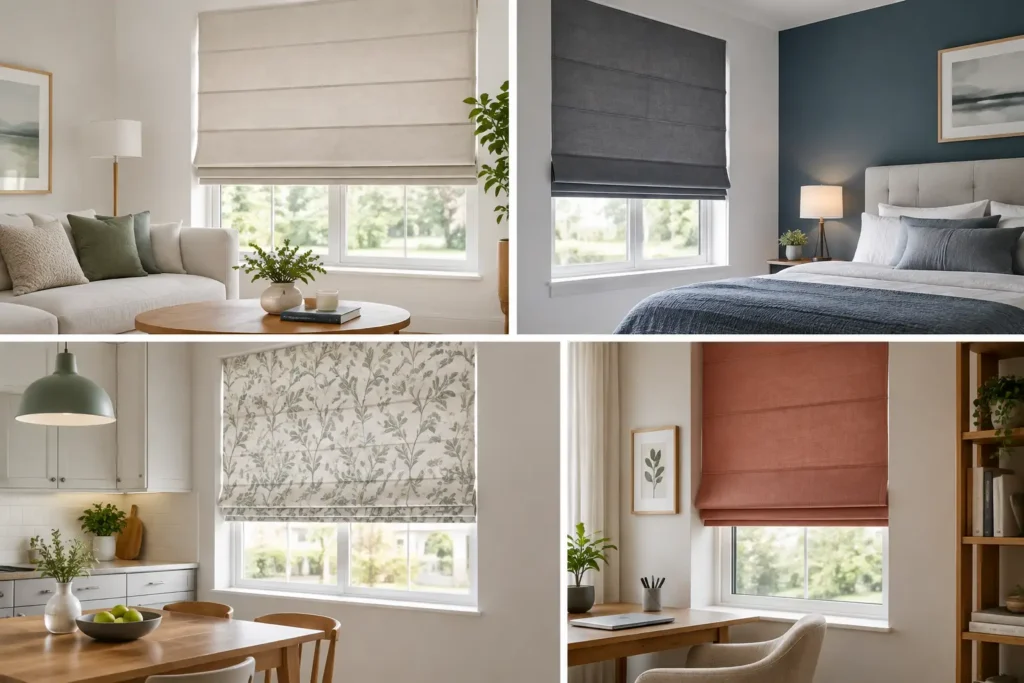
A Roman blind can make a window feel tailored rather than simply covered. Its soft fabric folds bring the warmth of curtains together with the clean control of a blind, making it an excellent choice for refined bedrooms, welcoming living rooms, elegant offices, and boutique hospitality interiors. Knowing how to choose Roman blinds comes down to more than selecting a color you like. The right design must suit the room’s light, privacy needs, window proportions, and daily use.
Custom Roman blinds offer a particularly polished result because fabric, lining, fit, and operating style can be selected around your space rather than forced into a standard size. Here is what to consider before making your choice.
How to Choose Roman Blinds for Your Space
Begin with the job the blind needs to do. A window treatment in a bedroom may need to block early morning light and provide complete privacy. In a living room, you may prefer softly filtered daylight that shows off the view while reducing glare. An office may require practical screen protection without making the space feel dark.
Roman blinds can meet each of these needs, but the fabric and lining must be chosen accordingly. Treat the blind as part of the room’s overall design, not an afterthought. Look at the wall color, flooring, furniture, curtain panels, and the amount of natural light the room receives at different times of day.
A soft linen-look Roman blind can add relaxed texture to a neutral living area. A structured woven fabric may suit a contemporary office or formal dining room. For a more luxurious effect, consider fabrics with subtle sheen, fine embroidery, or a richer texture that catches the light without overwhelming the interior.
Decide How Much Light You Want
Light control is usually the first practical decision. Roman blinds are available with different lining options, and each creates a different feel in the room.
Unlined Roman blinds allow the most natural light through and create an airy, decorative finish. They work best where privacy is not a major concern or where the blind is paired with curtains. A standard privacy lining softens sunlight, protects the face fabric, and prevents the blind from appearing transparent at night.
For bedrooms, media rooms, nurseries, or spaces exposed to strong sun, blackout lining is often the better choice. It significantly reduces incoming light and helps create a more restful, private setting. However, blackout Roman blinds are not always the best choice for a small, shaded room, where a lighter lining may make the interior feel more open.
If you want flexibility, pair Roman blinds with sheer or blackout curtains. The blind can provide neat daytime control, while curtains add extra insulation, privacy, and a more layered luxury finish after dark.
Choose a Fabric That Fits the Room
Roman blinds use fabric as their main visual feature, so material selection has a greater impact than it does with many other blind styles. Before choosing a pattern or color, consider the room’s conditions.
In kitchens, bathrooms, and other areas with humidity, splashes, or frequent cleaning needs, choose a durable fabric that is easy to maintain. In a sun-filled room, quality lined fabric is valuable because it helps protect the blind from fading over time. For bedrooms and formal living spaces, you have more freedom to prioritize texture, softness, and visual impact.
Plain fabrics are versatile and timeless. They can complement statement furniture, patterned rugs, wallpaper, or artwork without competing for attention. Patterned Roman blinds can become a focal point in a simple room, especially on a wide window or bay window. If the room already includes several bold elements, a solid or lightly textured fabric usually creates a more balanced result.
Color should respond to both the window and the room’s atmosphere. Warm neutrals can make a space feel calm and inviting, while charcoal, navy, forest green, or deep taupe can introduce depth and sophistication. Lighter shades tend to visually expand smaller rooms, although a darker blind can look striking when balanced with pale walls and good lighting.
Think About Fold Style and Fullness
Not all Roman blinds fold in exactly the same way. The style affects how much fabric is visible when the blind is raised and how formal or relaxed the finished window will feel.
Flat Roman blinds have a clean, smooth face when lowered. They are well suited to modern interiors, crisp fabrics, and printed designs because the pattern remains easy to see. Relaxed Roman blinds have a softer, gently curved lower edge, creating a more traditional or decorative appearance. They are attractive in bedrooms, villas, and classically styled living rooms, but may feel less appropriate for a highly minimal office.
The size of the window matters too. A wide Roman blind can look elegant, but very large windows may benefit from multiple blinds divided into practical sections. This makes them easier to operate, creates neater folds, and allows you to control light across different parts of the window.
Get the Mounting Position Right
A beautiful fabric cannot compensate for a blind mounted in the wrong place. Roman blinds can be installed inside the window recess or outside it, and the best choice depends on the window depth, the desired coverage, and the final look.
An inside mount sits within the recess and gives a tidy, built-in appearance. It is a strong option when the recess is deep enough and the window frame is attractive. Keep in mind that small gaps at the sides can allow light to enter, so it may not be ideal when blackout performance is the main goal.
An outside mount is fixed above and beyond the window frame. It gives fuller coverage, helps reduce side light gaps, and can make a small window appear taller and wider. Mounting the blind higher than the frame is a simple design choice that often makes ceilings feel more elevated. For blackout bedrooms, an outside mount is generally the more effective option.
Precise measuring is essential. Window recesses are not always perfectly square, and even a minor measuring error can affect how the blind hangs and operates. Professional measurement ensures the fabric allowance, brackets, controls, and final drop are planned correctly before fabrication begins.
Choose the Right Operating System
The operating system should match the blind’s size, weight, and how often it will be used. A chain-operated Roman blind is a practical, reliable choice for many windows and allows accurate positioning throughout the day. Cordless systems can create a cleaner look and are a sensible consideration in family homes where safety is a priority.
Motorized Roman blinds bring added convenience to hard-to-reach windows, wide windows, and homes with multiple treatments. With remote, wall-switch, or smart-home control, you can adjust several blinds without interrupting your routine. They are especially useful in bedrooms, living rooms with tall glazing, executive offices, and hospitality settings where comfort and presentation matter.
Automation is a premium upgrade, but it should be selected for a real reason rather than simply for novelty. If a blind is easy to reach and used only occasionally, a manual system may be the most sensible investment. If you want scheduled privacy, reduced glare during peak sun, or effortless control across several rooms, motorization can be well worth it.
Coordinate Roman Blinds With Curtains
Roman blinds do not have to replace curtains. In many high-end interiors, the two work together beautifully. The blind offers tailored light control close to the glass, while full-length curtains bring softness, scale, and a more complete finish to the wall.
For a coordinated look, choose fabrics that relate without being identical. A textured neutral Roman blind can sit behind flowing sheer curtains, while a blackout-lined blind can be paired with decorative drapes in the same color family. This layered approach is particularly effective for large living room windows, master bedrooms, and hotel-style interiors.
If you prefer a simpler look, Roman blinds can stand alone. This works especially well in kitchens, home offices, smaller bedrooms, and windows where curtain fullness would feel too heavy.
Make Quality and Installation Part of the Decision
A Roman blind should raise evenly, stack neatly, and hold its shape over time. These details depend on quality fabric, correct lining, carefully spaced support rods, durable hardware, and skilled fabrication. A low-cost ready-made blind may seem convenient, but it can leave awkward gaps, uneven folds, or a finish that does not match the room you have invested in.
Made-to-measure Roman blinds offer more control over every element, from the exact fabric and fullness to the mounting position and operating system. They also make it easier to coordinate with existing curtains, upholstery, wallpaper, or a wider interior renovation.
At Elegant Blinds & Curtains, a professional consultation and measurement service helps turn ideas into a properly fitted window treatment, with fabric, lining, and installation selected for the way your room is actually used. Choose a Roman blind that looks considered from every angle, then let expert fitting give it the elegant finish it deserves.