
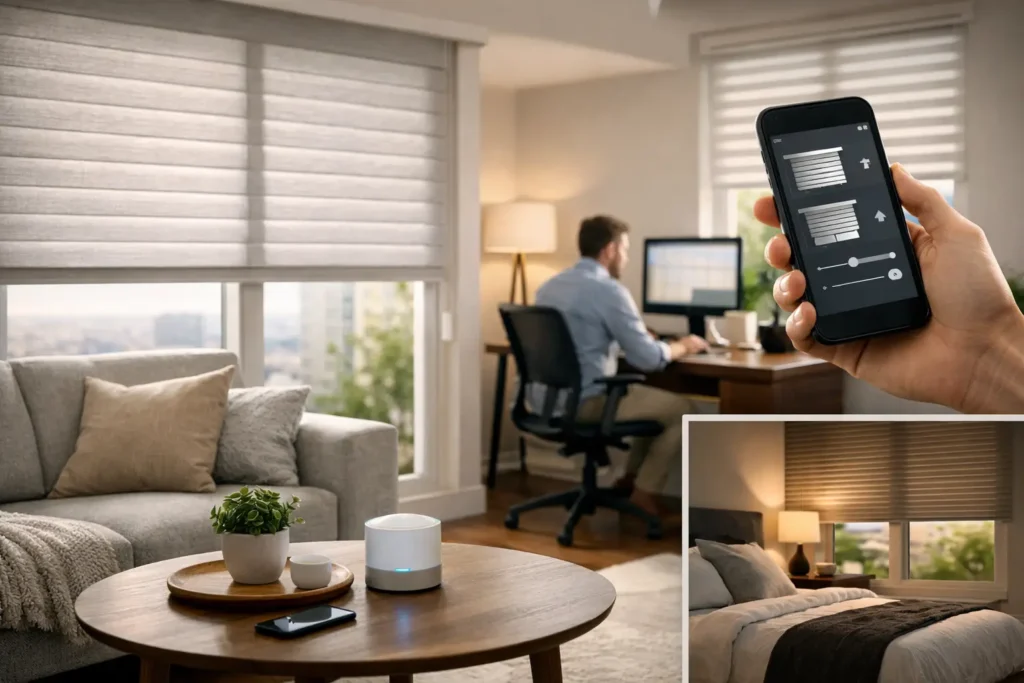
A bright Dubai morning can turn a beautiful room into a space that feels hot, exposed, and difficult to use. Smart blinds give you control without interrupting the look of your interior. With a tap, a remote, a wall switch, or a scheduled routine, you can adjust natural light, privacy, and comfort while keeping your windows dressed in a clean, tailored finish.
For villas, apartments, offices, and hospitality spaces, automation is not simply a modern extra. It is a practical upgrade that makes daily life easier, protects furnishings from harsh sun, and gives every room a more polished atmosphere. The best result comes from choosing the right blind style, motor system, fabric, and installation approach for the way your space actually works.
What Smart Blinds Add to a Well-Designed Space
Traditional blinds do an excellent job when they are measured correctly and selected for the room. Smart blinds add movement and timing to that function. Rather than walking from window to window, you can raise or lower multiple blinds together, set them to open with the morning light, or close them before an afternoon sunbeam reaches your furniture.
This convenience matters most where windows are large, high, or difficult to access. Double-height living rooms, wide sliding doors, stairwells, and meeting rooms are all ideal candidates for motorized operation. It also makes a difference in bedrooms, where a scheduled blackout blind can support a calmer morning routine, and in offices, where glare control needs to happen quickly before a presentation or video call.
The visual benefit is just as valuable. When several windows operate together, the room looks intentionally composed. Blinds sit at a consistent height, the façade appears neat from outside, and there are no dangling chains disrupting a refined interior scheme.
Choosing Smart Blinds by Room, Not Just by Style
A smart blind should solve a specific problem while complementing the furniture, finishes, and light conditions in the room. The most attractive option is not always the most practical one, especially in a climate with intense sunlight and long bright days.
Bedrooms Need Darkness and Quiet Control
For bedrooms, blackout roller blinds are often the most effective automated choice. Their close fit and opaque fabric help reduce incoming light, creating a more restful setting for sleep, afternoon rest, or shift-work schedules. Pairing a blackout blind with full curtains can add softness, improve coverage at the window edges, and create the layered luxury many homeowners want.
A motorized system is particularly useful when the bed is near the window or when you want the room to darken at a set time. However, blackout performance depends on the blind design and installation details. Light can still enter around the sides of a standard roller blind, so clients seeking near-total darkness may benefit from side channels or a curtain-and-blind combination.
Living Rooms Benefit From Flexible Light
Living rooms often need more than one setting. You may want filtered daylight during the day, privacy after sunset, and a darker environment for movie nights. Motorized zebra blinds offer an appealing balance because their alternating sheer and opaque bands can be aligned to soften light or increase privacy without fully raising the blind.
For a softer, more decorative result, automated Roman blinds or motorized curtains can work beautifully. These choices are especially effective in rooms with premium fabrics, feature walls, or formal seating areas. The trade-off is that fabric treatments usually need more consideration around dust, care, and the stacking space required above the window.
Kitchens, Bathrooms, and Offices Need Practical Materials
In kitchens and bathrooms, moisture-resistant and easy-clean materials are often the smarter choice. Motorized roller blinds in suitable fabrics offer a crisp finish and simple daily operation. For bathrooms, privacy should guide the selection first, followed by resistance to humidity and the ability to clean the blind easily.
Offices need controlled daylight without making the space feel closed off. Screen roller blinds can reduce glare and soften bright views while maintaining a connection to the outside. In boardrooms and training rooms, automated blackout blinds are a strong choice for presentations because they can be lowered quickly and evenly when screens are in use.
The Control Options That Matter Most
Smart blinds can be as simple or as connected as you prefer. A remote control is ideal for straightforward operation, particularly in a single room or smaller apartment. Wall switches provide a familiar, built-in feel and suit spaces where guests or staff need easy access to controls.
For a more connected home or workplace, smart controls can be integrated with compatible automation systems. This allows you to group blinds by room, operate them from a mobile device, or create schedules based on your routine. A living room can open in the morning and close during the strongest sun. Meeting-room blinds can lower before the first presentation of the day. Bedroom blinds can rise gradually instead of waking you with sudden brightness.
Automation should feel useful, not complicated. Before selecting a system, consider who will use it and how often. A family may value simple remotes and scheduled scenes. A villa owner may want whole-home control. A hotel or office may need dependable grouped operation that staff can manage easily. The right system is one that makes the room easier to run from day one.
Why Professional Measurement Makes the Difference
Smart blinds rely on more than a good-looking fabric. Accurate measurements, mounting position, power planning, motor capacity, and the weight of the blind all affect performance. A blind that is too narrow can compromise privacy and light control. One that is poorly aligned can look unfinished or wear unevenly over time.
Professional consultation helps answer the questions that are easy to overlook: Should the blind sit inside the recess or outside it? Is there a nearby power source, or is a battery-operated option more suitable? Will a curtain pelmet hide the roller neatly? Can the motor be positioned for convenient servicing? These details create the difference between an automated blind that looks added on and one that belongs to the interior.
Custom fabrication also gives you better control over scale and proportion. Wide windows may need multiple blinds so the fabric remains smooth and the motor operates reliably. Floor-to-ceiling glazing may call for carefully placed brackets and discreet channels. In commercial spaces, fabric openness, fire requirements, and repeated daily use may influence the final specification.
Battery, Wired, or Solar: Which Is Right?
Battery-powered smart blinds are popular when you want a clean installation without electrical work near the window. They are a practical option for existing rooms and can be recharged when needed. Their suitability depends on blind size, use frequency, and access to the motor for charging.
Wired motorized blinds are often preferred for large projects, heavy treatments, and locations where the blinds will be used frequently. They offer dependable continuous power, but they should be planned early, ideally during renovation or construction, so wiring remains hidden and the finish stays elegant.
Solar-powered options can be useful where sunlight is available to support charging, although their performance depends on window orientation and the amount of daylight reaching the panel. Each option has a place. The best choice is based on the window, your control expectations, and how much installation work is appropriate for the property.
Smart Blinds Are an Investment in Comfort
Automation can help manage heat and protect interiors by reducing direct sunlight at the right time of day. It can also support privacy in apartments with close neighboring buildings and improve energy comfort by limiting solar gain before a room becomes too warm. While blinds alone are not a replacement for proper insulation or air conditioning, they can contribute to a more comfortable environment and reduce the need to react after the sun has already filled the room.
They also make high-quality window treatments easier to enjoy. A beautiful blind is more likely to be used every day when it moves effortlessly. That matters for spaces with delicate finishes, expensive furnishings, artwork, and flooring that benefit from more consistent light management.
At Elegant Blinds & Curtains, the process begins with understanding your room, your windows, and the experience you want from them. From a single automated blackout blind to coordinated motorized treatments across an entire property, tailored measurement and professional fixing protect both the appearance and performance of your investment.
If your windows are beautiful but difficult to live with at certain hours of the day, schedule a measurement and see what the right smart blind solution can change. The most successful automation is quiet, precise, and almost invisible – except for the comfort it brings every day.