
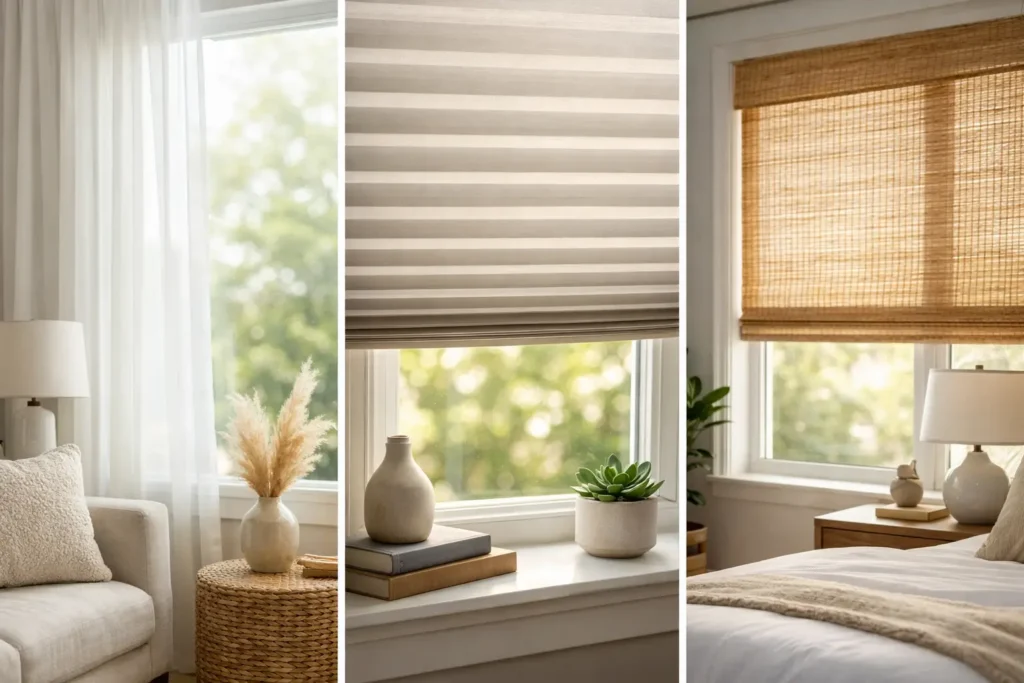
A room can have beautiful flooring, carefully chosen furniture, and a view worth framing, yet still feel unfinished when the sunlight is too harsh. Light filtering window treatments solve that problem with restraint: they soften direct glare, preserve a bright open feel, and bring a refined layer of texture to the window.
For homes, offices, and hospitality spaces, the right treatment is not simply about making a room darker. It is about shaping daylight so it flatters the space, protects interiors, and supports the way people use the room. The best choice depends on your window direction, privacy needs, décor style, and how much control you want throughout the day.
What Light Filtering Window Treatments Do
Light filtering fabrics and shades diffuse sunlight as it enters a room. Instead of sharp patches of light on the floor, reflections on screens, and excessive heat near the window, you get a softer, more comfortable glow. The room remains naturally illuminated without feeling exposed or overlit.
This makes them especially appealing in living rooms, dining areas, home offices, and reception spaces where daylight is welcome but direct sun is not. In Dubai, where bright sunlight is part of daily life for much of the year, filtering that light can make a noticeable difference to comfort and visual balance.
Light filtering is different from blackout. Blackout curtains and blinds are designed to block most incoming light, making them ideal for bedrooms, media rooms, and spaces that need complete darkness. Light filtering options are better for rooms where you want brightness with less intensity.
They can also help reduce UV exposure that may gradually fade upholstery, flooring, artwork, and wood finishes. The degree of protection varies by fabric, color, openness, lining, and product construction, so it is worth selecting materials based on the window’s exposure rather than appearance alone.
The Best Light Filtering Window Treatments by Style
Sheer curtains for softness and movement
Sheer curtains are a classic choice for creating an airy, luxurious interior. Their translucent fabrics gently scatter daylight and add movement to wide windows, balcony doors, and floor-to-ceiling glazing. White, ivory, warm beige, and soft gray sheers work beautifully in contemporary apartments as well as more layered villa interiors.
A sheer curtain offers useful daytime privacy, particularly when the exterior is brighter than the room. At night, however, that privacy changes. When interior lights are on, people outside may be able to see inward, especially at close range. For this reason, sheers are often paired with blackout or dimout curtains on a double track. The result is a polished layered look with flexible control from morning to night.
Light filtering roller blinds for clean lines
Roller blinds suit spaces that need a neat, uncluttered finish. Available in a wide range of colors, textures, and translucency levels, they filter daylight while sitting close to the window. They are a practical option for kitchens, offices, apartments, and rooms with a modern minimalist design.
The fabric matters. A lighter-colored roller blind often creates a brighter feel, while a darker or denser fabric can cut more glare and offer a clearer sense of privacy. For office windows, consider a screen-style fabric designed to reduce glare on monitors while maintaining an outward view. A professional consultation can help determine whether a more open weave or a more private fabric will suit the room best.
Zebra blinds for adjustable privacy
Zebra blinds combine alternating sheer and opaque horizontal bands. By adjusting the bands, you can shift from filtered daylight to greater privacy without fully raising the blind. This makes them a favorite for living rooms, bedrooms, offices, and spaces where conditions change throughout the day.
Their streamlined profile works particularly well in contemporary interiors. They provide more day-to-day flexibility than a fixed sheer curtain, although the visual effect is more structured and less flowing. For clients who value practical control and a clean design statement, zebra blinds offer an excellent middle ground.
Roman blinds for tailored warmth
Roman blinds bring the softness of fabric with a more tailored silhouette. When raised, they form elegant folds; when lowered, they create a smooth fabric panel that gently filters light. They are a strong choice for bedrooms, lounges, dining rooms, and boutique hospitality settings where a window needs warmth without the fullness of drapery.
Because Roman blinds can be custom made in a wide variety of fabrics, they are ideal for coordinating with cushions, upholstery, wallpaper, or a broader interior palette. They work best when measured precisely, particularly on windows with deep sills, handles, or nearby furniture.
Venetian blinds for precise light direction
Venetian blinds allow you to tilt the slats and direct light upward, downward, or away from a workspace. This is useful for home offices, kitchens, bathrooms, and commercial settings where controlling glare is as important as maintaining privacy.
Aluminum, wood-look, and PVC options each create a different visual effect. Aluminum gives a crisp contemporary finish, while wood-look slats can introduce warmth. In humid rooms, moisture-resistant materials are usually the smarter long-term choice. The trade-off is that slatted blinds create a more defined look than soft fabric treatments, so they may not suit every luxury interior scheme.
Choosing the Right Level of Light and Privacy
The phrase “light filtering” covers a broad range of materials. A very sheer fabric can preserve an almost uninterrupted view while offering minimal privacy. A denser woven shade can significantly soften the sun and provide a more sheltered feeling. Neither is automatically better. The right level depends on how the room is used.
For a living room with a view, a sheer curtain or screen roller blind may be the right answer. For a street-facing apartment, a denser light filtering blind, layered curtains, or zebra blinds may offer greater comfort. For a bedroom, light filtering fabric can be beautiful during the day, but it is often best paired with blackout lining or a second blackout curtain if restful sleep is a priority.
Window direction should influence the decision as well. East-facing windows receive strong morning light, while west-facing windows can become challenging in the late afternoon. South-facing glass may require more consistent sun management, especially in rooms with large expanses of glazing. A custom solution considers these details before fabric and color are finalized.
Why Custom Fitting Changes the Final Look
Ready-made window coverings can appear convenient, but a poor fit quickly affects both function and appearance. Gaps at the sides may allow unwanted glare and reduce privacy. Incorrect mounting heights can make ceilings feel lower. A blind that interferes with a window handle or curtain that falls short of the floor can undermine an otherwise beautiful room.
Custom window treatments are measured around the real conditions of the space: window depth, ceiling height, wall clearance, track placement, furniture layout, and the way doors and windows open. This precision is particularly valuable for bay windows, corner glazing, large sliding doors, and unusually shaped windows.
At Elegant Blinds & Curtains, the process can include a professional measurement, fabric and product selection, tailored fabrication, and expert installation. That means the final treatment is designed to look intentional rather than added as an afterthought.
Consider Motorization for Everyday Convenience
Motorized curtains and blinds bring another level of comfort to light filtering designs. With a remote, wall switch, app, or smart-home integration, you can adjust several windows at once and maintain a consistent atmosphere from morning to evening.
Motorization is particularly useful for tall windows, wide curtain tracks, hard-to-reach glazing, and hospitality or office settings. It also makes layering easier: sheers can open in the morning to welcome natural light, then close later for privacy, while blackout curtains remain available when needed. The investment is most worthwhile where convenience, large-scale window coverage, or automated routines are part of the design brief.
A More Considered Way to Dress Your Windows
The most effective window treatment does not compete with the room. It gives daylight a softer presence, protects the comfort of the people inside, and makes every finish around it look more considered. Begin with how you want the room to feel at 9 a.m., at sunset, and after dark, then choose a custom light filtering solution that works beautifully in all three moments.