
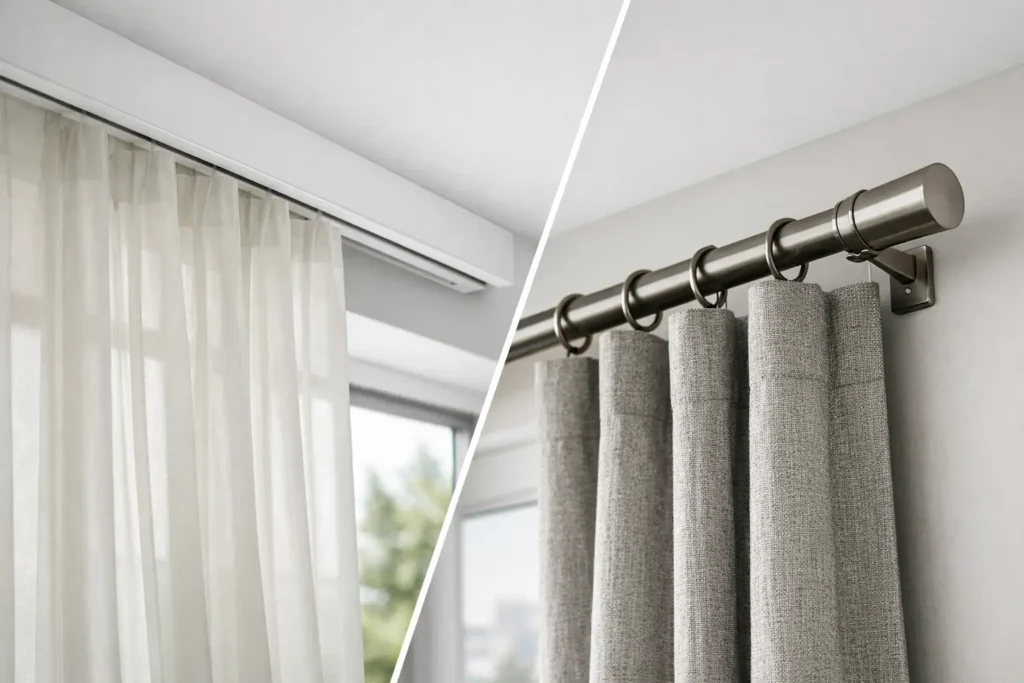
A curtain can be beautifully tailored, lined for blackout performance, and made from a luxurious fabric – yet still look unfinished if the hardware is wrong. The choice between curtain rails versus curtain rods shapes how your window treatment hangs, opens, blocks light, and contributes to the character of the room.
For a relaxed, decorative look, a rod may be exactly right. For a polished wall-to-wall finish or automated curtains, a rail is often the stronger choice. The best answer is not simply about style. It depends on your fabric, ceiling height, window shape, daily routine, and the level of light control you expect.
Curtain Rails Versus Curtain Rods: The Core Difference
A curtain rod is a visible horizontal pole, typically installed above the window and finished with decorative end caps called finials. Curtains hang from rings, eyelets, tabs, or a rod pocket. Because the hardware remains on display, a rod becomes part of the room’s design, much like a lighting fixture or door handle.
A curtain rail, also called a curtain track, is a channel that holds gliders or carriers. The curtain attaches to those gliders and moves smoothly along the track. Rails can be mounted to a wall, fixed directly to the ceiling, recessed into a ceiling detail, or concealed behind a pelmet or valance.
This difference changes the visual effect immediately. Rods frame a window with a deliberate decorative line. Rails allow the fabric itself to take center stage, creating a more continuous, tailored appearance. In contemporary homes, premium apartments, offices, and hospitality interiors, ceiling-mounted rails are particularly valued for their clean architectural finish.
When Curtain Rods Are the Better Design Choice
Curtain rods work beautifully when the hardware deserves to be seen. A slim black rod can give a room a crisp modern edge, while brushed brass or antique bronze can bring warmth and classic character. In a living room with textured linen curtains, a visible rod can make the treatment feel inviting rather than overly formal.
They are also a practical option for lighter curtain panels. Sheers, decorative side panels, and unlined curtains generally move well on quality rings or eyelets. For a bedroom or sitting room where the curtains are opened only once or twice a day, a rod can provide dependable performance with a simpler installation.
Rods are especially suitable when you want to highlight a conventional window shape. They can soften a small window, add width by extending beyond the frame, and create a pleasing focal point. The exposed finials offer a chance to coordinate with nearby metal finishes, including lamps, cabinet handles, and furniture legs.
There are limits, however. A rod usually has brackets along its span, which can interrupt the curtain’s movement. Very wide openings may require a center support, meaning the panels cannot slide freely from one side to the other. Heavy blackout drapery can also place significant load on a standard decorative rod, so quality materials and professional fixing matter.
Why Curtain Rails Create a More Tailored Finish
Rails are designed for smooth movement and flexibility. Since the carriers run inside the track, they support curtains in a controlled, even line. This is ideal for pinch-pleat, ripple-fold, wave, and hotel-style curtains, where the fullness and spacing of each fold are central to the finished look.
A ceiling-mounted rail makes a room feel taller because the fabric begins at the highest possible point. In spaces with generous windows, sliding doors, or full-height glazing, this approach gives curtains the scale they need. The result is refined without feeling busy.
Rails are also the preferred choice for blackout curtains when effective coverage matters. A track can extend beyond the sides of the window, allowing the fabric to overlap the opening and reduce side gaps. For stronger light control, a specialist can recommend return bends, layered tracks, or a discreet pelmet that covers the top gap.
This makes a meaningful difference in bedrooms, nurseries, media rooms, hotel suites, and rooms exposed to intense early-morning sunlight. In Dubai, where sunlight and heat can be particularly demanding, well-fitted blackout curtains on the right rail can improve sleep comfort while supporting a cooler-feeling interior.
Consider How You Use the Window Every Day
The most attractive hardware is only the right choice if it performs well in daily life. Start with the weight of the fabric. Lightweight sheers are forgiving, while lined velvet, thermal curtains, and sound-reducing drapery need a rail or rod rated to carry their weight without sagging.
Next, consider the opening. For wide patio doors and large panoramic windows, a continuous rail is usually easier to operate than a multi-bracket rod. It lets curtain panels travel across a long span with fewer interruptions. For bay windows or curved layouts, bent rails can follow the shape precisely, while rods may need separate sections and more visible joins.
Stacking space is another detail worth considering. This is the room your curtains occupy when fully open. Thick, full curtains need more stacking space than slim sheer panels. If you want to preserve as much daylight and view as possible, the rail should extend far enough beyond the window for the curtains to clear the glass.
The Best Hardware for Layered Curtains
Many premium window treatments combine a sheer curtain for daytime privacy with blackout curtains for evening comfort. This arrangement works best on a double rail, with each layer moving independently. The sheer can remain closed to soften glare, while the blackout layer stays open to preserve the view.
A double rod can achieve a similar effect, but it appears more prominent and needs careful spacing to prevent the fabrics from catching. For a formal or traditional interior, that visible layered hardware can be appealing. For a cleaner look, especially in bedrooms and contemporary living rooms, double rails are usually more discreet.
Layered treatments also require accurate measurements. The front curtain must clear the back layer, both fabrics need sufficient fullness, and the installation height must suit the ceiling and furniture layout. These details are where a made-to-measure consultation prevents a costly compromise.
Motorized Curtains Need the Right Rail
Automation changes the comparison. Motorized curtains operate on purpose-built rails, not ordinary decorative rods. The motor moves the carriers along the track, allowing curtains to open and close by remote control, wall switch, app, or compatible smart-home system.
For tall windows, hard-to-reach areas, wide glass walls, and hospitality spaces, motorized rails offer a major convenience advantage. They also protect delicate fabrics from repeated pulling, helping curtains retain their shape and clean finish over time. Quiet, correctly installed motors are essential in bedrooms and executive spaces where comfort matters.
A motorized rail can be visible or concealed, depending on the look you want. Recessing the track into a ceiling feature creates an especially luxurious result, with curtains appearing to emerge from the ceiling. Planning this early is ideal for renovation and new-build projects, though surface-mounted options can also look elegant in completed rooms.
Choosing the Right Option Room by Room
For a bedroom, prioritize darkness, smooth operation, and full coverage. A ceiling-mounted rail with blackout curtains, optionally paired with a sheer layer, is often the strongest solution. A rod can still work well for a softer decorative scheme, provided the curtain extends generously beyond the window.
For a living room, choose based on the desired personality. Decorative rods add visual character to classic, transitional, or relaxed interiors. Rails suit full-height curtains, layered sheers, minimalist spaces, and large glazing where a clean line is more valuable than visible hardware.
For offices, hotels, and commercial settings, rails are usually the practical leader. They handle repeated use, cover wider spans, support professional-looking pleats, and integrate easily with automation. In smaller rooms with a single straightforward window, a quality rod can remain a stylish and cost-conscious choice.
Professional Measurement Makes the Difference
A rail or rod should never be selected from window width alone. The correct specification considers the curtain heading, fabric weight, desired fullness, wall or ceiling structure, opening direction, furniture placement, and the clearance needed around handles or air-conditioning vents.
Professional installation is equally important. A poorly fixed rod can pull away from the wall under heavy curtains. An incorrectly aligned rail can cause snagging, uneven folds, and gaps that weaken blackout performance. Custom measurement ensures every component works together, from the track length to the final hem.
Whether you prefer the decorative statement of a rod or the tailored performance of a rail, Elegant Blinds & Curtains can help you select fabrics, hardware, and installation details that suit the way you live. Book a free measurement and let your windows receive the finish they were meant to have.