
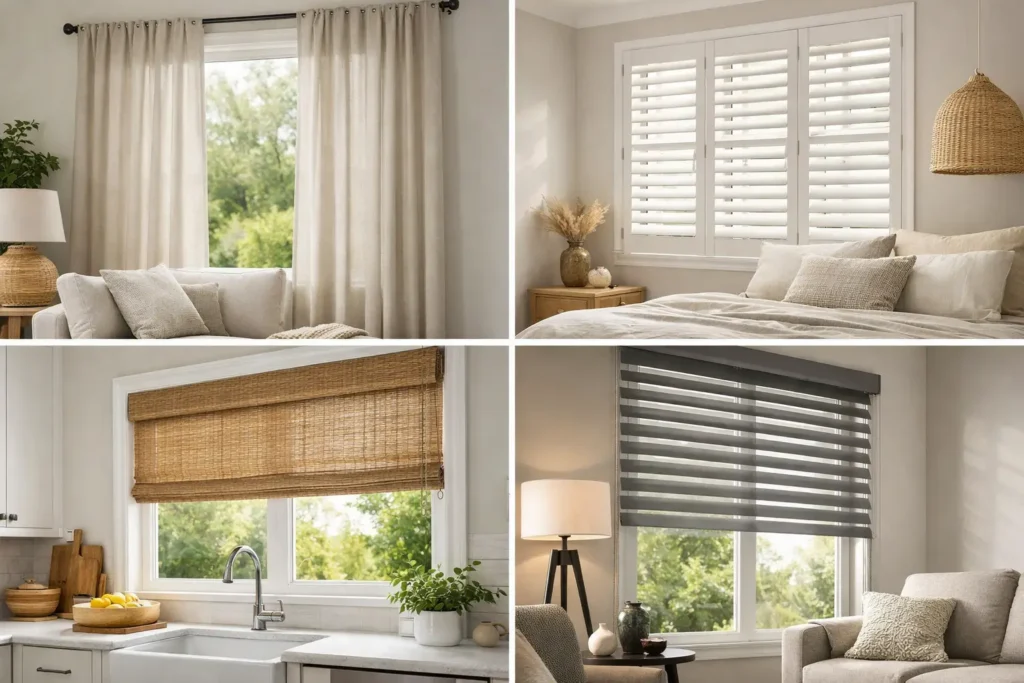
A window can make a room feel bright, open, and polished – or hot, exposed, and unfinished. Knowing how to pick window treatments means looking beyond color and choosing a solution that works with the light, privacy needs, ceiling height, furniture layout, and daily routine of the room. The right curtains or blinds do more than frame a view. They create comfort, add softness, control glare, and give an interior its finished, elevated character.
For a single apartment window, the decision may be simple. For a villa, office, or hospitality space, it deserves a more considered approach. Custom-fitted treatments bring the best result because every window, wall, and room use is different.
Start With What the Room Needs Most
Before selecting fabric, folds, or blind styles, decide what the window covering must do. Most rooms need a balance of light control, privacy, insulation, and visual appeal, but one priority usually leads.
A bedroom may need near-total darkness for restful sleep. A living room often benefits from soft daylight during the day and privacy after sunset. In an office, glare reduction may matter more than complete blackout. Bathrooms and kitchens need finishes that handle humidity and are easy to clean. For hotel rooms, durable blackout performance and a refined layered look are often essential.
This first decision narrows the choices quickly. A beautiful sheer curtain alone will not solve a west-facing bedroom with intense afternoon sun. Likewise, heavy blackout drapes may overwhelm a small kitchen that needs brightness and simple maintenance.
How to Pick Window Treatments Based on Light
Light is one of the biggest influences on comfort and on how colors, flooring, and furniture appear throughout the day. Take note of where the window faces and when sunlight enters the room.
For strong direct sun, blackout curtains, lined drapes, roller blinds, or Venetian blinds provide meaningful control. Blackout curtains are especially effective in bedrooms, media rooms, nurseries, and hotel suites because they limit light penetration and can help reduce heat gain. They are not only for people who want a dark room. They also protect rugs, artwork, and upholstered furniture from fading.
For spaces where daylight is welcome, sheer curtains create a softer, more luxurious effect. They diffuse harsh brightness while maintaining an airy feel and a connection to the view. In a living room or formal lounge, layering sheers with blackout or dimout curtains gives you flexibility from morning to night.
Zebra blinds are a modern option for rooms that need adjustable light without the fuller look of drapery. Their alternating sheer and opaque bands allow you to shift between filtered light, privacy, and a clearer view. Roller blinds offer a cleaner, more minimal profile, making them well suited to offices, kitchens, and contemporary interiors.
Choose the Right Level of Privacy
Privacy requirements change more than many homeowners expect. A high-floor apartment with distant neighboring buildings can use lighter fabrics than a ground-floor villa facing a street or shared outdoor space.
Sheer curtains provide daytime privacy, but at night, interior lighting can make a room visible from outside. If privacy after dark matters, pair sheers with lined curtains, blackout curtains, or blinds. This layered approach also creates a more considered design, with depth and texture rather than a single flat treatment.
Bathrooms need reliable privacy and practical materials. Moisture-resistant roller blinds, faux wood Venetian blinds, or easy-clean blinds are often stronger choices than heavy fabric curtains. For bedrooms, privacy should feel effortless: a treatment that closes fully, covers the window correctly, and leaves no distracting gaps at the sides.
Match the Treatment to the Window Shape and Size
The size of the window affects both the function and the visual proportions of the room. Floor-to-ceiling windows can carry full-length curtains beautifully, especially when tracks are installed close to the ceiling. This creates the impression of greater height and gives even a modest room a more luxurious finish.
For small windows, oversized curtains can still work if they are positioned to frame the wall rather than crowd the glass. However, a Roman blind or roller blind may be the more practical choice where furniture sits directly below the window or where there is little wall space at either side.
Wide sliding doors and large glass walls often benefit from ripple-fold curtains on a ceiling-mounted track. The folds stack neatly when open and create a tailored, architectural look when closed. Motorized curtains are particularly useful here, since wide or tall drapes can be cumbersome to operate by hand.
Bay windows, arched windows, and unusually shaped openings need accurate measurement and a product designed for the specific layout. Ready-made treatments can look uneven or leave coverage gaps. Custom fabrication ensures the treatment follows the window correctly and operates smoothly.
Select Fabrics and Colors That Support the Interior
Window treatments occupy a large visual area, so their fabric and color can change the entire mood of a room. Neutral linens, soft textured weaves, and warm off-whites create a calm, timeless backdrop. Richer fabrics such as velvet or jacquard can add drama and acoustic softness to a formal living room, executive office, or hospitality setting.
The best color is not always an exact match to the wall. A curtain that is one or two tones deeper can create dimension, while a complementary neutral can make the space feel more layered. If the room already has patterned rugs, wallpaper, or bold furniture, a plain fabric usually provides balance. In a quieter room, subtle pattern or texture can give the window a stronger presence.
Fabric weight matters as much as appearance. Lightweight sheers move gracefully and soften sunlight. Medium-weight dimout fabrics offer privacy with a less heavy look than blackout material. Heavier lined curtains tend to hang more formally and can improve comfort in spaces exposed to heat, outside noise, or strong sun.
Consider Blinds, Curtains, or a Layered Design
There is no single best answer because each treatment offers a different benefit. Curtains bring softness, scale, and a premium decorative finish. Blinds offer precise control and a compact profile. Combining them often delivers the most complete result.
A layered setup of sheer curtains and blackout drapes is ideal for bedrooms, lounges, and hotel rooms. It gives daylight without exposure, then privacy and darkness when needed. A roller blind with decorative side curtains can work well in offices or modern living spaces where glare control comes first but the room still needs warmth.
Roman blinds suit spaces where you want fabric character without full-length curtains, such as breakfast areas, dressing rooms, and smaller windows. Venetian blinds offer adjustable slats and a crisp structured look, but they require more regular cleaning than a simple roller blind. Each choice involves a trade-off between softness, control, maintenance, and visual impact.
Plan for Everyday Operation and Maintenance
A treatment should feel beautiful on installation day and remain easy to live with months later. Consider who will open and close it, how often it will be used, and whether the window is easy to reach.
Motorized curtains and blinds add real convenience in tall spaces, large villas, offices, and rooms with multiple windows. They can be operated by remote, wall control, or smart-home systems, making it easy to manage light and privacy throughout the day. Automation is also a polished choice for hospitality settings, where consistent guest comfort matters.
For kitchens, children’s rooms, and high-traffic spaces, choose durable, easy-clean materials. Dust and occasional professional curtain washing help preserve fabric quality, especially with light-colored drapes. Well-made tracks, brackets, and mechanisms are equally important. Even premium fabric will not look refined if the installation is uneven or the curtain does not glide properly.
Why Accurate Measurement Makes the Difference
Window treatments are one of the few interior details where a few centimeters can affect the whole appearance. Incorrect widths cause curtains to look skimpy when closed. Incorrect lengths can make them appear accidental rather than tailored. Blind measurements also depend on whether the treatment is mounted inside or outside the recess, as well as the position of handles, trims, and nearby furniture.
A professional measurement appointment turns preferences into a workable design. It confirms the right track placement, stack-back space, fabric fullness, and operating method before fabrication begins. In Dubai, where sunlight can be intense for much of the year, it also helps identify where blackout lining, heat control, or automated operation will add the most value.
The most successful window treatments do not compete with the room. They make it feel more intentional, more comfortable, and more complete. Book a professional measurement when you are ready to compare fabrics, blinds, and automation options in your own space, where the right choice becomes much easier to see.