
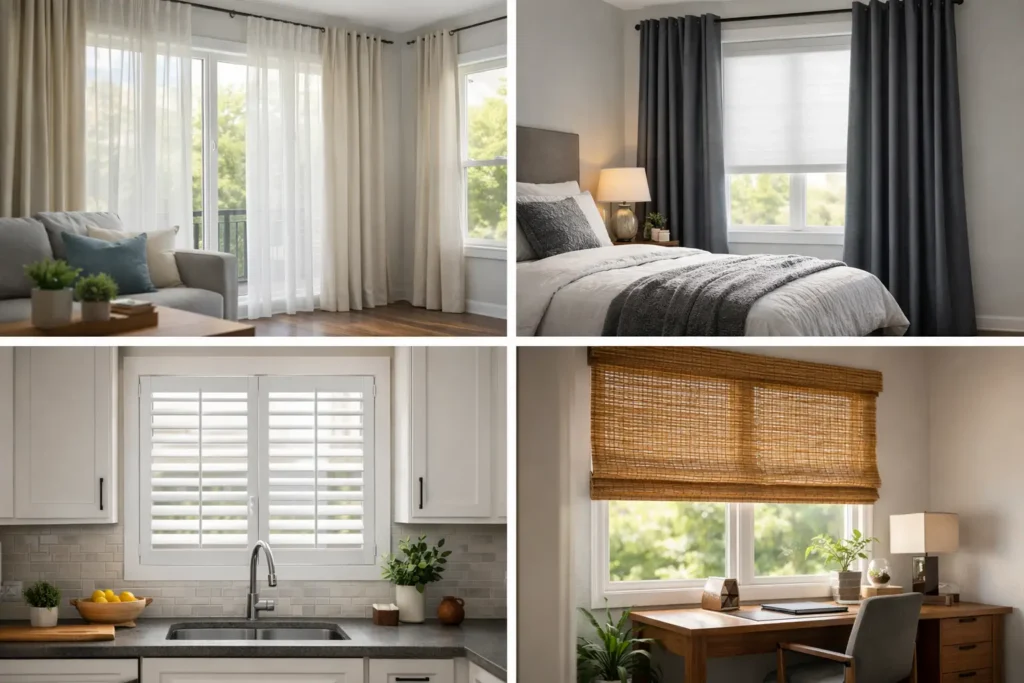
A window covering can make a room feel carefully finished or leave it looking incomplete. The right choice softens strong sunlight, protects privacy, supports comfortable temperatures, and gives furniture, flooring, and wall colors a more polished setting. This window treatment buying guide will help you select curtains, blinds, and automation options that suit how each room is actually used, not simply how it looks in a showroom.
Start With What the Room Needs
Before choosing a fabric, color, or blind style, consider the practical demands of the space. A bedroom may need near-total darkness for restful sleep, while a living room may benefit from soft daylight and daytime privacy. A kitchen needs a treatment that is easy to clean and stays clear of cooking areas. In a bathroom, moisture resistance matters as much as privacy.
Your window direction also affects the decision. West-facing rooms in Dubai often receive intense afternoon sun, making blackout curtains, lined drapes, or sunscreen roller blinds a valuable investment. Rooms that feel dim should not automatically receive heavy blackout fabric. Sheer curtains or light-filtering blinds can preserve privacy while allowing natural light to remain part of the design.
Think about the view, too. If you have a skyline, garden, or balcony view worth enjoying, choose a solution that opens fully and stacks neatly. When the view is less desirable, layered treatments can create a more elegant focal point while giving you control throughout the day.
Curtains, Blinds, or a Layered Finish?
Curtains and blinds solve different design challenges. The best option depends on the room, the window shape, and the finish you want to achieve.
Choose curtains for softness and luxury
Custom curtains bring movement, texture, and visual height to a room. They are especially effective in bedrooms, formal living areas, villas, hotel rooms, and spaces with wide windows or sliding doors. A full-length curtain installed close to the ceiling can make ceilings appear higher and windows look more generous.
Blackout curtains are a strong choice for bedrooms, nurseries, media rooms, and guest rooms. They help reduce incoming light and can also improve comfort by limiting heat transfer. Sheer curtains create a lighter, more airy effect and work beautifully in living rooms, lounges, and dining spaces where daylight is welcome.
Curtains do require thoughtful fabric selection. Heavy fabrics deliver a rich, tailored look but may overwhelm a compact room if the palette is already dark. Lighter linens and sheers feel relaxed and refined, though they will not provide the same darkness or insulation as lined blackout drapery.
Choose blinds for clean control
Blinds are ideal when you want a neat profile, easy operation, and precise light management. Roller blinds offer a minimal, contemporary look and are practical for offices, kitchens, bathrooms, and apartments with limited space around the window. Blackout roller blinds are especially useful where a slim installation and strong light control are both priorities.
Zebra blinds provide a modern balance between filtered light and privacy. Their alternating sheer and opaque panels allow you to adjust the view and daylight without fully raising the blind. Roman blinds add softness and fabric texture while remaining more streamlined than full curtains. Venetian blinds offer adjustable slats and suit rooms that need flexible daylight control, though they may need more regular dusting than a simple roller blind.
Consider combining both
For a premium, finished look, many homeowners pair sheers with blackout curtains or combine a roller blind with decorative side curtains. This layered approach gives you options: soft daylight in the morning, privacy during the day, and darkness when needed. It also adds dimension to larger rooms that can feel flat with a single treatment.
A Window Treatment Buying Guide to Light and Privacy
Light control is often the deciding factor, but it is not all-or-nothing. Consider how you use the room at different times rather than choosing only between sheer and blackout.
Sheer curtains diffuse sunlight and reduce direct glare without closing off the space. They are excellent for rooms where people spend the day, especially when windows face neighboring properties. Light-filtering roller blinds provide a similarly gentle effect in a cleaner, more contemporary format.
Blackout materials are best when sleep, screen visibility, or strong sun protection is the goal. Keep in mind that true darkness depends on more than the fabric. The width of the curtain, the track placement, the fit around the window, and potential gaps at the sides all influence performance. Professional measurement and installation make a noticeable difference here.
Privacy needs also vary. A high-rise apartment may require privacy mainly at night, while a ground-floor villa may need it throughout the day. Zebra blinds, layered curtains, and top-down light-filtering solutions can offer flexibility without making a room feel closed in.
Select Colors, Fabrics, and Hardware With Intention
Window treatments should complement the room rather than compete with every other finish. If your sofa, rug, and artwork already have strong pattern or color, a solid neutral curtain can bring balance. If the room is minimal, textured fabric or a subtle pattern can add welcome depth.
For a timeless result, choose colors that relate to the walls, flooring, or upholstery instead of matching one small accessory exactly. Warm whites, sand, taupe, soft gray, and muted earth tones tend to age gracefully. Deep charcoal, navy, olive, or jewel tones can create drama in larger rooms with sufficient natural light.
Fabric texture matters as much as color. Linen-look fabrics feel relaxed and organic, velvet feels more formal and insulating, while smooth polyester blends can be practical, durable, and easier to maintain. In hospitality settings, offices, and busy family homes, durability and cleaning requirements should be discussed before finalizing the fabric.
Hardware is part of the design. A discreet ceiling track creates a clean, architectural appearance, while decorative rods can add character in traditional or transitional interiors. For curtains, ensure the heading style suits the fabric and fullness. Wave curtains create a smooth, contemporary line, while pinch pleats feel more classic and structured.
Measure for Fit, Not Just Window Size
One of the most common mistakes is buying based only on the glass dimensions. A well-fitted treatment considers wall space, ceiling height, window depth, curtain stack-back, handles, air-conditioning vents, and nearby furniture.
Curtains usually look their best when they extend beyond the window width and reach close to the floor. Installing the track higher than the window frame can create a more elevated, custom look. For blinds, accurate recess measurements are essential, particularly where windows have uneven frames, handles, or limited depth.
Custom measurement is not a luxury detail. It prevents light gaps, dragging hems, awkward proportions, and blinds that interfere with window operation. For unusually wide windows, bay windows, curved areas, or floor-to-ceiling glass, expert planning is the safest way to achieve a clean result.
Decide Whether Motorization Is Worth It
Motorized curtains and blinds are no longer reserved only for large villas or hotels. They are a practical choice for tall windows, hard-to-reach glazing, wide curtain tracks, and rooms where daily convenience matters. With remote, wall-switch, or smart-home control, you can adjust privacy and sunlight without manually handling heavy fabric or multiple blinds.
Motorization is particularly valuable in bedrooms, living rooms with double-height windows, offices, and hospitality spaces. It can also help protect fabrics and mechanisms from repeated pulling. The trade-off is a higher upfront investment and the need to plan power access or battery options before installation. For spaces with one small, easily reached window, manual operation may remain the most sensible choice.
Plan for Care and Long-Term Value
The lowest initial price is not always the best value. Poorly sized curtains, weak tracks, fading fabric, and low-quality mechanisms can quickly make a room feel less refined. Choose materials designed for the level of sunlight, moisture, and daily use in the room, then follow suitable cleaning guidance.
Regular vacuuming with a soft brush attachment helps maintain curtains, while blinds benefit from light dusting and occasional careful wiping according to their material. Professional curtain washing is worth considering for delicate, lined, oversized, or heavily used drapery. It protects the fabric while helping your investment retain its original elegance.
A successful window treatment should feel effortless after installation. Book a professional measurement, bring photos or samples from your space, and let the room’s light, layout, and daily routine guide the final selection. Elegant Blinds & Curtains can help turn those details into custom-fitted curtains, blinds, and automation that make every window feel intentionally finished.