
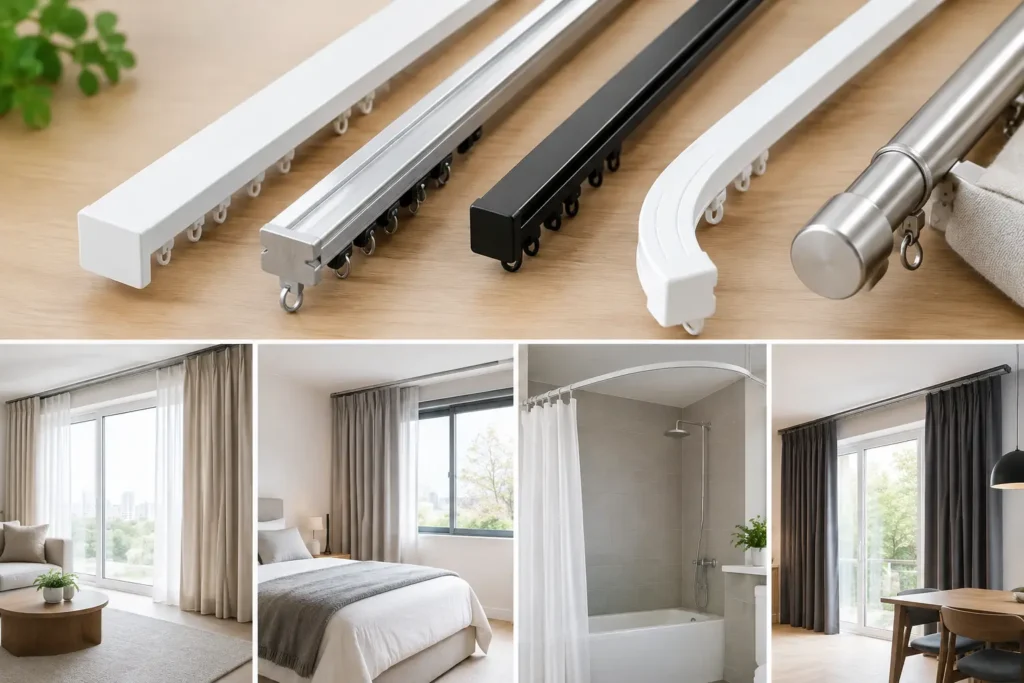
A curtain can only look as polished as the system that carries it. This curtain tracks comparison helps you choose the right support for the fabric, the room, and the finish you want – whether that means soft sheers floating across a living room window, blackout drapes closing tightly in a bedroom, or motorized curtains responding at the touch of a button.
Tracks are often overlooked because they sit behind the curtain. Yet the wrong choice can create visible gaps, uneven movement, sagging fabric, or a finish that feels less luxurious than the curtain itself. The right track keeps everything smooth, balanced, and beautifully tailored.
Why the Track Matters as Much as the Curtain
A premium curtain fabric deserves a precise foundation. The track determines how far the curtain can stack back, how easily it glides, how much weight it can hold, and whether the hardware remains discreet or becomes part of the design.
It also affects light control. In bedrooms, media rooms, hotel suites, and offices, a well-positioned track helps blackout curtains overlap correctly and reduces light escaping around the edges. In living areas, a slim ceiling-mounted track can make curtains appear to start at the ceiling, visually lifting the room and creating a more refined sense of height.
Your choice should be based on more than appearance. Window width, curtain weight, ceiling design, existing pelmets, desired layering, and automation plans all influence the best solution. A professional measurement is especially valuable for wide glass doors, corner windows, curved walls, and full-height curtains.
Curtain Tracks Comparison: The Main Options
Ceiling-Mounted Tracks
Ceiling-mounted tracks are a favorite for contemporary interiors because they create a clean, architectural look. They are fixed directly to the ceiling, allowing curtains to fall from the highest point of the room to the floor. This approach makes lower ceilings feel taller and gives large windows a more dramatic, hotel-inspired finish.
They work particularly well with recessed curtain pockets, false ceilings, and concealed pelmets. When the track is hidden, the attention stays on the fabric and its folds rather than on visible hardware.
The trade-off is planning. Ceiling mounting requires a secure fixing point, especially for heavy blackout or lined curtains. If you are renovating or fitting out a new villa, apartment, office, or hospitality space, it is best to decide on the track location before final ceiling work is complete.
Wall-Mounted Tracks
Wall-mounted tracks attach above the window opening rather than to the ceiling. They are a practical choice when the ceiling is concrete, uneven, decorative, or unsuitable for fixing. They also work well in rooms where a dropped ceiling is not part of the design.
This option can still look elegant, particularly when the track is concealed behind a valance, pelmet, or decorative fascia. It offers flexibility in determining the curtain height and can be easier to install in completed rooms.
However, wall-mounted tracks usually need to sit high and wide enough to prevent the curtain from blocking the glass when open. If installed too close to the window frame, they may allow light gaps at the sides or make a room feel visually narrower. Exact measurement makes a noticeable difference here.
Single Tracks
A single track holds one curtain layer. It is ideal when the goal is simple: one set of blackout drapes for a bedroom, a decorative curtain for a study, or sheer curtains for privacy in a less sun-exposed room.
Single tracks are neat, cost-effective, and easy to operate. They suit minimalist interiors where one fabric provides the required privacy and light control. For example, a blackout curtain on a single track can be an excellent choice in a guest room where daytime softness is less important.
The limitation is flexibility. If you later want both daytime sheers and nighttime blackout coverage, the single track will need to be replaced or supplemented. For many main living spaces and primary bedrooms, a double-track system is a more adaptable long-term investment.
Double Tracks
Double tracks are designed for layered window treatments. One channel carries sheer curtains, while the second supports blackout, dimout, or decorative drapes. This is the classic premium arrangement for bedrooms, living rooms, hotel rooms, and formal reception areas.
During the day, the blackout layer can remain open while sheers soften sunlight and maintain privacy. At night, the main curtains close for darkness, comfort, and a more insulated feel. The two layers add depth and create a richer finish even when the fabrics are simple.
A double track needs more projection from the wall or more space in a ceiling pocket. The curtains must also be selected with appropriate fullness so they do not feel crowded when stacked. Done correctly, it is one of the most versatile and elegant curtain solutions available.
Hand-Operated Tracks
Manual tracks remain a smart choice for standard-sized windows and rooms where curtains are not opened and closed repeatedly throughout the day. Quality manual systems use smooth runners or gliders, making even lined curtains easy to draw without pulling or catching.
For the best appearance, manual curtains can be operated with a wand rather than by handling the fabric directly. A wand helps keep sheer and light-colored curtains cleaner, protects delicate materials, and gives the treatment a more controlled movement.
Manual tracks are generally more budget-friendly than motorized systems and require no electrical planning. They are ideal for guest bedrooms, smaller windows, and projects where practical luxury matters more than automation.
Motorized Curtain Tracks
Motorized tracks bring comfort and sophistication to wider windows, tall curtains, hard-to-reach spaces, and smart homes. With a remote, wall switch, app, or integrated home automation system, curtains can open and close without manual effort.
They are especially useful for large sliding doors, double-height windows, and rooms with multiple curtain panels. Instead of pulling heavy fabric across a wide span, the motor moves it consistently and gently. Scheduled opening can also make bedrooms and living rooms feel more responsive to your routine.
Motorization does require more planning. The track must be sized correctly, the motor position should be accessible, and power needs to be considered before installation where possible. For a polished result, the track, fabric weight, curtain heading, and control method should be specified together rather than treated as separate decisions.
Choosing the Right Track for Your Room
Bedrooms usually benefit from double tracks, combining a sheer layer for daytime privacy with blackout curtains for restful sleep. A ceiling-mounted configuration offers the strongest visual finish and can help reduce side light when the curtain is sized and positioned correctly.
Living rooms often call for ceiling-mounted single or double tracks, depending on how much sun control and privacy you need. Full-height sheers create an airy, luxurious look, while a second layer of textured drapes adds warmth at night. In apartments with floor-to-ceiling glazing, this combination can soften the scale of large glass areas without obstructing the view.
For offices, a single track with practical dimout curtains may be enough for glare reduction and a tailored appearance. Conference rooms and executive spaces may benefit from motorized blackout tracks, particularly where presentations take place or windows are large.
Hotels and serviced residences require tracks built for regular use. Durable components, smooth gliders, precise overlap, and fabrics selected for performance are more valuable than decorative features that cannot withstand daily operation. A room may look luxurious on installation day, but the track must keep performing long after guests begin using it.
Details That Separate a Good Installation From a Beautiful One
The most successful curtain tracks are not chosen in isolation. Track length should extend beyond the window so curtains can clear the glass when open. This protects the view, allows more daylight into the room, and prevents fabric from feeling compressed at the sides.
Curtain return and overlap also matter. Return is the distance from the track to the wall, while overlap is the extra fabric where curtain panels meet in the center. Both help improve privacy and light control, especially with blackout curtains. Small measurement errors can create the light leaks that customers notice immediately after installation.
Weight capacity is another essential detail. Heavy velvet, lined blackout fabrics, sound-reducing curtains, and extra-wide panels need a track engineered to carry them comfortably. A lightweight track may seem sufficient at first, but it can become difficult to operate or lose alignment over time.
At Elegant Blinds & Curtains, track selection is considered alongside fabric, room use, heading style, and installation conditions. This coordinated approach avoids the common problem of selecting a beautiful curtain first and trying to force it onto an unsuitable system later.
Make the Choice Around How You Live
There is no single best curtain track for every property. A concealed ceiling-mounted double track may be perfect for a villa bedroom, while a wall-mounted manual track may be the right solution for a finished apartment where structural changes are not practical. Motorized tracks add meaningful convenience for large or high windows, but a high-quality manual system can be equally elegant in the right setting.
The most valuable step is to have the window measured before ordering fabric or finalizing a design. A tailored recommendation can account for the window dimensions, ceiling structure, curtain weight, privacy needs, and the way you want the room to feel. Book a professional measurement and let the track become the quiet detail that makes your curtains move, hang, and look exactly as they should.