
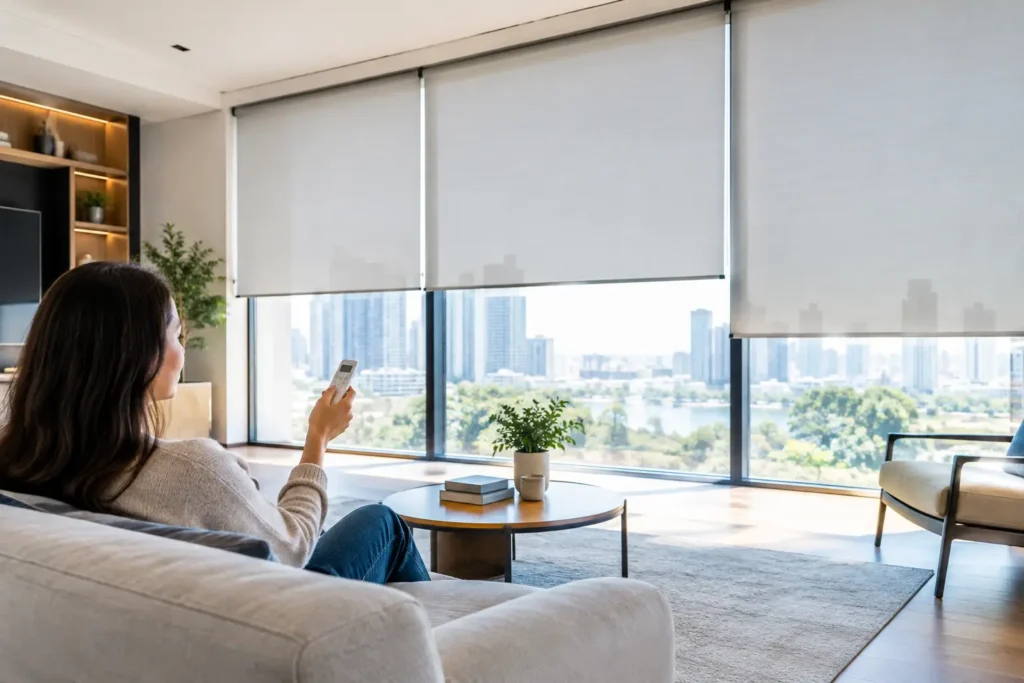
Floor-to-ceiling glazing can make a living room feel extraordinary at noon and uncomfortably exposed by late afternoon. This automated blinds project case shows how a custom motorized solution can turn that daily frustration into precise, elegant control, without compromising the view that made the space desirable in the first place.
The Brief Behind This Automated Blinds Project Case
The project centered on a contemporary residence with wide glass doors, strong afternoon sunlight, and an open-plan living and dining area. The homeowners wanted a refined finish that suited their modern furniture, but their requirements were practical as well: reduce glare on screens, protect furnishings from harsh sun, create privacy after dark, and operate multiple blinds without walking from window to window.
A manual blind would have addressed only part of the brief. On a large glass frontage, several individual controls can quickly feel inconvenient, especially when the room is used for entertaining or relaxing. The better solution was a made-to-measure automated blind system designed around the exact window dimensions, the direction of light, and the way the family used the room.
This is where a professional consultation matters. Automation is not simply a motor added to a blind. Fabric choice, bracket position, control method, blind width, recess depth, and power access all influence how the completed installation looks and performs.
Starting With Light, Not Just Style
The first design decision was determining what kind of light control the room actually needed. A fabric that looks beautiful in a sample can behave very differently across a full wall of glass. The clients did not want to block daylight completely during the day. They wanted softened light, reduced glare, and privacy without making the interior feel closed off.
A sunscreen roller blind was selected for the main living area. Its open weave filtered intense sunlight while preserving an outward view during daylight hours. For the sections where evening privacy was more important, the design allowed for a coordinated blackout layer. This combination gave the homeowners flexibility: filtered daylight when the sun was high, then fuller coverage when needed.
Color was equally deliberate. A warm neutral fabric complemented the wall finishes and helped the blinds read as part of the interior architecture rather than as an afterthought. In premium spaces, the smallest visual decisions matter. The fascia, bottom bar, and installation lines should feel clean from every angle, whether the blinds are raised or lowered.
Why the window orientation changed the specification
West-facing windows often demand more than a standard decorative treatment. Late-day sun can create uncomfortable heat and persistent glare, particularly around televisions, workstations, and dining areas. A tailored solar-control fabric can improve comfort while helping limit UV exposure on flooring, rugs, artwork, and upholstery.
That does not mean every project needs blackout blinds. Bedrooms, media rooms, offices, hotel suites, and sun-exposed villas all have different priorities. The most successful choice depends on whether the goal is visibility, darkness, privacy, heat management, or a balance of several needs.
Planning Automation That Feels Effortless
For this project, the blinds were grouped by zone rather than controlled as one large set. The living area, dining area, and glass doors could each move independently, allowing the homeowners to adapt the room throughout the day. A single scene could lower every blind for privacy, while individual controls made it easy to keep daylight in one part of the space.
The controls were selected for simplicity. Wall-mounted switches offered a familiar option for everyday use, while remote control added convenience from the sofa or dining table. Smart-home integration was also considered, with the ability to connect the blinds to compatible automation systems where required.
Schedules can be valuable, but they are not always necessary. Some homeowners prefer blinds to lower automatically before direct afternoon sun reaches the room. Others want control only when they choose it. The right system should fit the household routine rather than introduce technology for its own sake.
Wired or battery-powered motors?
This decision usually comes down to the construction stage and the condition of the space. Wired motors are an excellent choice during a renovation or new build, when power can be planned discreetly before final finishes are completed. They are especially suitable for larger projects with many window treatments and centralized controls.
Battery-powered automation can be a practical alternative in completed homes where running new cables would disrupt walls or ceilings. It can provide a neat result with less invasive work, although batteries will need periodic charging or replacement. For high, oversized, or frequently operated blinds, a wired option is often the more convenient long-term choice.
A site measurement identifies the best route early. It prevents unpleasant surprises after fabric has been selected and ensures that the motor, brackets, and wiring strategy are appropriate for the window and surrounding finishes.
Precision Measurement Makes the Difference
The visual success of motorized blinds depends heavily on measurement. Large windows magnify even small inconsistencies. A blind that is slightly too narrow can allow unwanted light gaps; one that is oversized may interfere with handles, doors, trims, or ceiling details.
During the measurement stage, the installer assesses more than width and drop. The team checks the mounting surface, available headroom, glass-door clearance, window handles, side gaps, ceiling level, and access for future maintenance. In apartments with concealed curtain pockets or villas with decorative cornices, these details determine whether the final result looks integrated or improvised.
For this case, the blinds were aligned carefully across the glazing so their bottom bars finished at a consistent level. The brackets were positioned to keep the mechanism discreet while allowing smooth movement. The goal was not only reliable operation, but a tailored visual rhythm across the entire wall.
Installation Day: Clean, Coordinated, and Considered
A premium installation should respect the home as much as the design. Once the blinds arrived, the installation team prepared the area, fixed the hardware securely, mounted each blind, connected the motors, and tested every control setting. Fabric was inspected for alignment, and the blinds were run repeatedly to confirm smooth travel.
The handover included guidance on using the remotes, grouping zones, and maintaining the fabric. For smart controls, it is worth taking a few minutes to ensure the homeowner understands the daily routines they want to use. Technology should feel reassuring from the first day, not confusing.
In projects with curtains and blinds together, coordination is especially important. Motorized roller blinds can sit behind elegant sheers for a layered, luxurious appearance, while curtains add softness and acoustic comfort. The treatment must be planned as one composition so tracks, blind mechanisms, and fabric proportions do not compete for space.
What the Homeowners Gained
The transformation was felt immediately. During the brightest part of the day, the room remained comfortable enough for reading, working, and watching television. At night, privacy could be created in seconds. The clients also gained a cleaner look because the controls and hardware were selected to complement the interior rather than distract from it.
Automation brought an additional benefit that is easy to overlook: consistency. Instead of leaving blinds half-open because operating several windows feels tedious, the homeowners could set the room exactly as they wanted. That regular use helps make light management part of the space, not a task that gets postponed.
For commercial settings, the same thinking can improve meeting rooms, executive offices, restaurants, and hotel suites. A well-planned automated blind system supports guest comfort, screen visibility, privacy, and a polished brand environment. The scale may change, but the design process remains centered on function, finish, and dependable operation.
Is an Automated Blind System Right for Your Space?
Motorized blinds are particularly worthwhile for high windows, wide glass walls, hard-to-reach areas, and rooms where light changes quickly during the day. They are also ideal for homeowners who value convenience and want an organized, high-end finish. However, a smaller room with one easily accessible window may be perfectly served by a manually operated blind. The best choice depends on the room, budget, usage, and desired level of control.
Elegant Blinds & Curtains can help you assess those details through a professional measurement and design consultation. Bring your plans, photos, or inspiration for a single room or an entire property, and let the window treatment be designed around the way you want to live. A thoughtfully specified blind does more than cover glass – it gives every room a more comfortable, composed way to respond to the day.