
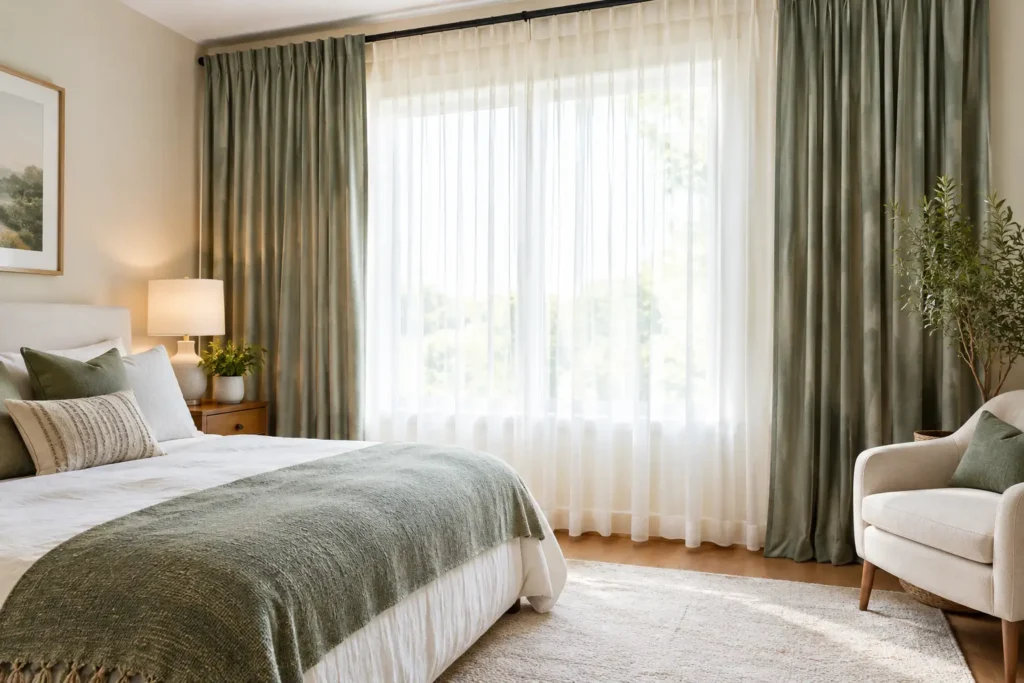
A beautifully dressed window does more than finish a room. It softens hard architectural lines, controls Dubai’s intense daylight, improves privacy, and gives the entire space a considered, luxurious feel. Learning how to layer curtains beautifully is less about adding extra fabric and more about choosing the right combination of fabrics, tracks, proportions, and function.
For a villa living room, a city apartment bedroom, a boutique office, or a hotel suite, layered curtains create the flexibility that a single treatment often cannot. Sheers can keep the room bright and private during the day, while heavier drapes provide darkness, insulation, and a more intimate atmosphere at night. When tailored and installed correctly, the result feels effortless rather than overdecorated.
How to Layer Curtains Beautifully: Start With Function
Before selecting colors or patterns, decide what the window needs to do. The best layered curtains are designed around the way a room is used, not only around a fabric swatch.
In bedrooms, the most successful pairing is often a light-filtering sheer curtain with a lined blackout curtain. The sheer softens daylight and reduces direct views into the room, while the blackout layer supports better sleep, privacy, and a calm retreat-like mood. In a living room, a translucent sheer paired with textured linen-look drapes may be enough, particularly when you want softened sun rather than complete darkness.
For offices, restaurants, and hospitality spaces, performance deserves equal attention. Fabrics may need to manage glare on screens, protect furnishings from harsh sun, absorb some sound, or meet project-specific durability requirements. A layered treatment can do all of this while maintaining a refined, welcoming appearance.
The key is to let each layer have a clear job. If both layers are equally heavy, the window can look crowded and block too much natural light. If both are too sheer, the treatment may look attractive but fail to provide privacy or comfort when needed.
Choose the Right Layering Combination
The classic arrangement places sheers closest to the glass and decorative or blackout curtains in front. This layout is popular for good reason: the sheer remains useful during the day, and the front drapes can be opened wide to frame the window when not in use.
White, ivory, soft sand, and warm gray sheers suit most interiors because they diffuse light without competing with furniture or wall finishes. For the front layer, choose a fabric that adds purposeful contrast. This may be a matte blackout in a deep neutral, a soft velvet for a formal lounge, or a textured woven fabric for a contemporary family room.
Color should relate to the room rather than match every element exactly. Curtains in the same shade as the wall create a quiet, expansive look. Curtains one or two tones deeper add definition. If the room already has statement flooring, patterned furniture, or wallpaper, plain drapes usually provide the balance. In a simpler room, a subtle weave, tailored border, or restrained pattern can give the window more presence.
There is also a practical trade-off between airy appearance and light control. Lightweight sheers look graceful when they are generously full, but they do not block glare. Blackout curtains improve darkness dramatically, though thicker fabrics need more space around the window and a sturdier track. A professional measurement helps ensure the layers work together without feeling bulky.
Use Fullness to Create a Premium Finish
Curtains should not look stretched flat across the window. Fullness is what gives fabric its soft folds and elegant movement. As a general design principle, sheers need more fullness than the front drapes because their lightness is part of their appeal.
The exact amount depends on the fabric, heading style, and the width of the opening. Delicate sheers may need generous gathering to avoid looking sparse, while heavy velvet needs less because its weight naturally creates deeper folds. Ripple-fold and wave headings offer a clean, contemporary line, while pinch pleats bring structure and formality.
A custom-made treatment allows the fabric quantity, heading, and track to be chosen as one complete design. Ready-made panels can be tempting for a quick update, but they often fall short at the edges, sit at an awkward height, or lack the fullness that gives curtains their polished finish.
Hardware Is Part of the Design
Layered curtains need two channels: one for sheers and one for the main drapes. A double curtain track is usually the cleanest option, especially in modern interiors where the hardware should visually disappear. Recessed ceiling tracks can make curtains appear to flow directly from the ceiling, creating a taller and more architectural look.
A double rod can also work, particularly in traditional rooms or where decorative finials complement the interior. However, rods take up more visual space and may not suit every window shape. For wide glass walls, corner windows, or floor-to-ceiling openings, a custom track system generally delivers smoother movement and more reliable alignment.
Mounting height has a major effect on the final result. Installing the track close to the ceiling rather than directly above the window makes the room feel taller. Extending the track beyond each side of the window lets the curtains stack away from the glass, preserving more daylight and a clearer view when open.
This detail matters even more in compact apartments. A window may be modest in size, but a ceiling-mounted, wall-to-wall curtain treatment can make it feel intentional and generous.
Get Length and Proportion Right
For most residential spaces, floor-length curtains are the most elegant choice. They should either just kiss the floor or break very slightly, depending on the style of the room. Curtains that hover noticeably above the floor can make a premium fabric look unfinished.
A clean, tailored skim is ideal for contemporary homes, offices, and frequently used spaces because it is easy to maintain. A small puddle of fabric on the floor can feel romantic and formal, but it is less practical in busy family rooms, hotels, or areas where curtains need regular cleaning.
Width matters as much as length. The front drapes should frame the window when open rather than cover a large portion of the glass. At the same time, they need enough overlap at the center and sides when closed to prevent light gaps. This is particularly important for blackout curtains in bedrooms and media rooms.
Consider Motorized Layered Curtains
Motorization adds a level of convenience that suits layered window treatments exceptionally well. With separate motorized tracks, you can open the blackout curtains in the morning while leaving the sheers closed for privacy, then adjust both layers in the evening without handling the fabric.
This is useful for tall windows, large sliding doors, and hard-to-reach installations. It also helps preserve the appearance of premium fabrics by reducing daily pulling and uneven handling. In smart homes, curtains can be scheduled around sunrise, sunset, or occupancy, providing comfort with a more polished daily routine.
Motorization is an investment, so it makes the most sense for frequently used windows, large-scale glazing, or projects where convenience and integrated interiors are priorities. For a small guest room, a well-designed manual double track may be the more practical choice.
Avoid These Common Layering Mistakes
The most common mistake is treating layered curtains as two unrelated purchases. A sheer and a blackout panel may both be beautiful alone, yet still clash in texture, tone, pleat style, or proportion when installed together. Review the fabrics side by side in the room’s natural and artificial light before deciding.
Another issue is choosing tracks that are too short or too shallow. Layers need enough projection from the wall so that the fabrics hang freely without rubbing, bunching, or catching on window handles. They also need a proper stacking allowance, especially with thick blackout lining.
Finally, do not underestimate exact measurement. Uneven floors, air-conditioning bulkheads, curtain recesses, balconies, and sliding doors all affect how a layered treatment should be tailored. What looks straightforward in a photograph can require a carefully planned solution on site.
At Elegant Blinds & Curtains, a professional consultation brings fabric selection, free measurement, custom tailoring, and expert fixing into one coordinated service. The right layers should feel natural in daily life: bright when you want daylight, private when you need quiet, and impeccably finished from every angle. Schedule a measurement, and let your windows become one of the most elegant features in the room.