
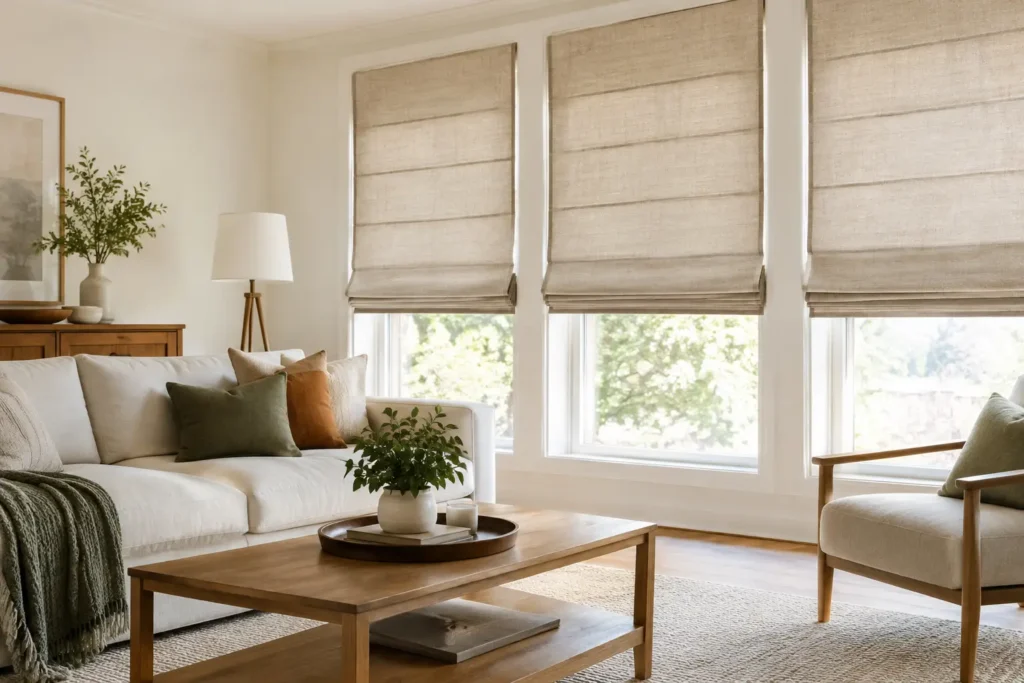
A window can have the right view and still make a room feel unfinished. Bare glass often leaves living spaces too exposed, bedrooms too bright, and offices overly harsh by midday. Roman blinds solve those practical concerns while introducing the softness and tailored finish usually associated with custom curtains. Their clean folds add depth without crowding the window, making them a refined choice for apartments, villas, offices, and hospitality interiors.
What Makes Roman Blinds Different?
Roman blinds are fabric window coverings that lift into neat horizontal folds when raised and sit flat or gently structured when lowered. Unlike roller blinds, which roll into a tube, Roman blinds keep the fabric visible at every position. The result feels warmer, more decorative, and especially well suited to interiors where texture and detail matter.
They work beautifully as a standalone treatment on a compact window, but they can also be layered with sheer curtains or full drapery for a more luxurious look. That flexibility is one reason Roman blinds remain popular in both classic and modern interiors. A linen-look fabric can create relaxed elegance, while a structured weave, velvet, or patterned textile can become a focal point.
The finished appearance depends on the style of fold, fabric weight, lining, and installation. This is why made-to-measure work matters. A blind that is slightly too narrow, hung at the wrong height, or made with fabric that does not suit its mechanism can lose the polished effect that makes this style special.
Why Roman Blinds Suit So Many Rooms
The appeal is not just visual. Roman blinds offer an effective balance of light control, privacy, and softness, particularly where full-length curtains may feel too heavy or take up too much room.
Bedrooms That Need Better Darkness
A lined Roman blind gives a bedroom a composed, hotel-inspired finish while reducing intrusive daylight. For stronger room darkening, blackout lining is the better choice. It can help make early mornings, street lighting, and intense afternoon sun less disruptive without adding bulky layers around the bed.
Complete blackout still depends on the blind’s fit and the gaps around the window. If total darkness is the priority, a custom measurement and a carefully chosen mounting position are essential. Pairing the blind with side curtains can further reduce light leakage and add a more dramatic, luxurious frame to the room.
Living Rooms With a Softer Finish
In living rooms, Roman blinds introduce fabric texture without covering the entire wall. They are ideal for windows behind sofas, beside reading corners, or above built-in seating where floor-length curtains may be impractical. A light-filtering fabric preserves daylight while reducing glare, helping the room feel bright rather than exposed.
For a more layered design, a Roman blind can handle privacy and direct sun while sheer curtains soften the wider window area. This combination gives homeowners more control throughout the day and creates a finished look that feels intentional from every angle.
Kitchens, Dining Areas, and Smaller Windows
Roman blinds are a strong option for windows above counters, sinks, or banquettes because they stay contained within the window area. The key is selecting a practical fabric. In kitchens, choose materials that can handle occasional moisture and are easy to maintain. Avoid delicate textiles directly beside an active cooking zone, where grease and steam may shorten their lifespan.
A patterned or textured Roman blind can also bring personality to a neutral dining area. Since the treatment uses less fabric than full curtains, it is a smart place to introduce a richer color, subtle print, or tailored trim.
Offices and Hospitality Spaces
Offices benefit from a window treatment that looks professional without feeling cold. Roman blinds can soften glass-heavy meeting rooms, executive offices, reception spaces, and boutique commercial interiors. The right fabric helps manage glare on screens while supporting a more comfortable atmosphere for staff and visitors.
In hospitality settings, durability and consistency are just as important as style. Coordinated Roman blinds can complement upholstered furniture, headboards, wallpaper, and curtains while offering guests easy privacy and light control. Commercial projects should use fabrics and mechanisms selected for the expected level of daily use.
Choosing the Right Fabric and Lining
Fabric is the heart of a Roman blind. Before choosing a color, consider how the room is used, which direction the window faces, and how much privacy or darkness is needed. A fabric sample may look very different once sunlight passes through it, so reviewing options at the window is far more reliable than choosing from a screen alone.
Light-filtering fabrics are suitable for living rooms, dining spaces, and offices where natural light is welcome but direct glare is not. Blackout fabrics or blackout linings are better for bedrooms, media rooms, and spaces where privacy is non-negotiable. Sheer or semi-sheer choices can look elegant, though they are best used where privacy is less of a concern or where another window treatment provides backup.
Color affects more than decoration. Pale neutral fabrics often make a room feel open and calm, especially in smaller apartments. Deep tones add contrast and a sense of intimacy, but may absorb more heat on sunny windows. Prints can create character, yet an oversized pattern may be lost in the folds of a narrow blind. A tailored consultation helps match the scale of the pattern to the dimensions of the window.
Manual or Motorized Roman Blinds?
Manual Roman blinds are a dependable, cost-conscious option for windows that are easy to reach and adjusted occasionally. A smooth, well-fitted mechanism keeps operation simple and maintains the crisp folds of the fabric.
Motorization is worth considering for tall windows, hard-to-reach areas, or rooms where convenience is part of the design brief. With the press of a button, blinds can be raised for daylight, lowered for privacy, or scheduled around daily routines. In a smart home, automated window treatments can also support energy-conscious use by reducing direct sun during the hottest periods of the day.
The best choice depends on the number of windows, access, budget, and how the space is used. Motorization adds convenience and a premium finish, while manual controls remain an excellent solution when straightforward operation is all that is needed.
Precise Fitting Is What Creates the Luxury Look
Roman blinds are less forgiving than they appear. Their folds need to stack evenly, the fabric must sit straight, and the mounting position should make the window look balanced. Even a beautiful material can appear ordinary if the blind is installed too low, too close to the glass, or without considering handles, window openings, and surrounding furniture.
An inside mount creates a neat, recessed appearance when the window frame has enough depth and is square. An outside mount can make a narrow window look wider, cover more light gaps, and visually raise the ceiling when installed above the frame. There is no single right answer. The room’s proportions and the desired level of light control should guide the decision.
Professional measurement also accounts for obstacles that are easy to overlook, including uneven walls, curtain tracks, air-conditioning grilles, and furniture placement. For a premium result, the product, fabric, hardware, and installation need to work together from the start.
A Custom Treatment Designed Around Your Space
Ready-made blinds can be tempting, but they rarely deliver the exact fit, fabric quality, or finish that a carefully designed room deserves. Custom Roman blinds allow you to choose the level of privacy, lining, texture, color, and control system that suits the space rather than settling for a standard size.
For homes and commercial interiors in Dubai, Elegant Blinds & Curtains provides tailored guidance from measurement through fabrication and professional fixing. This removes the guesswork from selecting fabrics, planning layers, and achieving an installation that looks as good in person as it does in the design concept.
A well-chosen Roman blind does more than cover a window. It brings a sense of order, softness, and quiet luxury to the room every time the light changes. Schedule a measurement when you are ready to see how the right fabric and fit can transform your space.