
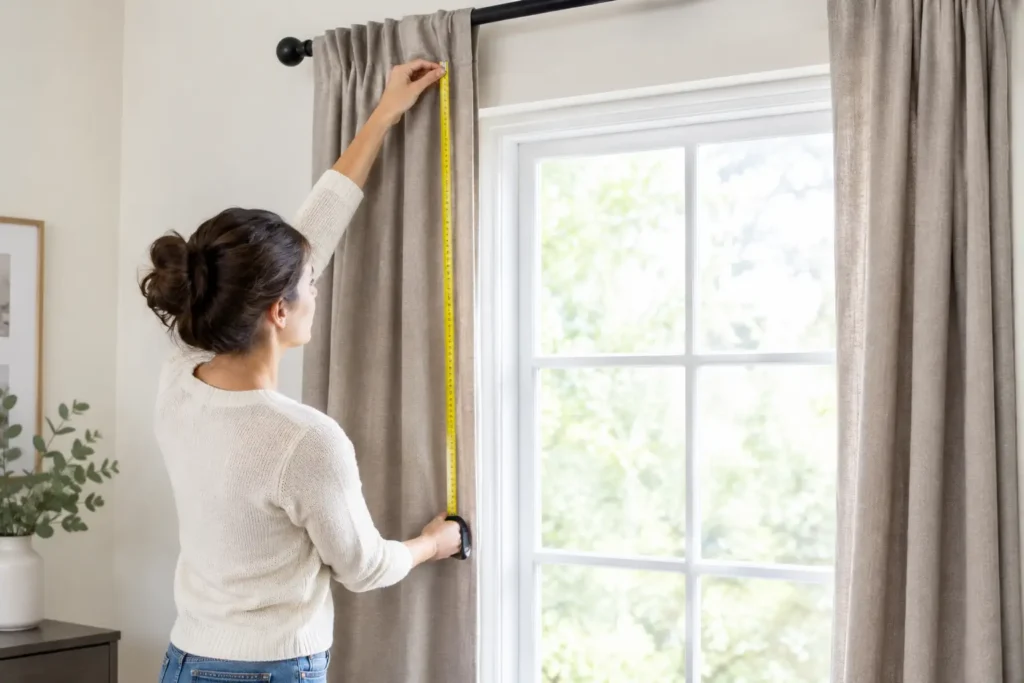
A curtain can be made from the finest fabric and still look underwhelming if it is measured incorrectly. Learning how to measure curtains is what turns a window covering into a tailored design feature: full enough to frame the room, long enough to feel elegant, and precisely positioned for privacy and light control. Whether you are furnishing one apartment bedroom or completing a full villa, a few careful measurements set the standard for the final result.
Before You Measure Curtains, Decide How They Will Hang
Do not begin at the window glass. Start by choosing the curtain style and the hardware that will carry it. Curtains installed on a ceiling-mounted track create a clean, high-end line and can make ceilings appear taller. A wall-mounted rod offers a more decorative finish, particularly when paired with statement finials or eyelet curtains.
This decision affects every measurement. The curtain drop is measured from the track or rod position, not from the top of the window frame. Likewise, the width should be based on the full area you want the curtains to cover, including the space beyond the sides of the window.
For a polished, custom-fitted result, confirm these details before taking out the tape measure: the type of heading, whether curtains will be single or double layered, the intended installation height, and whether the panels need to stack to one or both sides. A sheer-and-blackout combination, for example, usually needs a double track and slightly more projection from the wall than a single curtain layer.
What You Need for Accurate Curtain Measurements
A metal measuring tape is best because it stays straight across wide windows. You will also need a pencil, paper or notes app, and a step stool for high windows. Record all dimensions in inches or centimeters consistently. Measuring in centimeters is often easier for made-to-measure curtains because it avoids fractions and allows for more precise fabrication.
Measure each window separately, even when two windows appear identical. In villas, apartments, offices, and hotel rooms, minor differences in wall finishes, ceiling levels, or window-frame positions are common. One centimeter can be noticeable when curtains are designed to skim the floor.
It also helps to photograph each window after measuring. Include nearby obstacles such as an air-conditioning unit, wardrobe, window handle, radiator, built-in bench, or balcony door. These details allow your curtain specialist to plan practical track placement and choose the right fabric weight and opening style.
How to Measure Curtain Width
Curtain width is determined by the track or rod, not by the window itself. To measure it, take the full width from one end of the installed or planned track to the other. If you are using a decorative rod, measure from the outer edge of one finial to the outer edge of the other, unless the supplier advises otherwise.
As a general rule, extend the track or rod 6 to 12 inches beyond each side of the window. This creates a wider, more luxurious frame and allows the curtain panels to clear the glass when open. The room receives more natural light, and the view is less obstructed during the day.
The amount of extra width depends on the available wall space. A narrow wall between a window and a corner may limit how far the track can extend. For wide sliding doors, the curtain stack must also leave enough room for easy access. A professional consultation is valuable here because the most attractive placement must still work with daily living.
Add Fullness for a Luxurious Finish
The fabric width is not the same as the track width. Curtains need fullness so they drape in soft, generous folds when closed. The exact amount depends on the heading style and material.
For most custom curtains, a fullness ratio of 1.5 to 2 times the track width creates an elegant appearance. Lightweight sheers often look best at 2 to 2.5 times fullness, especially in living rooms where daylight and movement are part of the effect. Blackout, lined, or heavier fabrics may need slightly less fullness because the material already has body.
For example, a 100-inch track may require 200 inches of sheer fabric for a rich, gathered finish. A plain panel with too little fullness can look flat and sparse, while excessive fullness may make heavy blackout curtains difficult to stack neatly. The right balance depends on fabric, heading, and the amount of space available at each side of the window.
How to Measure Curtain Length or Drop
For curtain length, hold the tape measure at the exact point where the curtain will begin. On a ceiling-mounted track, measure from the underside of the track. For a rod, measure from the underside of the rings or from the top of the rod according to the heading style. Measure straight down to your preferred finishing point.
There are three common curtain drop options. A floating finish stops around 1/2 inch above the floor and is ideal for rooms where easy cleaning matters, such as kitchens, children’s rooms, or busy offices. A kissing finish lightly touches the floor and gives a refined tailored look, but it needs a level floor and precise installation. A puddled finish extends 1 to 3 inches onto the floor for a softer, more dramatic style, best suited to formal bedrooms or low-traffic lounge areas.
In most contemporary homes, curtains that just touch or hover slightly above the floor offer the best combination of elegance and practicality. They keep the room looking composed without collecting dust or interfering with robot vacuums, doors, or frequent foot traffic.
Always take the drop measurement in at least three places: left, center, and right. Floors and ceilings are not always perfectly level. If measurements vary, a custom installer can advise whether to follow the shortest point for a floating finish or tailor the hem to account for the room’s conditions.
Measuring for Curtains Above a Window
Installing curtains higher than the window frame can transform the proportions of a room. A ceiling-height track makes a modest window look more substantial and gives a room a taller, more architectural feel. This approach is particularly effective in Dubai apartments and modern villas with clean lines and generous glazing.
If ceiling mounting is not possible, install the rod approximately 4 to 8 inches above the window frame, provided there is enough space. Avoid placing the rod directly on top of the frame unless the ceiling or surrounding architecture leaves no other option. The extra height gives the fabric room to fall beautifully and makes the finished window treatment feel intentional rather than purely functional.
Measure for Double Curtains, Bay Windows, and Doors
Double curtains need separate measurements for the sheer and blackout tracks. The tracks may have the same width, but their projection from the wall must be considered, especially near handles, shutters, or air-conditioning grilles. The blackout layer usually sits closer to the room, while the sheer layer sits closer to the window, though the configuration can vary.
For bay windows, measure each return separately rather than taking one straight width across the front. Tracks may be bent or joined around the angles, and the curtain panels must be planned so they move smoothly without leaving gaps. Curved tracks require specialist measurement and installation for the cleanest result.
Sliding doors and French doors require extra attention. Measure the full opening, then plan where the curtains will stack when open. If one side is used as the main access point, a center-opening curtain may be inconvenient. A one-way draw that stacks on the less-used side can make the space easier to live with.
Do Not Forget Practical Clearances
Beautiful curtains should never block essential parts of the room. Before finalizing measurements, check for window handles, vents, switches, furniture, and doors that swing inward. Thick blackout curtains may need more clearance than sheers, while motorized curtains need room for the track motor and suitable access to power.
For motorized curtain systems, measuring is only one part of the planning process. The placement of electrical points, smart-home controls, and track joins can affect the installation. Motorization is especially worthwhile for tall windows, wide glass walls, hospitality spaces, and bedrooms where comfort and privacy should be available at the touch of a button.
When Professional Measurement Makes the Difference
DIY measurements are helpful for budgeting and planning, but final measurements for custom curtains should be verified on site. This is particularly true for floor-to-ceiling glazing, double tracks, irregular walls, automated systems, and rooms with premium flooring or detailed ceiling work. Precise measurement protects the investment in luxury fabric and ensures the finished curtains open, close, stack, and fall exactly as intended.
Elegant Blinds & Curtains offers free measurement and consultation to help homeowners, offices, and hospitality spaces achieve a finish that feels considered from every angle. A specialist can assess the window, recommend track placement, calculate fabric fullness, and coordinate installation without leaving you to manage technical details alone.
The best curtain measurement is not simply a set of numbers. It is a plan for how your room should feel – brighter in the morning, private at night, proportioned beautifully, and finished with the quiet confidence of custom craftsmanship. Schedule a professional measurement when you are ready to give your windows the attention they deserve.