
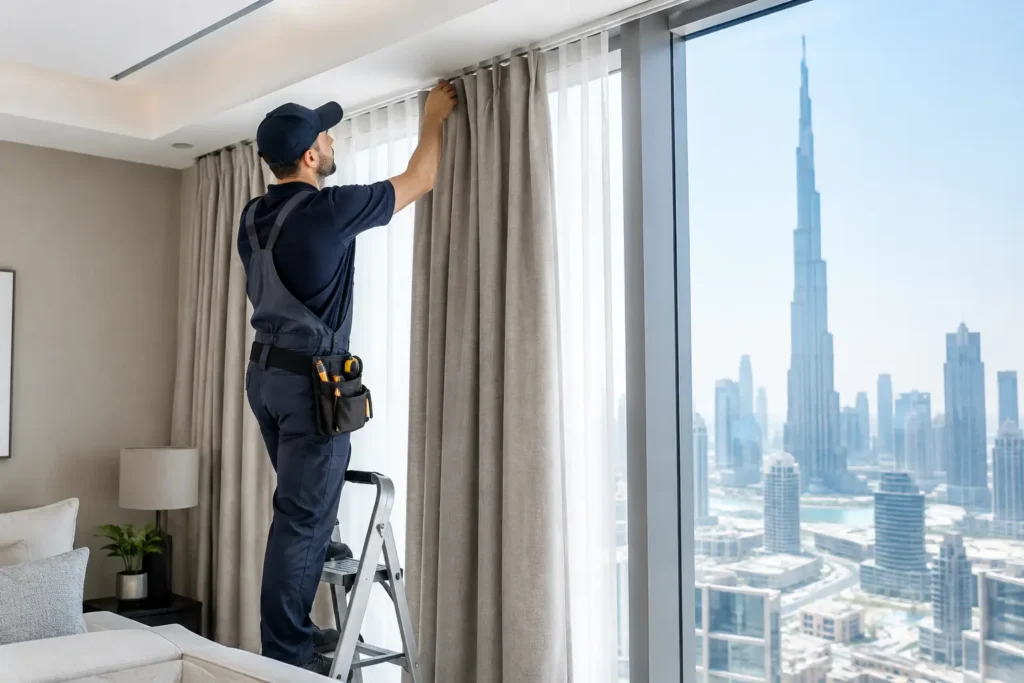
A curtain can look exceptional in a showroom and still disappoint once it is installed. In a high-rise apartment, villa, office, or hotel suite, the difference usually comes down to proportion, fixing method, and exact measurement. This Dubai curtain installation guide explains how to make decisions that give your windows a tailored, luxurious finish rather than an off-the-shelf look.
The right installation does more than frame a view. It controls glare, protects privacy, softens acoustics, improves sleep, and gives the whole room a more considered appearance. The best result starts well before a track is fixed to the wall.
Start With the Room, Not the Fabric
Before choosing a curtain style, consider what the room needs to do. A bedroom may require complete darkness and stronger privacy, while a living room often benefits from sheer curtains that filter intense daylight without hiding the view. In an office, roller blinds or vertical solutions can provide a cleaner, more practical finish around workstations and screens.
Dubai homes also have large windows, sliding doors, and floor-to-ceiling glazing more often than standard-sized openings. These features are beautiful, but they need a window treatment that is proportioned correctly. A narrow, short curtain on a wide glass wall can make an otherwise elegant room feel unfinished.
For rooms exposed to direct sun, blackout lining or a layered sheer-and-blackout arrangement offers flexibility. The sheer layer keeps the space light during the day; the blackout layer supports privacy, comfort, and sleep at night. For kitchens and bathrooms, moisture-resistant blinds are often a better choice than heavy fabric curtains. The right answer depends on use, humidity, cleaning needs, and the look you want to achieve.
Accurate Measurement Is the Foundation of Curtain Installation
Custom curtains are only as good as their measurements. This is why professional site measurement is worth arranging before fabric is ordered or tracks are selected. A few centimeters can affect how the hem falls, whether panels overlap properly, and whether a curtain clears furniture, handles, or air-conditioning units.
Measure the full treatment area
Do not measure only the glass. Measure the width and height of the entire area the finished curtain must cover. For a fuller, more premium effect, the track usually extends beyond the window on both sides. This lets the curtain stack away from the glass when open, bringing in more natural light and making the window appear wider.
Height is equally important. Ceiling-mounted tracks and curtains that fall close to the floor create a longer, more refined visual line, especially in apartments with modest ceiling heights. Wall-mounted rods can work beautifully too, but they need enough clearance above the window and should be positioned intentionally, not simply where the window frame ends.
Account for obstacles and access
Measure around AC grilles, bulkheads, ceiling coves, recessed lighting, curtain pelmets, sliding door handles, and built-in furniture. In some properties, access for drilling may also be limited by concrete ceilings, concealed services, or false-ceiling construction. A professional installer assesses the surface and uses the correct anchors and brackets for a secure fixing.
For doors that are used daily, decide how the curtain will open before installation. A center-opening style may look balanced, while a one-way draw can be more practical when furniture or a wall sits beside one side of the opening.
Choose the Right Track or Rod
The hardware is not a minor detail. It affects movement, longevity, noise, and the finished appearance. Premium curtains deserve a track or rod that supports their weight and operates smoothly every day.
A concealed ceiling track is ideal for a clean, architectural look. It works particularly well with ceiling coves, pelmets, and floor-to-ceiling curtains. A decorative rod becomes part of the design, making it a strong choice for classic interiors or rooms where an exposed finish complements the furniture and wall color.
For layered window treatments, use double tracks. The front track normally holds the decorative or blackout curtain, while the rear track holds the sheer. This arrangement gives you daytime softness and nighttime coverage without crowding both fabrics onto one track.
Heavy blackout, hotel-style, or sound-reducing curtains need stronger brackets and quality gliders. Saving on hardware can lead to sagging, difficult movement, or premature wear. A professional installation considers the curtain weight, track span, and fixing surface together.
The Dubai Curtain Installation Guide to Fullness and Length
A curtain should not look flat when closed. Fullness is created by using more fabric than the width of the window. The ideal amount depends on the fabric, heading style, and desired effect. Lightweight sheers usually need more fullness to look rich and softly gathered, while thick blackout fabric may need less to avoid unnecessary bulk.
Wave curtains are a popular choice for contemporary interiors because they form even, continuous folds. They need a compatible track and carefully calculated fabric width. Pencil pleat curtains offer adjustable fullness and suit many homes, while eyelet curtains work best on decorative rods and provide a more casual, visible-header style.
Length deserves equal attention. Floor-length curtains should generally finish just above the floor for easy movement and cleaning, or rest lightly on it for a more relaxed, luxurious look. Curtains that stop well above the floor can visually shorten the wall and tend to look less custom-made. In spaces with robotic vacuums, frequent cleaning, or uneven flooring, a small clearance is often the practical choice.
Plan for Motorization Before the Installation Date
Motorized curtains and blinds add everyday convenience, but the planning must happen early. If you are renovating or furnishing a new property, decide whether you want hardwired motors, battery-operated systems, remote control, wall switches, or smart-home integration before ceilings and electrical points are finalized.
Hardwired motorization is a polished long-term option for wide or heavy curtains, especially in villas, hospitality spaces, and large living rooms. Battery-operated options can be useful where wiring is not available, although charging access and usage frequency should be considered. The best choice depends on window size, control preference, budget, and whether the room is already finished.
Motorization is particularly valuable for tall windows, difficult-to-reach tracks, and curtain walls that are opened and closed several times each day. It also helps maintain the fabric because the panels move evenly rather than being pulled by hand.
What Professional Fixing Changes
A correct installation is not just about straight tracks. It is about placing every bracket, end stop, carrier, and curtain panel so the treatment performs as intended. Installers check that tracks are level, panels meet properly in the center, hems hang evenly, and fabric does not catch on handles, furniture, or nearby fixtures.
They also make final adjustments on site. Curtains may settle after hanging, and rooms are rarely perfectly symmetrical. Small refinements to the heading, hook positions, or hemline can make a major difference to the final presentation.
For commercial and hospitality projects, professional fixing is even more valuable. Repeated use, larger window spans, safety expectations, and consistent visual standards require durable hardware and disciplined installation. Hotel curtains, for example, must provide reliable blackout coverage while still operating smoothly for guests and housekeeping teams.
Prepare Your Space for Installation
Before the fitting appointment, clear access around the windows and move fragile décor away from the work area. If possible, confirm that furniture placement is final, particularly beds, sofas, desks, and wardrobes. A track may need to extend beyond the window to allow a proper stack-back, and furniture can influence the most practical opening direction.
It also helps to discuss your preferences clearly: whether you want the curtains to touch the floor, which side should open, how much daylight you want when they are pulled back, and whether privacy matters from neighboring buildings. These details turn a good installation into one that feels designed specifically for your lifestyle.
Elegant Blinds & Curtains brings fabric selection, precise measurement, custom tailoring, and professional fixing together, so you do not have to coordinate multiple suppliers. Request a free measurement and quote, then let an experienced team create window treatments that look beautiful from the first fold to the final fitting.