
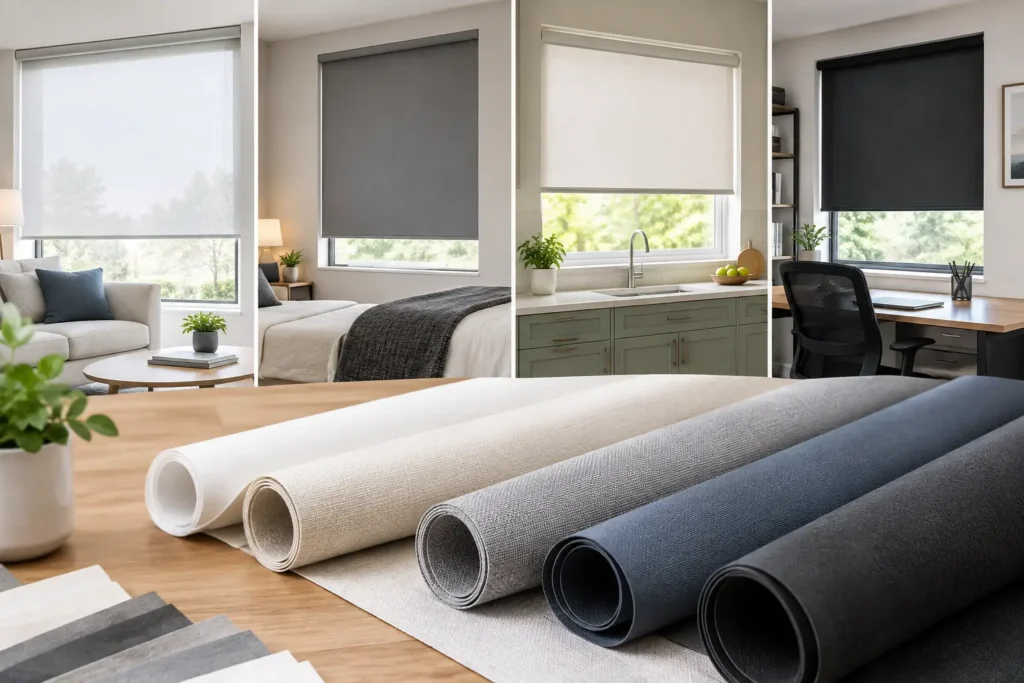
A roller shade can look beautifully simple, but its material determines almost everything you feel after installation: how the room handles sunlight, whether neighbors can see in, how easy the blind is to clean, and how polished the window appears. This roller shade materials review focuses on the fabrics and finishes that make the biggest difference in real homes, offices, and hospitality spaces.
The right choice is rarely about selecting the darkest or most expensive option. A bright living room needs a different balance than a bedroom, kitchen, bathroom, or glass-fronted office. The most successful roller shades are tailored to the room’s light, privacy needs, furnishings, and daily routine.
What to Look for in Roller Shade Materials
Before comparing individual materials, consider the four qualities that shape performance. Light control is usually the first priority, from softly filtered daylight to near-total room darkening. Privacy matters just as much, especially for street-facing windows, apartments, and bathrooms.
Then there is maintenance. A material that looks elegant in a formal lounge may not be the practical choice beside a busy kitchen sink. Finally, consider visual texture. Roller shades sit close to the glass, so their color, weave, and openness can either quietly support the interior or become a noticeable design feature.
Custom measurement also matters. Even an excellent fabric will underperform if there are excessive light gaps, an unsuitable mounting position, or a mechanism that does not suit the window. Precise fitting turns a good material choice into a finished result that feels intentional.
Roller Shade Materials Review: The Main Options
Sunscreen Fabric: Daytime Views With Controlled Glare
Sunscreen roller shade fabric is made with an open weave that filters direct sun while preserving an outward view during the day. It is a refined choice for living rooms, home offices, reception areas, and spaces with large windows where blocking the scenery would feel like a loss.
Its key specification is openness factor, which describes how tightly the fabric is woven. A lower openness factor provides more privacy and stronger glare reduction, while a higher openness factor lets in more light and maintains a clearer view. For many bright rooms, a medium openness fabric offers the most comfortable compromise.
The trade-off is nighttime privacy. When interior lights are on and it is dark outside, sunscreen fabric does not provide the same concealment as blackout or opaque materials. It works best where daytime sun management is the main concern, or when paired with curtains for evening privacy and added softness.
Blackout Fabric: Privacy and Restful Darkness
Blackout roller shades are designed to block light through the fabric itself, making them a natural fit for bedrooms, nurseries, media rooms, hotel rooms, and meeting spaces. They offer a crisp, modern alternative to heavy drapery and can significantly reduce the sharp morning light that disrupts sleep.
Not every product described as blackout creates complete darkness. Light can still enter around the sides, above the roll, or beneath the bottom bar. For a room where darkness is essential, specify a carefully measured shade, an appropriate mounting method, and, where suitable, side channels or layered window treatments.
Blackout fabric is also excellent for privacy. Its dense construction prevents silhouettes from showing through, even when lights are on. The look can be minimal and tailored, especially in neutral tones, but it may feel too closed-off for a family room that benefits from daylight throughout the day.
Light-Filtering Fabric: Soft, Private Daylight
Light-filtering roller shade materials diffuse sunlight rather than completely blocking it. They reduce harsh glare, soften the view at the window, and create a calm glow that suits dining rooms, hallways, lounges, and workspaces.
This category is ideal for clients who want privacy without making the room feel dark. Compared with sunscreen fabric, light-filtering shades generally obscure the view more fully. Compared with blackout fabric, they keep the interior brighter and more open.
Results vary by fabric color and thickness. Pale shades tend to reflect heat and make a compact room feel airy, while deeper colors add visual depth and can offer better glare control. Ask to see samples against the actual window before making a final decision. The same fabric can appear very different under warm interior lighting and strong afternoon sun.
Vinyl and PVC: Practical for Humid, High-Use Rooms
Vinyl or PVC roller shade materials are valued for their moisture resistance and easy-care surface. They are especially practical in bathrooms, kitchens, utility areas, clinics, and commercial settings where splashes, humidity, or frequent cleaning are expected.
A quality vinyl shade has a clean, structured appearance and can provide effective privacy and light control. It is not always the first choice for a formal bedroom or luxury sitting room, where woven fabrics often deliver more warmth and depth. Still, modern vinyl finishes have improved considerably and can look sleek in contemporary interiors.
For humid spaces, choose the entire system carefully, not just the fabric. The roller tube, brackets, bottom bar, and chain or motor should all be appropriate for the environment. This is one reason professional consultation is valuable for rooms with unusual conditions.
Decorative Woven Fabrics: Texture That Completes the Room
Decorative roller shade fabrics bring more character to a streamlined window treatment. They may feature subtle linen-like textures, fine slubs, tonal patterns, or soft matte finishes that coordinate with upholstery, wall finishes, and curtains.
These materials are often chosen for villas, styled apartments, executive offices, and hospitality interiors where the shade needs to contribute to the overall design. Their performance depends on the backing and weave. Some are light-filtering, some room-darkening, and others combine decorative texture with blackout backing.
The best option depends on how the room is used. A delicate textured fabric can be perfect for a formal lounge but less forgiving in a children’s playroom or a grease-prone kitchen. Style should support daily life, not create another maintenance concern.
Choosing by Room, Not Just by Appearance
Bedrooms benefit from blackout or room-darkening materials, particularly when sleep quality and complete privacy are priorities. A layered solution can be even more elegant: a blackout roller shade for performance with sheer or decorative curtains for softness.
Living rooms often suit sunscreen or light-filtering materials because they manage glare without disconnecting the room from daylight. If the windows face nearby buildings, choose a tighter weave or add curtains for evenings.
Bathrooms and kitchens call for practical materials that tolerate moisture and clean easily. Vinyl, PVC, or carefully selected treated fabrics are usually more reliable than highly textured textiles. Offices need a balance of screen visibility, glare reduction, and professional appearance, which is why sunscreen shades are a frequent choice for work areas with monitors.
For hotels and guest rooms, blackout performance, dependable mechanisms, and a polished finish should be treated as a complete package. The material must look refined, withstand repeated use, and support a consistently comfortable guest experience.
Color, Backing, and Heat Control
Color affects more than style. Light-colored roller shades can help reflect sunlight and maintain a bright, spacious feeling. Darker shades may improve outward visibility with sunscreen fabrics and add contrast to a modern interior, but they can absorb more heat and make a small room feel visually heavier.
Backing also changes performance. A white or reflective backing can improve heat and light management from the window side, while a fabric-facing finish inside the room preserves the chosen decorative look. For strongly sun-exposed windows, this detail deserves attention during material selection.
No roller shade material alone can solve every heat issue in a large glazed room. Window orientation, glass type, mounting position, and curtain layering all affect comfort. The right consultation considers the whole window, rather than promising that one fabric will do every job.
Manual or Motorized: Material Still Comes First
Motorization adds convenience, especially for tall windows, wide openings, and smart-home routines. It allows shades to be raised or lowered without handling chains and can help protect interiors by closing shades during the brightest hours.
However, automation does not compensate for the wrong material. A motorized sunscreen shade will still offer limited nighttime privacy, and a motorized blackout shade can still leak light around an improperly fitted frame. Select the fabric for its function first, then choose the operating system that makes it easy to use every day.
At Elegant Blinds & Curtains, material samples, accurate measurement, custom fabrication, and professional installation are considered together because the final effect depends on every one of those decisions. A beautifully tailored roller shade should feel effortless to operate and perfectly suited to the room.
The most rewarding choice is the one you barely have to think about after installation: it softens the glare when you work, gives you privacy when you need it, and makes the window look finished from morning through night. Request a professional measurement before ordering, then choose the material that supports the way you actually live in the space.