
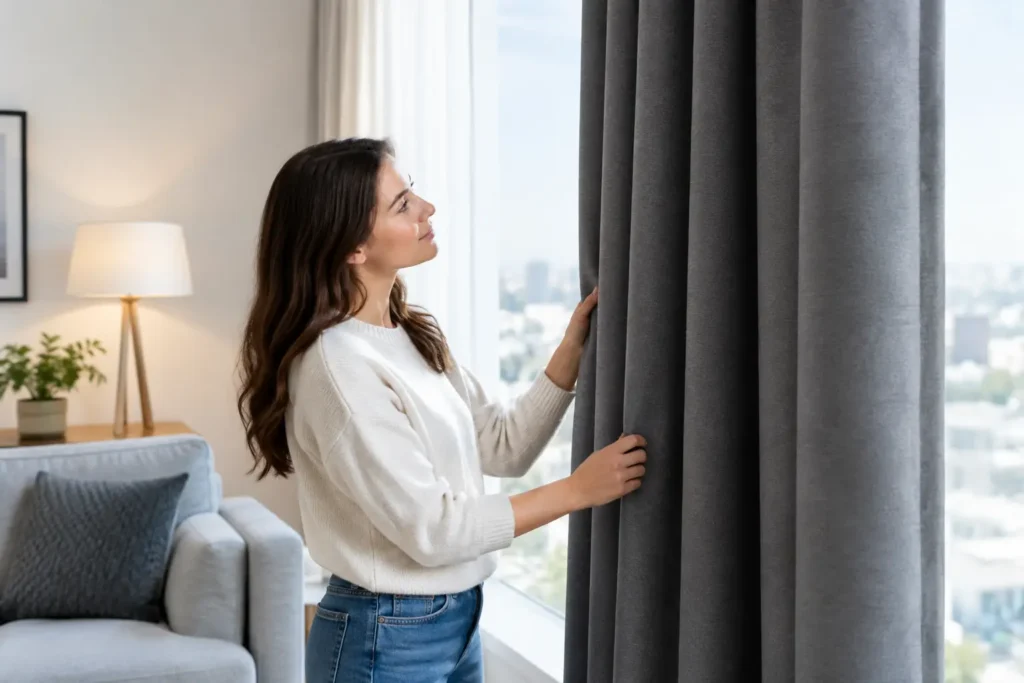
Street traffic that cuts through an otherwise beautiful bedroom, conversations carrying between office areas, or the hard echo of an unfurnished living room can quickly affect how a space feels. This soundproof curtain selection guide helps you choose window treatments that bring greater softness, privacy, and acoustic comfort to the room without compromising its design.
Soundproof curtains are often called noise-reducing or acoustic curtains, and the distinction matters. A curtain will not create the same level of sound isolation as a rebuilt wall or acoustic glazing. What a well-designed, correctly fitted curtain can do is absorb some sound within the room, reduce echo, soften outside noise, and limit the sound that enters through the vulnerable gaps around a window. For many homes, offices, and hospitality settings, that improvement makes a noticeable difference.
Start With the Noise You Want to Reduce
Before choosing fabric or color, identify what is making the room uncomfortable. Low-frequency noise from traffic, aircraft, generators, or construction is harder for any curtain to control than higher-frequency sounds such as voices, light road noise, or reflections within a room. If the noise is coming mainly through thin glass, loose frames, or air gaps, the window itself may need attention alongside the curtain treatment.
A bedroom facing a busy road usually needs a heavier, fuller treatment than a home office where the main goal is reducing echo during calls. In a hotel room, privacy, blackout performance, and noise comfort often need to work together. A meeting room may benefit more from fabric surfaces that absorb internal reverberation than from a curtain intended to reduce exterior sound.
This early assessment prevents a common disappointment: expecting a decorative curtain to solve a structural noise problem. The right selection should match the room, the source of the sound, and the level of quiet you expect.
Choose Density Over Appearance Alone
The most effective sound-reducing curtains rely on mass, thickness, and fullness. Lightweight sheer fabric is beautiful for filtered daylight, but it will contribute very little to acoustic control on its own. For stronger performance, look for densely woven, heavy fabrics or purpose-made acoustic materials.
Velvet, suede-like textiles, tightly woven polyester blends, and lined drapery fabrics are popular options because they add weight while maintaining a refined finish. A curtain with a blackout lining can also offer a useful combination of light control, privacy, and added density. However, blackout does not automatically mean soundproof. Some blackout fabrics are thin and primarily designed to block light, so always consider the complete construction rather than the label alone.
For rooms where noise reduction is the priority, a layered design is usually the more effective choice. A decorative face fabric combined with an acoustic or blackout lining creates more material for sound to travel through. It also allows the curtain to look tailored and luxurious from inside the room while providing practical comfort behind the scenes.
Consider the Fabric Weight
Fabric weight is a practical indicator of how much material is available to absorb and resist sound. Heavier curtains tend to perform better, but extreme weight requires suitable tracks, brackets, and secure installation. This is particularly relevant for wide glazing in villas, apartments, hotel rooms, and commercial spaces.
A custom-made treatment lets you select a fabric that feels substantial without making the room look overly dark or formal. The right finish might be a plush velvet for a cinema room, a textured neutral fabric for a living space, or a durable contract-grade material for an office or hotel.
Full Coverage Makes a Major Difference
Even premium fabric will underperform if it is too narrow, too short, or mounted with large gaps around the window. Sound travels through openings easily, which is why precise coverage matters as much as the fabric itself.
For the best result, the curtain should extend beyond the window frame on both sides and reach well above it. Mounting the track close to the ceiling creates more coverage at the top and also gives the room a taller, more finished appearance. The hem should sit close to the floor, rather than stopping high above it, because the gap below the curtain can allow sound and light to pass through.
Fullness is equally important. A flat panel pulled across a window offers less fabric than a generously gathered curtain. As a general design principle, curtains with approximately two to two-and-a-half times the width of the window create a richer drape and improve acoustic absorption. The precise amount depends on the fabric, heading style, and desired look, but skimpy panels rarely deliver premium visual or practical results.
Select the Right Track and Heading Style
Curtain hardware may seem like a finishing detail, yet it influences performance and daily use. Ceiling-mounted tracks are often the preferred option for sound-reducing curtains because they minimize the gap above the fabric. A return track that curves toward the wall can further reduce side gaps while producing a clean, hotel-inspired finish.
Wave curtains are an elegant choice for contemporary interiors, especially across large windows and sliding doors. Their smooth, even folds create a polished appearance, though their side sealing may be less complete than a more structured pleated system. Pinch pleats, goblet headings, and other tailored styles can provide excellent fullness and a classic luxury feel.
For a bedroom or media room, prioritize coverage and lining first, then choose the heading that suits the interior. For formal spaces or hospitality projects, the visual rhythm of the folds may be equally important. Custom measurement helps balance both requirements.
Layer Soundproof Curtains for Better Comfort
A single heavy curtain can be highly effective, but layered window treatments offer more flexibility. Combining a sheer curtain with a lined outer drape allows daylight during the day and greater privacy and noise comfort when the main curtain is closed. It is a practical solution for living rooms, bedrooms, and upscale reception areas where the window treatment must work from morning through evening.
For especially noisy locations, consider pairing soundproof curtains with other improvements. Better window seals, double-glazed glass, rugs, upholstered furniture, and wall finishes can all reduce the harshness of a room. Curtains are one part of the acoustic picture, but they are often the most visually transformative and least disruptive place to start.
In offices, fabric panels, carpets, and soft seating can help reduce sound reflections that make meetings and calls feel tiring. In bedrooms, thick curtains can support a calmer sleep environment when combined with properly sealed windows. The best approach is not always more fabric. It is the right mix of materials and installation details.
Do Not Forget Light, Privacy, and Maintenance
Sound-reducing curtains often perform double duty, so consider how the room is used. A nursery or primary bedroom may need near-total darkness as well as reduced outside disturbance. A living room may need privacy at night while preserving a bright, open feel during the day. A conference room may require a professional finish that also improves presentation quality and speech clarity.
Color and texture should support the room rather than make it feel closed in. Deep tones and velvet textures create drama and warmth, while soft gray, beige, taupe, and textured neutrals can make a heavy curtain feel lighter and more versatile. Large windows can handle richer fabrics; smaller rooms may benefit from ceiling-mounted tracks and tones that blend with the walls.
Maintenance is another practical consideration. Heavy drapery collects dust over time, particularly in high-traffic homes, offices, and hospitality spaces. Ask about the recommended cleaning method before finalizing the fabric. A professional curtain cleaning service can help preserve the fabric’s drape, lining, and appearance without damaging the treatment.
Why Professional Measurement Matters
Soundproof curtains are not a one-size-fits-all purchase. Window recesses, sliding doors, wall-mounted air-conditioning units, ceiling details, furniture placement, and track clearance all influence the final result. A measurement taken only across the glass can leave you with insufficient side coverage and an installation that looks unfinished.
Professional consultation makes it easier to choose the right fabric weight, lining, track system, and fullness for your space. It also ensures that heavy curtains are fixed securely and operate smoothly, whether you prefer manual draw cords, hand-operated panels, or motorized curtains integrated into a smart home or office setup.
Elegant Blinds & Curtains can help turn acoustic needs into a tailored window treatment that feels as refined as it performs. Book a measurement and compare fabric samples in the actual room, where daylight, wall colors, and surrounding noise reveal what the finished curtain truly needs.
A quieter room rarely comes from one dramatic change. It comes from thoughtful coverage, substantial fabric, precise fitting, and a design that you will be happy to close every day.