
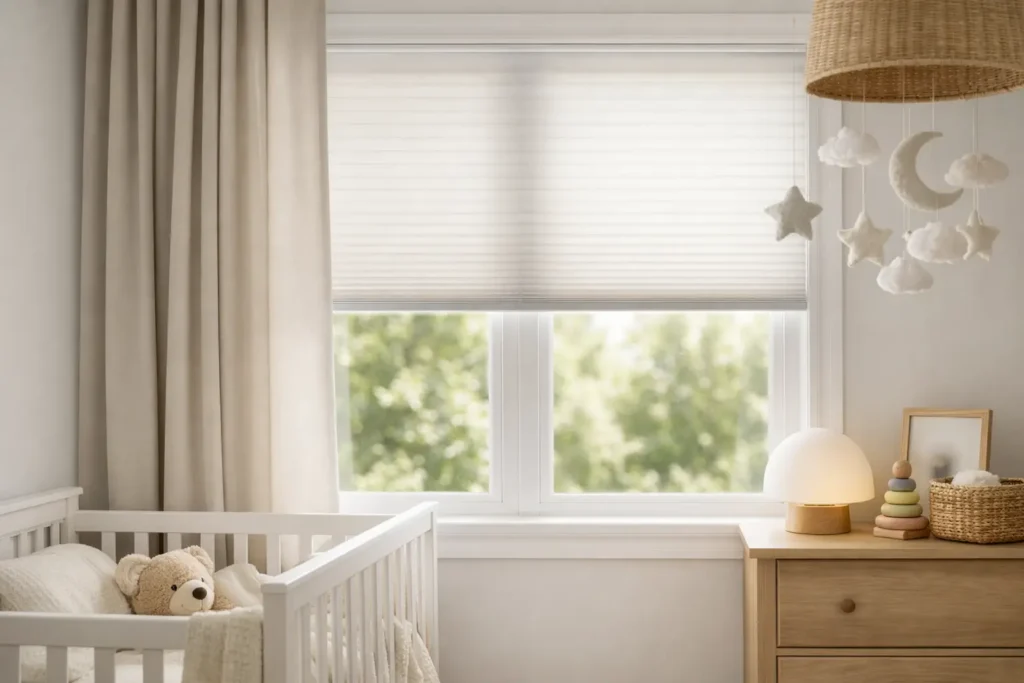
A nursery can look perfectly finished at midday, then become far too bright for a nap when the afternoon sun reaches the window. That is why choosing the best window coverings for nurseries is about more than selecting a sweet fabric or matching a wall color. Parents need dependable darkness, privacy after sunset, easy operation, and a design that will still suit the room as a baby becomes a toddler.
A made-to-measure solution brings those priorities together. The right curtains or blinds soften the space, control glare, and give parents one less daily frustration to manage. For homes with strong sunlight, especially in bright climates such as Dubai, precise fitting and quality blackout lining can make a remarkable difference to the comfort of the room.
What Nursery Window Coverings Need to Do
The first job is sleep support. Newborns and young children do not always follow a neat daytime schedule, so a room that can become comfortably dim during naps is valuable. At night, effective light control also helps limit glare from streetlights, neighboring buildings, and early morning sun.
Privacy matters just as much, particularly in apartments or villas with overlooked windows. A nursery should feel peaceful without feeling closed off all day. This is where layered window treatments are especially effective: sheers can filter daylight and maintain privacy in the daytime, while blackout curtains or blinds take over for sleep.
Safety should guide every selection. Avoid loose operating cords within a child’s reach, and choose professionally installed treatments with secure brackets and precise fixtures. Motorized curtains and blinds are an elegant cordless option, allowing parents to adjust light quietly from a wall control, remote, or compatible smart-home system.
Finally, think beyond the baby stage. A high-quality neutral base, such as cream blackout curtains, warm gray Roman blinds, or soft textured roller blinds, can work with changing bedding, furniture, and decor for years.
Best Window Coverings for Nurseries: Top Choices
Blackout Curtains for a Softer, More Luxurious Finish
Blackout curtains are a natural choice for parents who want the room to feel calm, cozy, and visually complete. Unlike a basic dark fabric, true blackout curtains use a specialized lining or blackout fabric designed to reduce incoming light substantially. When custom-made to reach close to the ceiling and extend beyond the sides of the window, they can limit light gaps that often disturb daytime naps.
They are also ideal for adding warmth to a nursery with hard flooring, large windows, or a modern minimal interior. Choose a washable-looking, durable fabric in a gentle neutral, muted blue, dusty rose, sage, or soft beige rather than a highly themed print. The treatment will remain useful when the room’s theme changes.
There is one practical trade-off: curtains can gather dust more easily than a wipe-clean blind, and very long panels should be measured and installed thoughtfully for a children’s room. Professional fitting keeps the finish neat and controlled. For the most polished result, pair blackout curtains with a discreet sheer curtain behind them.
Blackout Roller Blinds for Clean, Reliable Light Control
For a streamlined nursery, blackout roller blinds are one of the most practical options. They sit close to the window, offer a tidy contemporary look, and are simple to raise or lower. With custom sizing, the blind can be fitted to minimize side gaps and provide stronger light control than an off-the-shelf alternative.
Roller blinds suit compact bedrooms, windows behind cribs or changing tables, and spaces where parents do not want fabric panels taking up visual room. They are available in many understated colors and textures, from crisp white to linen-look neutrals. A moisture-resistant or easy-clean fabric can also be helpful in busy family homes.
A standard roller blind may still allow some light at the sides, depending on the mounting style and window recess. If near-total darkness is the goal, a blackout blind combined with side curtains is often the better answer. Motorization is particularly appealing here because it removes cords and makes early-morning adjustments quiet and effortless.
Roman Blinds for Tailored Texture
Roman blinds provide the softness of fabric with the compact shape of a blind. They fold into horizontal sections when raised, creating a tailored look that feels at home in classic, contemporary, and luxury nursery interiors. A blackout lining can be added for nap-time darkness, while the front fabric can coordinate with upholstery, wallpaper, or a feature wall.
This option works beautifully when you want a more decorative finish without full-length curtains. It is also a strong choice for smaller windows or rooms with radiators, desks, or built-in furniture beneath the window.
Roman blinds require careful fabrication and installation to hang evenly and operate smoothly. For a nursery, cordless or motorized operation is the preferred route. A well-selected fabric is worth the investment because it can carry the room from nursery to child’s bedroom without looking dated.
Zebra Blinds for Flexible Daytime Privacy
Zebra blinds use alternating sheer and opaque fabric bands, allowing parents to shift between filtered daylight, privacy, and a clearer view outside. They are a modern choice for families who want a controlled amount of natural light in the room without opening the treatment fully.
They work best when the main need is daytime glare reduction and adjustable privacy. However, zebra blinds are not usually the strongest standalone choice for a very dark sleep environment. If your baby is sensitive to light during naps, consider pairing them with blackout curtains or selecting a dedicated blackout option instead.
Their clean lines and modern operation make zebra blinds especially suitable for contemporary apartments and smart-home interiors. With motorization, the fabric alignment can be adjusted precisely without cords or repeated handling.
Sheer Curtains Layered With Blackout Treatments
Layering is often the most versatile nursery solution. Sheer curtains create a soft glow in the morning and preserve privacy while allowing daylight into the room. Add blackout curtains or a blackout blind behind or in front of the sheers, and parents have complete control from bright playtime to a darkened nap space.
This combination gives a room a more finished, hotel-inspired feel while solving practical needs throughout the day. It is particularly effective for large windows, sliding doors, and rooms that receive intense sunshine. The additional fabric also adds visual depth, which can make a simple nursery feel more considered and inviting.
The key is proportion. Sheers should be light and full enough to drape gracefully, while blackout panels need the right width and return to cover the window effectively. Custom measurement is what prevents a beautiful layered design from becoming bulky or leaving frustrating strips of light at the edges.
Safety and Installation Are Part of the Design
A nursery window treatment should never be chosen on appearance alone. Cords, chains, and loose fabrics need to be considered from the start, even if a crib is not yet positioned near the window. Babies become mobile quickly, and a room layout can change just as fast.
Cordless systems and motorized blinds or curtains reduce this concern while adding real daily convenience. Parents can close the room before a nap while holding a baby, schedule treatments to open in the morning, or adjust glare without entering a sleeping child’s room. For tall or difficult-to-reach windows, automation is more than a luxury feature – it is a practical advantage.
Professional installation also protects the look and performance of the treatment. Correct brackets, secure fixing, smooth tracks, and accurate curtain heights all matter. A curtain dragging on the floor, a blind that sits unevenly, or gaps caused by incorrect measuring can undermine both safety and light control.
Choosing Colors and Fabrics That Grow With the Room
A nursery does not need to be filled with cartoons or overly delicate pastels to feel warm. Soft natural textures, calming colors, and quality fabric create a refined backdrop for the playful details that can be changed easily later. Consider warm white, oatmeal, sand, pale gray, misty blue, muted green, or blush as flexible starting points.
If the room already has patterned wallpaper, colorful furniture, or a statement rug, plain curtains or blinds often create needed balance. If the walls are quiet, a subtle woven texture or gentle pattern can add character without overwhelming the space. Fabric samples are invaluable here because daylight can change a color dramatically between morning and evening.
For a more premium finish, coordinate the window treatment with the room rather than treating it as a separate purchase. The best result considers wall color, flooring, furniture scale, window position, and how much sunlight the room receives. Elegant Blinds & Curtains can help homeowners turn those details into a custom solution, from free measurement through tailored fabrication and professional installation.
Make the Final Choice Around Your Routine
Start by asking when the room needs the most protection from light. If naps and early bedtimes are the priority, blackout curtains or blackout roller blinds should lead the decision. If daytime privacy and a soft, welcoming appearance matter most, layered sheers and blackout panels offer greater flexibility. If convenience is non-negotiable, motorization deserves a place in the plan.
The most beautiful nursery window covering is one that works quietly every day: it darkens the room when sleep calls, filters harsh sunshine when play begins, and continues to look elegant long after the nursery furniture is gone. Schedule a professional measurement before committing to a style, and let the fit be as thoughtful as the room itself.