
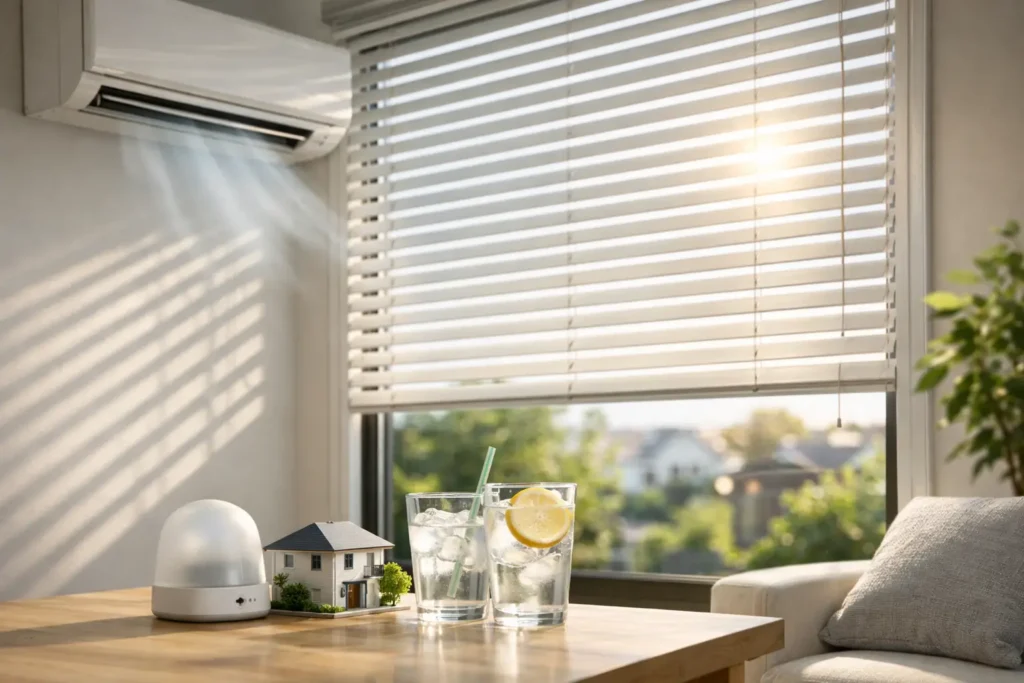
A west-facing living room can feel dramatically different at 4 p.m. than it does in the morning. The sun has been heating the glass for hours, the floor and furniture are holding that warmth, and the air conditioner has to work harder to catch up. So, do blinds reduce cooling costs? Yes, they can – especially when they are selected for the window, fitted precisely, and used at the right time of day.
Blinds are not a replacement for efficient glazing, insulation, or a well-maintained AC system. They are, however, one of the most practical ways to reduce solar heat entering a room while improving privacy, light control, and the finished look of the space. For homes, offices, and hospitality interiors in hot, sunny locations such as Dubai, the difference can be felt quickly.
Do Blinds Reduce Cooling Costs? Yes, When They Block Solar Heat
Cooling costs rise when sunlight passes through a window and becomes trapped as heat indoors. This is particularly noticeable on large windows, sliding doors, and rooms with direct afternoon sun. Once heat enters, your AC must remove it, often for hours after the sunlight has moved.
The right blinds limit that heat gain before it spreads across the room. Opaque materials, reflective backings, tightly fitted shades, and well-managed openings all reduce the amount of solar energy that reaches your interiors. The result is a room that stays more comfortable, with less frequent or intense cooling demand.
The savings vary. A shaded north-facing window may make little difference, while a large unprotected west-facing window can be a major source of unwanted heat. Your glass type, window size, room insulation, local climate, thermostat setting, and daily routine all affect the final result. It is more accurate to think of blinds as a valuable part of a cooling strategy rather than a guaranteed fixed percentage reduction on every energy bill.
The Blind Type Makes a Real Difference
Not every window covering provides the same level of protection. A light-filtering blind may soften glare beautifully but still allow considerable warmth into the room. For spaces where heat control is a priority, material density and coverage matter as much as color and style.
Blackout Roller Blinds for Strong Heat Control
Blackout roller blinds are among the strongest choices for bedrooms, media rooms, offices, and spaces with intense direct sunlight. Their opaque fabric blocks light effectively and helps reduce solar heat gain. When paired with a close-fitting installation, they also prevent the bright gaps and heat leaks that can occur around loosely hung coverings.
A quality blackout roller blind can create a cooler, more restful bedroom during the day and support better sleep at night. It is also a polished choice for offices where screen glare and uneven temperatures distract employees.
Solar and Light-Filtering Roller Blinds for Daytime Views
Solar or light-filtering roller blinds are ideal when you want daytime visibility without leaving the glass fully exposed. These fabrics reduce glare and filter sunlight while preserving an outward view. They generally do not block as much heat as blackout materials, but they can make bright rooms noticeably more comfortable without making them feel closed off.
The openness of the fabric matters. A tighter weave typically offers stronger privacy and solar control, while a more open weave provides a clearer view. A professional consultation helps balance these priorities for the room rather than choosing based on appearance alone.
Zebra Blinds for Flexible Light Management
Zebra blinds use alternating sheer and opaque fabric bands, allowing you to shift between filtered daylight, privacy, and greater coverage. Their versatility makes them popular in living rooms, apartments, and contemporary offices.
For cooling performance, zebra blinds work best when the opaque bands are aligned during periods of direct sun. They are an excellent design-led option for flexible daily control, although a dedicated blackout roller blind generally offers more complete heat and light blocking.
Venetian Blinds for Adjustable Directional Control
Venetian blinds let you tilt slats to redirect sunlight rather than simply covering the window. This can reduce glare while allowing some natural light into the room. Aluminum slats can be particularly practical in kitchens, bathrooms, and workspaces because they are durable and easy to maintain.
Their limitation is the spacing between slats. Even when closed, small gaps can allow heat and light through. They are effective for adjustable shade, but a tightly fitted roller blind or layered curtain treatment will usually provide stronger insulation from direct solar exposure.
Roman Blinds and Curtains for a Softer, Layered Finish
Roman blinds bring tailored fabric texture and a more decorative feel to bedrooms, dining rooms, and refined living spaces. Their cooling performance depends on the fabric and lining selected. A lined Roman blind offers substantially more protection than a lightweight unlined style.
For the best of both worlds, many homeowners combine a solar blind with custom blackout curtains. The blind controls daytime glare and visibility, while the curtains add softness, fuller coverage, and another barrier against heat when closed. This layered treatment can also elevate the proportions of a room and make large windows feel more intentional.
Precise Fitting Is What Turns a Blind Into a Barrier
A premium fabric alone cannot perform at its best if the blind is undersized or poorly installed. Heat and sunlight naturally find their way around large side gaps, exposed top sections, and uneven hems. This is why made-to-measure blinds are particularly valuable for wide windows, unusual openings, bay windows, and floor-to-ceiling glass.
An inside-mounted blind can look clean and minimal, but it may leave small light gaps around the frame. An outside mount can extend beyond the opening to provide wider coverage. The better choice depends on the window depth, frame design, privacy needs, and desired finish.
For rooms with intense sun exposure, consider cassette systems, side channels, or a layered curtain arrangement. These details improve coverage while creating a more polished result than an off-the-shelf blind that does not truly fit the window.
Use Blinds Before the Room Gets Hot
Timing is one of the easiest ways to improve cooling efficiency. Closing blinds after a room is already hot still helps, but much of the heat has already entered the space. Closing them before direct sunlight reaches the glass is more effective.
In a west-facing room, that may mean lowering blinds by early afternoon. In an east-facing bedroom, it may mean closing them before morning sun becomes intense. This is where motorized blinds add meaningful convenience. You can schedule them to lower automatically during the hottest hours, even when no one is home, then open them later to welcome softer daylight.
Motorization is especially useful for high windows, large glass walls, offices, and hotel spaces where manually adjusting several blinds every day is unrealistic. Smart control supports a more consistent routine, and consistency is what helps window coverings contribute to lower cooling demand.
Color, Fabric, and Window Direction All Matter
Lighter colors often reflect more sunlight than dark colors, particularly when the blind faces the room and is positioned close to the glass. But color should not be considered in isolation. A dark blackout fabric can still outperform a pale sheer blind because density, backing, and coverage have a greater effect on total heat control.
Window direction is equally important. West and east windows usually deserve the most attention because they receive low-angle sunlight that penetrates deeply into rooms. South-facing windows can receive strong consistent sun depending on the building orientation, while shaded windows may need a treatment chosen more for privacy and style than for thermal performance.
For a home with multiple window exposures, using one blind style everywhere is not always the smartest choice. A blackout solution may suit sun-heavy bedrooms, while zebra blinds may be better for a living area that needs adjustable daylight. A cohesive interior can still use different products when fabrics, colors, and hardware are coordinated carefully.
A Better Investment Than Chasing the Lowest Price
Cheap ready-made blinds can offer basic shade, but they often fall short where cooling performance matters most: exact sizing, fabric quality, smooth operation, and full coverage. A custom treatment is designed around your specific window dimensions and how the room is used.
At Elegant Blinds & Curtains, the process begins with understanding the light, layout, style, and comfort needs of the space. Professional measurement and installation help ensure the selected blind looks refined and performs as intended, whether you are updating one bedroom or finishing an entire villa, office, or hospitality project.
If a room feels hotter than it should, start by looking at the windows during the sunniest part of the day. The right custom blind can make that view more comfortable to live with, while giving your interiors the privacy, control, and elegance they deserve. Schedule a measurement to choose a solution that suits both your space and the way you use it.