
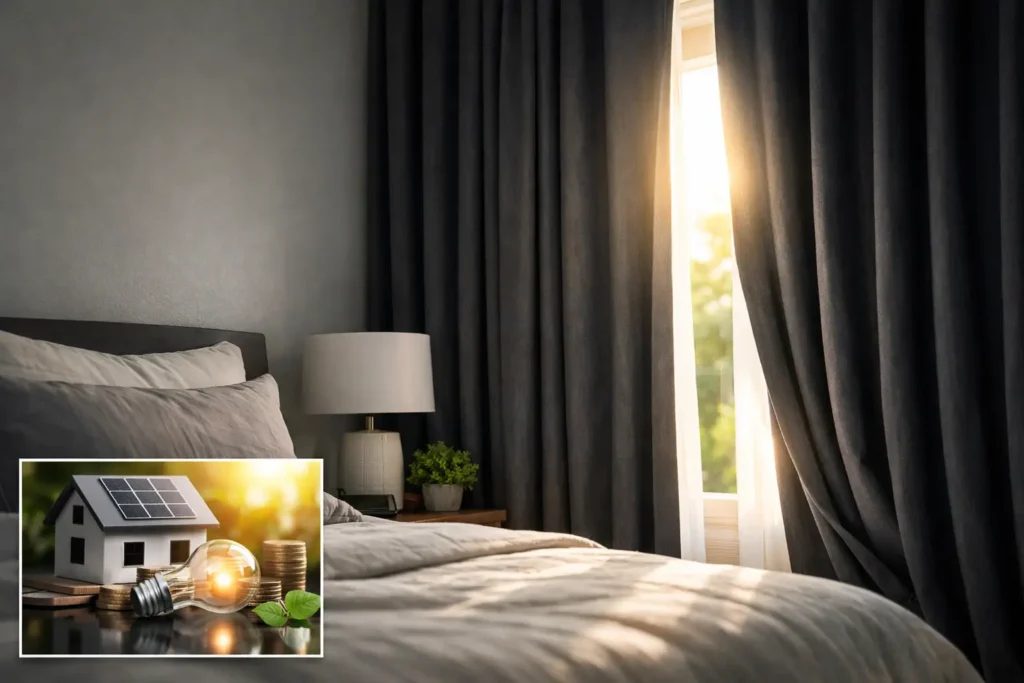
A sunny window can turn a beautifully furnished room into the warmest place in the house before noon. So, do blackout curtains save energy? Yes, they can – especially when they are properly fitted, lined, and closed at the right times. They are not a replacement for insulation, efficient glazing, or a well-maintained HVAC system, but they can reduce unwanted solar heat gain and make indoor temperatures feel more consistent.
For homes, apartments, offices, and hospitality spaces, blackout curtains offer a practical layer of temperature control while delivering the privacy, darkness, and polished finish that premium interiors demand.
How blackout curtains help save energy
Windows are a common source of heat transfer. In warm weather, sunlight passing through glass heats floors, furnishings, and indoor air. Your air conditioner then has to work harder to bring the room back to a comfortable temperature. In cooler conditions, heat from inside can escape through the glass and small gaps around the window frame.
Blackout curtains create a fabric barrier between the room and the window. Their dense material, often paired with a blackout lining, helps block direct sunlight and slows the movement of heat. The effect is most noticeable on windows that receive strong afternoon sun, large glass doors, and rooms with wide, exposed glazing.
The energy benefit comes from controlling solar heat before it spreads through the room. When curtains are closed during the brightest hours, less radiant heat reaches your furniture and interior surfaces. That can reduce the cooling load and help the space feel more comfortable without immediately lowering the thermostat.
The fit matters as much as the fabric
Not every blackout curtain performs the same way. A ready-made panel that is too narrow, too short, or installed far from the window will still darken a room, but it may leave pathways for light and warm air to pass around the edges.
Custom-fitted blackout curtains are designed to cover the window fully, with appropriate overlap at the sides and above the track or rod. Extending the curtain close to the floor also improves coverage. This attention to proportion is what turns a decorative treatment into a more effective comfort solution.
At Elegant Blinds & Curtains, the measurement and installation process is designed around the room, not just the window size. The direction of sunlight, ceiling height, existing decor, privacy requirements, and desired level of light control all influence the right curtain design.
Do blackout curtains save energy in hot climates?
They can be particularly valuable in hot, sunny climates, where cooling costs are often the larger concern. South- and west-facing windows generally receive intense direct sunlight, with west-facing rooms often becoming uncomfortable later in the day. Closing blackout curtains before the room heats up is more effective than waiting until it already feels warm.
For Dubai homes and commercial spaces, this timing can make a meaningful difference in day-to-day comfort. A custom blackout solution helps soften the impact of harsh sunlight while protecting interiors from glare and fading. Upholstery, rugs, wood finishes, and artwork can all benefit from reduced direct exposure.
That said, blackout curtains do not need to stay closed all day. Natural light is part of what makes a room feel open and inviting. A layered approach often gives the best result: sheer curtains can filter daylight and preserve privacy during milder hours, while blackout curtains can be drawn when sunlight is strongest or complete darkness is needed.
Where blackout curtains make the biggest difference
Bedrooms are the obvious choice because blackout fabric supports restful sleep and privacy. Yet the energy advantages can be just as useful in living rooms, media rooms, home offices, conference rooms, and hotel guest rooms with sun-facing windows.
Rooms with large windows or sliding doors usually have the most to gain because there is more glass through which solar heat can enter. Spaces located on upper floors, rooms with darker flooring that absorbs heat, and areas with limited shade from neighboring buildings or landscaping may also feel a noticeable improvement.
In offices, blackout curtains can reduce screen glare and make meeting spaces more comfortable during peak daylight. In hospitality settings, they provide guests with better sleep conditions while helping rooms maintain a more stable indoor environment. The result is a detail that feels luxurious because it is both visually refined and genuinely useful.
Blackout curtains versus other window treatments
Blackout curtains are highly effective for full light blocking and soft, elegant coverage, but they are not the only energy-conscious option. The best treatment depends on how you use the room.
Roller blinds with blackout fabrics offer a clean, contemporary look and are especially practical for compact spaces or windows where a streamlined finish is preferred. Roman blinds bring a more tailored decorative feel, while motorized blinds and curtains add a level of convenience that can improve everyday energy habits.
Automation is particularly helpful for hard-to-reach windows, large villas, offices, and rooms that receive changing sunlight throughout the day. Curtains can be scheduled to close before strong sun enters the room and open later when the light is softer. When energy-saving habits happen automatically, comfort does not depend on someone remembering to adjust every window covering.
For some homes, combining treatments delivers the strongest result. A blackout roller blind close to the glass can handle light control, while full-length curtains add insulation, softness, and visual depth. This layered look works beautifully in bedrooms, formal living rooms, and high-end hospitality interiors.
What blackout curtains cannot do
Blackout curtains can support lower cooling or heating demand, but expectations should remain realistic. Their impact varies based on window size, glass type, insulation, air leaks, curtain construction, local weather, and how consistently the curtains are used.
If a room has gaps around the window frame, old single-pane glass, or an oversized HVAC issue, curtains alone will not solve the underlying problem. They work best as part of a wider strategy that includes properly sealed windows, sensible thermostat settings, and window treatments selected for the room’s orientation.
Color also has a role, although it is not the only factor. Lighter, reflective linings can help limit heat absorption on the window-facing side, while the room-facing fabric can be chosen to complement the interior palette. This is one reason a consultation is valuable: performance and design do not have to compete.
Choosing blackout curtains for comfort and style
Start with the purpose of the space. A bedroom may need near-total darkness, while a living room may benefit from a layered sheer-and-blackout arrangement. Consider whether you want manually operated curtains, a motorized track, or automation integrated with your existing smart-home setup.
Fabric selection should balance texture, drape, durability, and blackout performance. A premium lining can create the desired darkness even when the face fabric is selected primarily for its color or design. The track, heading style, and installation height also influence how elegant the finished window will look and how well it performs.
Precise installation is essential. Curtains should open and close smoothly, stack neatly when drawn back, and cover the glazing properly when closed. A professionally tailored treatment delivers a cleaner result than a one-size-fits-all panel, particularly on wide windows, corner windows, and sliding doors.
A smarter finishing touch for your windows
Blackout curtains are one of those interior upgrades that earn their place every day: they improve sleep, reduce glare, strengthen privacy, soften a room visually, and can help limit unwanted heat. If you want a window treatment that feels considered rather than merely functional, book a free measurement and explore a custom blackout solution designed around how your space receives light.